
TAIWAN HISTORY - Formosa Files Episodes

17
July 8, 2026
Taiwan’s First Sex Change (1953-1955) – S6-E17 (Not suitable for minors)
NOTE: This is our first episode to be labeled “explicit,” not due to bad language, but because it includes reasonably direct anatomical references. It may be best not to play this aloud when minors are present. We start with the relatively unknown story of Taiwanese boys condemned to become eunuchs in Emperor Qianlong’s imperial palace, their fate sealed simply because they were the young sons of rebels. We then turn to the first gender affirmation surgery (as it might be called today) performed in Taiwan, way back in the early 1950s, with the remarkable case of soldier Hsieh Chien-shun (謝尖順), the so-called "Chinese Christine." In 1953, the discovery of Hsieh's medical condition and the ensuing series of operations became front-page news across Taiwan, with newspapers turning a deeply personal matter into a national spectacle. We explore the ethics of the case. Hsieh was reluctant to transition to female and only agreed after considerable pressure, making it much less of an “aff…

17
July 2, 2026
Sky Cop TC Brown Returns – S6-E16
TC Brown returns to Formosa Files – and to Taiwan – after 53 years away. A former U.S. Air Force security policeman stationed at CCK Air Base in Taichung for most of 1968-73, TC reflects on his recent trip back to the island, the Taiwan he remembers from the Vietnam War era, and the Taiwan he found today. John talks with TC about his memoir Made in Taiwan and town patrol in Taichung’s “Dirty Dozen” bar district. We also visit Hualien through Wang Chen-ho’s bawdy novel Rose, Rose, I Love You, one of the few works of fiction to touch on Taiwan’s role in Vietnam War R&R.

June 27, 2026
The Fake Fishmonger – Snack 08
In the early hours of morning, Eryk and John head to a market in Taichung. Actually, they let Lin Kai-lun do that and all the other hard work. Lin is a third-generation fish seller, whose Chinese-language memoir A Guide to Fake Fishmongering tells a story of family debt, backbreaking labor, and the culture of Taiwan’s wet markets. It’s a moving story (the family brought low by gambling) and funny too (there’s some questionable medical advice). So, gather around the “urine tree” for a work-time break and fish-scented chat.

16
June 24, 2026
Snakes of Taiwan (with Gerrut Norval) – S6-E16
Does a “triangular head” mean danger? Did the wartime Japanese release experimental snakes on Yangmingshan? Do you really collapse after a hundred steps if a hundred-pacer bites you? Herpetologist Gerrut Norval joins John Ross to talk snakes. They focus on Taiwan’s six important venomous species: the green bamboo viper, Chinese cobra, many-banded krait, Russell’s viper, Taiwan habu, and the famous hundred-pacer. The biggest surprise for John was learning about the wild population of Burmese pythons on Kinmen. Be sure to visit the Formosa Files website for pictures and names of the snakes mentioned.

7
June 20, 2026
Keelung to Ishigaki Ferry: Taiwan’s Forgotten Yaeyama Stories – Snack 07
To celebrate the new Yaima Maru ferry service connecting Keelung with the Yaeyama Islands, Taiwan’s nearest neighbors, we uncover stories of Taiwanese migrants there in the Japanese colonial era. On jungle-clad Iriomote Island, some suffered brutal conditions in the coal mines. On nearby Ishigaki, Taiwanese settlers helped transform the island’s agriculture. They developed its pineapple industry and also introduced water buffalo, whose descendants can be seen today pulling tourist carts.

15
June 17, 2026
The Dragon Boat Festival Story: Qu Yuan, Myth, and History – S6-E15
Looking for the true story behind the Dragon Boat Festival (Duanwu Jie)? There’s much more to it than dragon boat races and sticky rice dumplings (zongzi). Many know the standard origin story of the patriotic poet Qu Yuan, but Formosa Files uncovers the less-tidy roots of the holiday. The Dragon Boat Festival date falls on the fifth day of the fifth lunar month; once feared as the dangerous "Month of a Hundred Poisons." Discover how people responded with temple rituals, protective herbs, and even arsenic-laced wine. John Ross and Eryk Michael Smith also chat about what marks the arrival of summer in modern Taiwan, from peak mango season to the blooming of the yellow golden shower and red flame trees right around when schools celebrate graduations. Plus, Eryk shares ancient wisdom from Ben-Hur ("Row well, and live" – 1959) as he recounts his own dragon boat racing glory.

14
June 10, 2026
Football in Taiwan: From Missionaries to Mulan – S6-E14
As we head into the 2026 World Cup, we take a look at Taiwan’s surprisingly rich football heritage. Although a minor sport today, there have been periods of intense popularity and success. The soccer story starts more than a century ago with British Presbyterian missionary Edward Band, who introduced the sport to students in Tainan. We follow the growth of football during the Japanese colonial era, the White Terror crackdown, and then the unusual “Hong Kong Legs” era when the ROC national team used “football mercenaries.” The country’s greatest international success, however, came with the Mulan women’s football team.

June 6, 2026
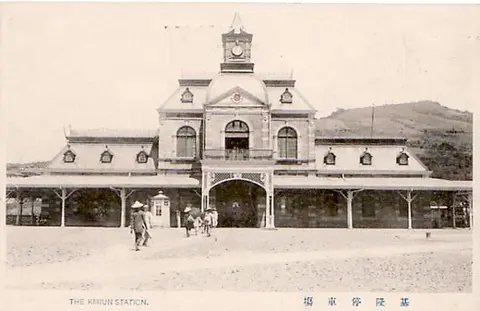
The Great Formosa Tsunami Mystery – Snack 06
The disaster was so terrible, so deadly that shocking reports of it reached as far away as Europe; they claimed that in 1782, Taiwan had been devastated by a colossal tsunami. Some accounts said the island had almost disappeared beneath the sea and that 40,000 people had died. Yet strangely, Chinese records seemed to say almost nothing about it. In this snack episode, Eryk and John put on their white coats and get scientific; or, in other words, they use some recent groundbreaking academic papers to explain one of the greatest mysteries in Taiwan’s history. Was there really a massive tsunami on Taiwan’s southwest coast in the 1780s? Listen and learn.
13
June 4, 2026
Should Taiwan Change its Time Zone? A Chat With Sasha B. Chhabra – S6-E13
Who owns Taiwan’s time? Taipei-based political commentator and author of Formosa Review substack Sasha B. Chhabra helps us wind back the history of Taiwan’s clocks, from local rhythms before what we now call “standard time,” to Japanese colonial rule, wartime Tokyo time, and ROC “Central Plains Time.” Then we move forward to more recent debates over sovereignty and identity. “What time is it?” seems like a simple question, but this episode delightfully complicates it with stories of daylight, empire, modernization, authoritarianism, and Taiwan’s right to define its own place in the world.
12
May 28, 2026
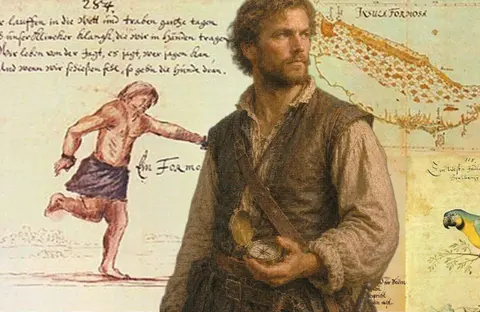
A German in Dutch Formosa: Caspar Schmalkalden – S6-E12
In the mid-1600s, Caspar Schmalkalden left war-ravaged Europe to work as a soldier and surveyor for the Dutch. After spending time in Brazil, he sailed to Batavia and finally to Formosa, where he lived among Dutch colonists, Chinese settlers, and Indigenous communities for several years. Back home in Germany, Schmalkalden wrote a richly illustrated account of his travels. It remained unpublished for more than 300 years and has still never appeared in a complete English translation. For the first time, we tell the story of this observant German traveler and the seventeenth-century Taiwan he encountered: a land of colorful feasts, deer hunts, strange tropical illnesses, herds of wild horses, and a mysterious creature he called the “Tayouan Devil.”
May 25, 2026
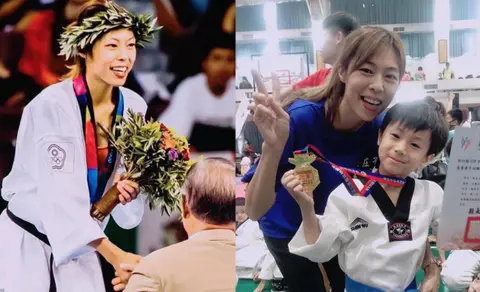
Taekwondo in Taiwan: From the Marines to Olympic Gold – Snack 05
Taekwondo may be Korean, but few places have embraced it as enthusiastically as Taiwan. Introduced in the 1960s for the military, the fast-kicking martial art quickly spread to the wider community. Before long, Taiwan had become one of the world’s taekwondo powers; it even sent trainers to the Middle East to teach the Jordanian royal guard. But peak global glory for the island’s taekwondo fighters came at the Athens Olympics in 2004, when Taiwan won its very first Olympic gold medals.
11
May 20, 2026
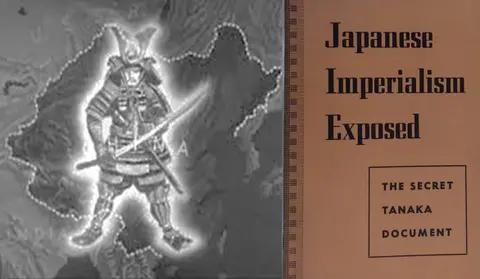
The Tanaka Memorial: A Secret Blueprint for World Conquest – S6-E11
In the 1930s, a mysterious document known as the Tanaka Memorial shocked the world. Supposedly written by Japanese Prime Minister Baron Tanaka, it outlined a strategy for conquering Manchuria, China, Southeast Asia, and even the United States. As real-life events seemed to unfold according to the alleged plan, the document became one of the most influential pieces of anti-Japanese propaganda of the twentieth century. It was quoted by American films, politicians, and many others. In this episode, we tell the story of Taiwanese businessman Tsai Chih-kan (蔡智堪), who later claimed to have personally copied the secret plans from inside the Japanese Imperial Palace. Although most historians today believe the Tanaka Memorial was a forgery, it remains an unsolved mystery. And the story of how it shaped global politics and wartime propaganda is, we think, more fascinating than the contents of the document.
10
May 13, 2026
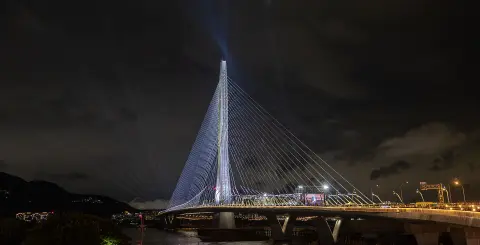
Bridges of Taiwan – S6-E10
John Ross and special guest John Groot celebrate the opening of the remarkable Danjiang Bridge in Tamsui (Danshui). They explore the bridges that transformed Taiwan: the Xiluo Bridge over the mighty Zhuoshui River, once the longest bridge in Asia, and the Taipei Bridge that helped fuel Taiwan’s economic miracle. That bridge is best known for its “Scooter Waterfall,” the tightly packed stream of scooters that pours down the Taipei-side off-ramp during morning rush hour. We follow the Taipei Bridge to the other side, the gritty, industrial district of Sanchong. John Groot shares stories from his many walks, including some hair-raising bridge crossings during his circumnavigation of Taiwan’s coastline. He also outlines his ambitious new walking project and related website, TaiwanCentric.com (formerly the Culture Shack and scheduled to relaunch on May 22)

May 9, 2026
Chen Shu-chu: Taiwan’s Vegetable Vendor Philanthropist – Snack 04
In this Mother’s Day edition, we celebrate the extraordinary life of Chen Shu-chu (陳樹菊), a humble vegetable seller from Taitung who quietly donated millions of NT dollars to schools, charities, and orphaned children – while continuing to live a modest life behind a market stall. Born in 1950 into poverty, Chen Shu-chu was forced to leave school at just thirteen after her mother died in childbirth. For half a century she worked at the stall and saved her earnings, giving them to the needy. Chen’s lifetime of extraordinary generosity eventually brought her international fame. In 2010 she appeared in Time magazine’s list of the world’s most influential people. This is an uplifting story of how a seemingly ordinary market vendor became one of Taiwan’s most admired figures.
9
May 6, 2026
Taiwan Ghosts: Haunted Hotels, Trickster Spirits, and Vengeful Widows – S6-E9
Ghosts of all kinds – wandering spirits, water ghosts looking for substitutes, mountain demons, and many more; welcome to the strange supernatural world of Taiwan. Eryk and John, fortified with protective amulets and holy mantras, bravely step into the murky shadowlands of Taiwanese ghost lore and modern supernatural encounters. For this episode, they draw heavily on anthropologist Lin Mei-rong’s collection of more than 150 ghost stories from across Taiwan. You’ve probably heard of water ghosts. But have you heard of the mysterious “Little Girl in Red” who lures hikers deep into the mountains? Or paper funeral dolls that come alive? How about “Yin” temples dedicated not to gods, but to wandering spirits? Lock your doors and windows, light some incense, and prepare to be spooked (and amused).
8
April 29, 2026
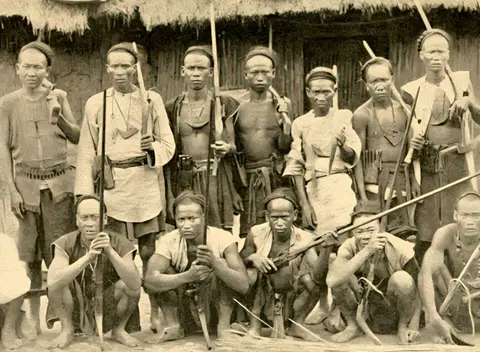
Guns in the Mountains: Taiwan’s Indigenous Firepower – S6-E8
We head into the mountains to tell the story of the deep relationship between Taiwan’s Indigenous communities and firearms. The warriors’ incredible skill and ingenuity with guns enabled them to hold off Qing dynasty forces, Western punitive expeditions, and even the modern Japanese army well into the 20th century. Far from the familiar image of bows and arrows versus modern rifles, Taiwan’s Indigenous peoples were quick to adopt and adapt firearms. Early on these firearms were simple matchlock muskets – slow to load but still deadly in skilled hands – but in the late 1880s, the Indigenous groups acquired modern rifles. Sometimes they had firepower equal to, or better than, their opponents. Through the centuries, guns became essential tools for hunting and warfare. They also became items of status and cultural importance. Guns were gifted in marriage, buried with the dead, and woven into customs of justice and belief. For this episode, we drew on the excellent dissertation by…
7
April 22, 2026
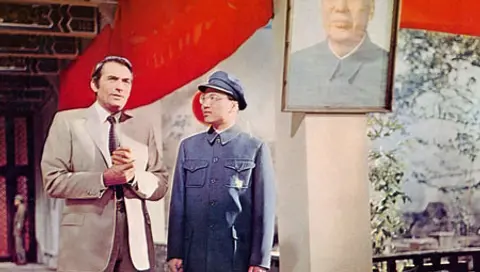
Ping-Pong with Mao in Taiwan: The Chairman (1969) – S6-E7
We step into the strange Cold War world of The Chairman, a forgotten 1969 spy thriller starring Hollywood great Gregory Peck. The movie, which was partly filmed in Taiwan, is about a scientist sent behind the Bamboo Curtain to steal a miracle agricultural formula. The plot is outlandish, but behind the absurdity lies an interesting snapshot of global fears in the late 1960s, from overpopulation and famine to superpower rivalry. We follow the film production here in Taiwan (a stand-in for off-limits communist China). This takes us to locations such as Taipei’s spectacular mountainside Zhinan Temple, where Peck plays ping-pong with Mao Zedong. Yes, The Chairman was a flop – deservedly so, we think – but the film certainly makes for a fun podcast episode. Watch movie for free on YT; link below.
6
April 15, 2026
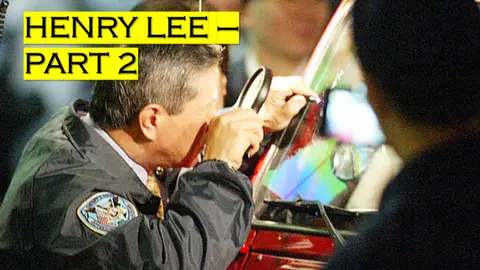
The Celebrity Forensics Expert: Henry Lee – Part 2 – S6-E6
It’s 1965, and Henry (27) and Margaret (26) Lee have moved to the USA. She’s working as a schoolteacher, and he’s trying to make ends meet however he can, including by washing dishes at a Chinese restaurant and teaching kung fu. After some hard years — and a long stint in school — Henry Lee secures an academic position at New Haven University and builds its forensic center into a world-class institution. He soon begins working with legal authorities and solving cases. Being called as an expert witness for the defense in the 1995 OJ Simpson trial cements Henry Lee’s status as a modern Sherlock Holmes. But unlike fictional characters, Lee was human, and humans make mistakes and sometimes also lie. There’s no question Lee made some significant mistakes. Some, however, think he crossed the line into deception. Still, the errors, big or small, can be counted on one hand — most of the roughly 8,000 cases he worked on are not under review. Stick around after the end for a five-minute r…
5
April 8, 2026
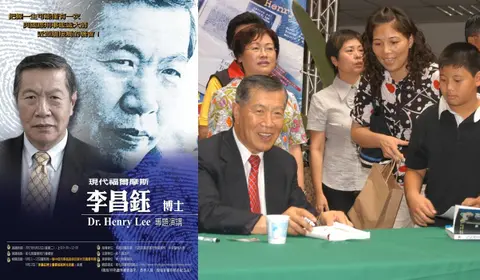
Shoes, Graves, and Fingerprints: Henry Lee in Taiwan – Part 1 – S6-E5
To mark the recent passing of Henry C. Lee (李昌鈺), one of the world’s most famous forensic scientists, we examine his extraordinary life. In Part 1, we’re in impoverished postwar Taiwan. Lee is the eleventh of thirteen children. That, and his father dying on “China’s Titanic,” means it’s a childhood marked by tragedy and hardship. Lee walked barefoot to school to save his shoes. We follow his police training and work, service on Kinmen, a visa-overstay romance, and an unlikely detour running a tiny newspaper in Borneo. Part 2 follows Lee to the United States, where he rises to international fame through major criminal cases and where his golden reputation is somewhat tarnished by controversy.
April 5, 2026
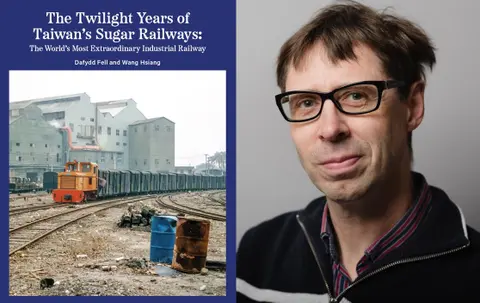
Bonus episode: Taiwan’s Sugar Railways (with Prof. Dafydd Fell) -S6
John talks with Professor Dafydd Fell of SOAS University about "The Twilight Years of Taiwan’s Sugar Railways", his new book co-written with Wang Xiang, a researcher who has spent years documenting the remains and memories of this once vast railway network. Fell’s own fascination with the sugar railways dates back to the 1990s when he was living in Taiwan. John and Dafydd explore how sugar helped build modern Taiwan, how the narrow-gauge railways moved far more than just sugar cane, and how the network had a Cold War strategic purpose. The episode is full of nuggets, from mystery Belgian locomotives to propaganda train tours.
4
April 2, 2026
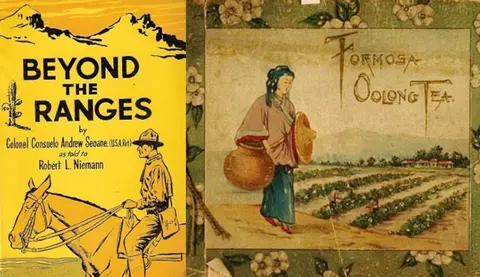
Taiwanese Tea in America, American Spies in Formosa – S6-E4
In 1904, colonial Taiwan tried to impress America with oolong tea at the St. Louis World’s Fair. Just five years later, two American spies disguised as South African zoologists were secretly roaming Japanese Formosa – but they weren’t investigating tea. They were on a U.S. Army mission to gather military intelligence. In this episode, John and Eryk explore tea, empire, espionage, and the strange relationship between Taiwan and the United States in the early 1900s.
March 28, 2026
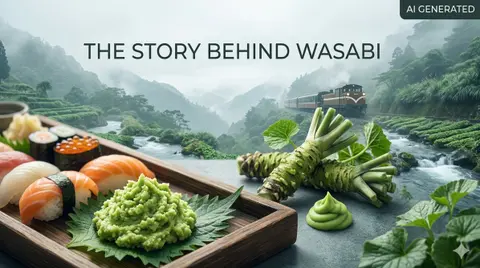
Wasabi – Green Fire from the Mountains – Snack 03
That little green blob of spicy paste beside your sushi and sashimi has an amazing backstory. The notoriously fussy plant is grown in the mountains of Taiwan (special shoutout to Chiayi County). It arrived in Alishan with the Japanese colonists and their forest railway and flourished in the cool mountain air. After disappearing for a time, it has recently made a comeback. Listen to learn the history of wasabi and find out whether you’ve been eating the real deal or a fake sauce.
3
March 26, 2026
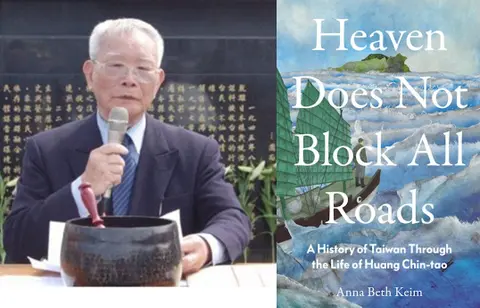
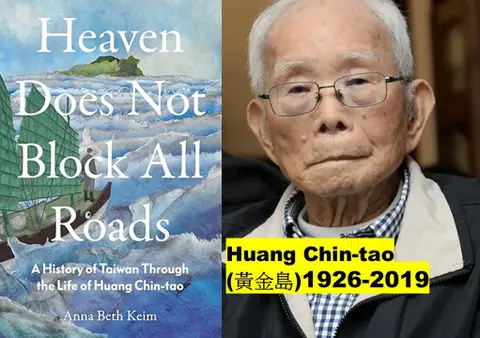
The Extraordinary Life of Huang Chin-tao (Part 2) – S6-E3
Huang Chin-tao (黃金島) was never a household name, but his life story is the story of modern Taiwan. In this concluding episode, we follow Huang from the 2.28 uprising in 1947 as he joins a resistance group led by a rare combination: a Taiwanese woman communist guerrilla commander, Xie Xuehong, whom we've dubbed Agent "Red Snow." After fighting bravely but losing the Battle of Wuniulan Bridge in Nantou, Huang becomes a fugitive and then spends more than two decades in Taiwan’s prisons. There is, however, finally some happiness: a few years after being released, he found love and became a political activist in what would become Taiwan's first real opposition party. For this tale of resistance, survival, and a regular man’s refusal to be broken by history, we drew on Anna Beth Keim’s excellent biography "Heaven Does Not Block All Roads."
2
March 18, 2026
Huang Chin-tao: a History of Taiwan Through One Man’s Life (Part 1) – S6-E2
This is part one of the extraordinary life story of Huang Chin-tao (黃金島 Huáng Jīndǎo). In fact, he seemed to live not one life but many; he was a Japanese naval recruit, a combat soldier, a survivor of typhoons and pirates, an armed rebel during the 2-28 Incident of 1947, a man on the run, a prisoner, and a politician. His lifetime, 1926 to 2019, also gives us the background story of Taiwan’s turbulent 20th century. Although the turns and twists of history were often brutal for Huang, he was unbreakable, a man who refused to let fate decide his path. In the words of the title of Anna Beth Keim’s excellent biography: Heaven Does Not Block All Roads.