
Categories
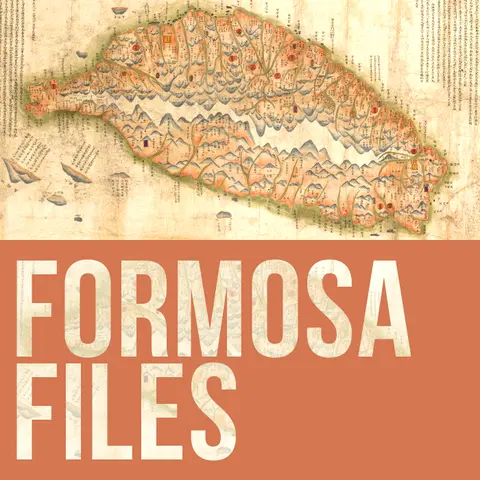
Formosa Files Podcast
The Formosa Files cover the early history of Taiwan (1600 C.E. - 2000) through engaging stories presented by seasoned hosts John Ross and Eryk Michael Smith, who bring their extensive experience living on the island.
Expert Interviews
This category features insightful interviews with historians, authors, and cultural figures, providing in-depth perspectives on Taiwan's diverse history and heritage.
Taiwan in the 1990s
Explore the transformative decade of the 1990s, highlighting Taiwan's transition to democracy, significant political events, and societal changes that characterized this pivotal period in its history.
Taiwan history in the 1990s
The 1990s were a particularly interesting time in Taiwan's history as they featured a major change: the official switch to multi-party democracy and direct elections for the president and lawmakers. While changes to Taiwan had first come after martial law was lifted in the late 1980s -- including the establishment of the first serious opposition political party: the Democratic Progressive Party (DPP) – the 1990s was the decade in which democracy began to bloom. It was a wild, sometimes violent time, epitomized by the 1997 kidnapping and murder of the daughter of Bai Hsiao-yen. In 1996, the first direct presidential election was held, with Lee Tung-hui of the Chinese Nationalist Party (Kuomintang or KMT) winning an unsurprising victory over formerly in-exile Taiwan independence supporter Dr. Peng Min-ming, representing the DPP. Just before the election, Taiwan faced the Third Taiwan-Strait Crisis, as the People's Republic of China (PRC) conducted “missile tests” in the waters near Taiw…
Taiwan during Qing dynasty rule
Taiwan came under Qing dynasty rule in 1683 after the defeat of the Zheng regime, which had used the island as a base of resistance against the Qing on the mainland. Initially, Qing authorities viewed Taiwan as a remote and unruly frontier rather than a core province. Migration from Fujian and Guangdong increased rapidly, bringing Han Chinese settlers who developed agriculture, trade, and local communities, often pushing into lands inhabited by Indigenous Austronesian peoples. Governance was limited and uneven, with periodic rebellions and conflicts reflecting weak state control and the island’s frontier character. Through the eighteenth and nineteenth centuries, the Qing gradually expanded administrative structures, creating prefectures and counties to manage population growth and economic activity. Taiwan became an important producer of rice and sugar for regional markets, especially Fujian. However, ethnic tensions among settlers from different regions and clashes with Indigenou…
China-Taiwan conflict since 1949.
Since 1949, the conflict between Taiwan and the People’s Republic of China has centered on sovereignty, legitimacy, and security across the Taiwan Strait. After losing the Chinese Civil War, the Republic of China government retreated to Taiwan, maintaining that it remained the lawful government of all China. Meanwhile, the newly established People’s Republic of China asserted that Taiwan was a breakaway province that must eventually be reunified, by force if necessary. Both sides initially claimed to represent all of China, creating a prolonged political and military standoff. During the Cold War, Taiwan was backed by the United States, especially after the outbreak of the Korean War in 1950, which led Washington to deploy the Seventh Fleet to the Taiwan Strait. Several crises followed, including artillery bombardments of offshore islands in the 1950s, underscoring the risk of direct conflict. Over time, Taiwan shifted from an authoritarian regime to a democratic political system, …
Taiwan as a Japanese colony
Via Wikipedia: The island of Taiwan, together with the Penghu Islands, became a dependency of Japan in 1895, when the Qing dynasty ceded Fujian-Taiwan Province in the Treaty of Shimonoseki after the Japanese victory in the First Sino-Japanese War. The consequent Republic of Formosa resistance movement on Taiwan was defeated by Japan with the capitulation of Tainan. Japan ruled Taiwan for 50 years. Its capital was located in Taihoku (Taipei) led by the Governor-General of Taiwan. Taiwan was Japan's first colony and can be viewed as the first step in implementing their "Southern Expansion Doctrine" of the late 19th century. Japanese intentions were to turn Taiwan into a showpiece "model colony" with much effort made to improve the island's economy, public works, industry, cultural Japanization, and support the necessities of Japanese military aggression in the Asia-Pacific. Japan established monopolies and by 1945, had taken over all the sales of opium, salt, camphor, tobacco, alco…
Taiwan during World War II.
By the late 1930s Taiwan had become one of Japan’s most important colonial possessions. It functioned as both an economic supplier and a strategic military base for Japan’s expansion across East and Southeast Asia. Extensive infrastructure, including ports, railways, and airfields, had already been developed during the colonial period, and these facilities allowed Taiwan to serve as a major logistical hub once the Pacific War began in 1941. As the war intensified, Taiwan’s economy and society were fully mobilized to support Japan’s military needs. Agricultural production, especially rice and sugar, was directed toward feeding Japanese troops and civilians across the empire. Factories were retooled to produce military supplies and processed goods that could be shipped to battlefronts. Colonial authorities also launched assimilation campaigns encouraging Taiwanese people to adopt Japanese names, speak Japanese, and participate in Shinto rituals. These policies were meant to integrate…
Taiwan in the 1980s.
The 1980s saw huge economic growth in Taiwan, but the island was marred by pollution, corruption and other ills that come with economic success. Still, many in Taiwan view the 1980s as a golden age of relative political peace, and financial prosperity.
Taiwan's fight for democracy
Taiwan’s struggle for democracy emerged from decades of authoritarian rule following its transfer from Japan to the Republic of China in 1945. Early tensions between local residents and incoming Nationalist officials erupted in the February 28 Incident of 1947, when protests were violently suppressed and thousands were killed. This marked the start of the White Terror era, during which martial law, imposed in 1949 after the Kuomintang retreated to Taiwan, restricted political opposition, media, and civil liberties for nearly four decades. Despite tight controls, social change in the 1970s and 1980s fostered growing demands for reform. A rising middle class, expanding education, and international isolation after losing the United Nations seat in 1971 all contributed to pressure for political liberalization. Opposition activists known as the "tangwai" organized protests and publications, most notably during the 1979 Kaohsiung Incident, which drew global attention to Taiwan’s lack of …