
Taiwan Indigenous People Episodes
18
July 15, 2026
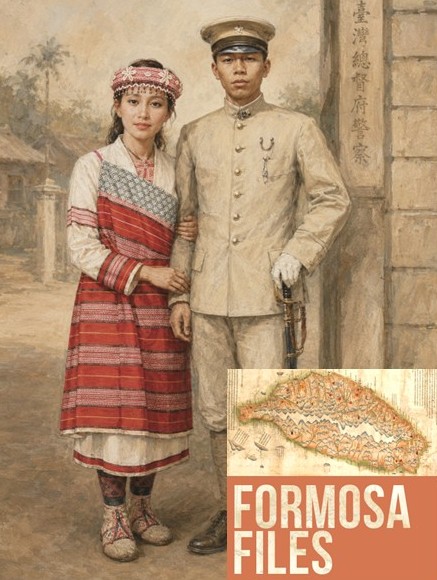
The Princess and the Policeman – S6-E18
In 1911, Baike Daole, the daughter of a powerful Atayal chief in the mountains of central Taiwan, was pressured to marry the Japanese policeman Shimoyama Jihei. Their “strategic marriage” was intended to help Japan control Indigenous communities, but it produced a family caught between cultures and governments. We follow their story – and the extraordinary life of their son, Shimoyama Hajime – from Japan’s violent campaign to control Taiwan’s Indigenous peoples and the bloody 1930 Wushe Incident to the 228 uprising of 1947, when Hajime was arrested and tortured, and the uncertain first years of Chinese Nationalist rule.
8
April 29, 2026
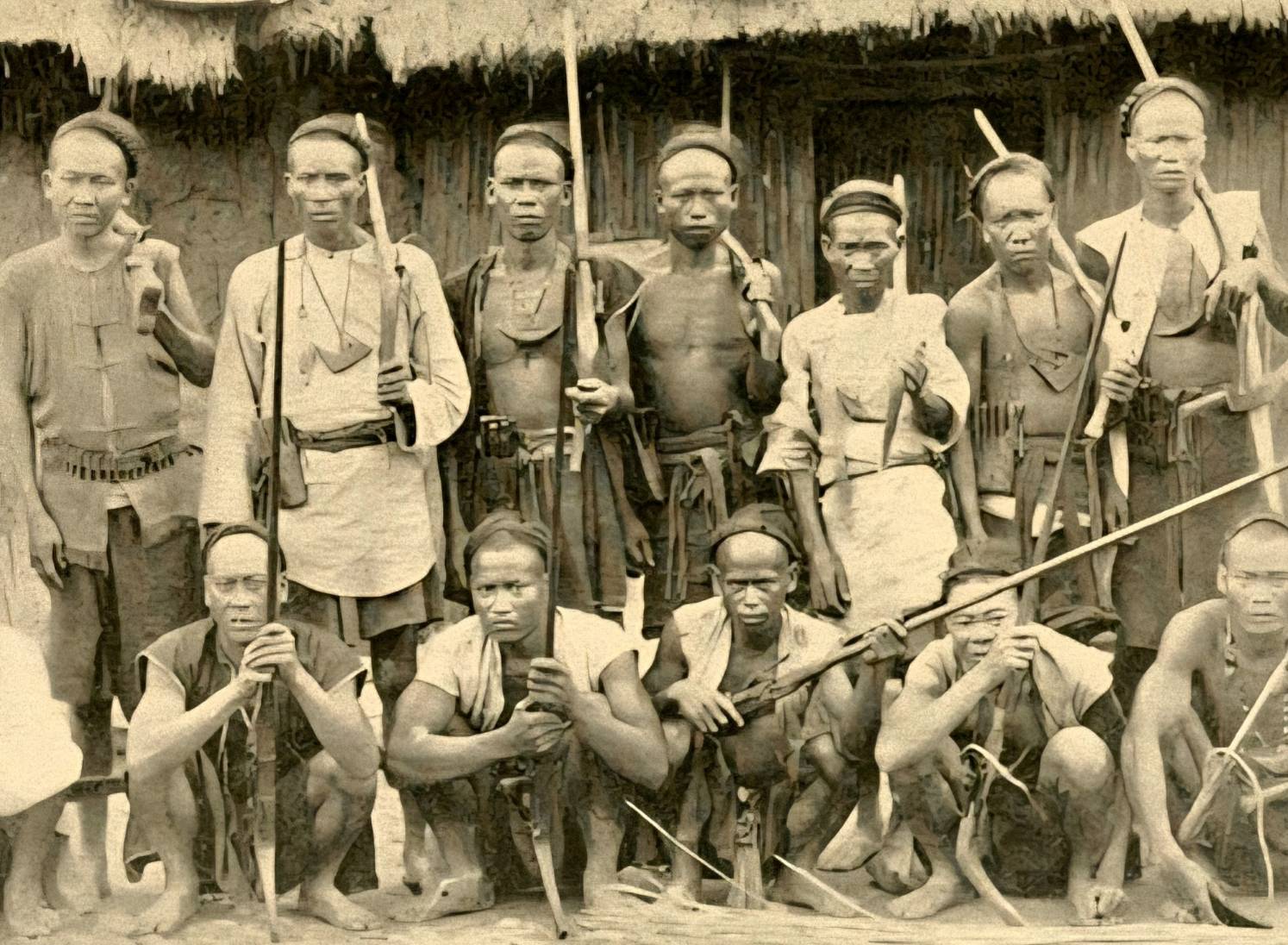
Guns in the Mountains: Taiwan’s Indigenous Firepower – S6-E8
We head into the mountains to tell the story of the deep relationship between Taiwan’s Indigenous communities and firearms. The warriors’ incredible skill and ingenuity with guns enabled them to hold off Qing dynasty forces, Western punitive expeditions, and even the modern Japanese army well into the 20th century. Far from the familiar image of bows and arrows versus modern rifles, Taiwan’s Indigenous peoples were quick to adopt and adapt firearms. Early on these firearms were simple matchlock muskets – slow to load but still deadly in skilled hands – but in the late 1880s, the Indigenous groups acquired modern rifles. Sometimes they had firepower equal to, or better than, their opponents. Through the centuries, guns became essential tools for hunting and warfare. They also became items of status and cultural importance. Guns were gifted in marriage, buried with the dead, and woven into customs of justice and belief. For this episode, we drew on the excellent dissertation by…
35
Dec. 19, 2024
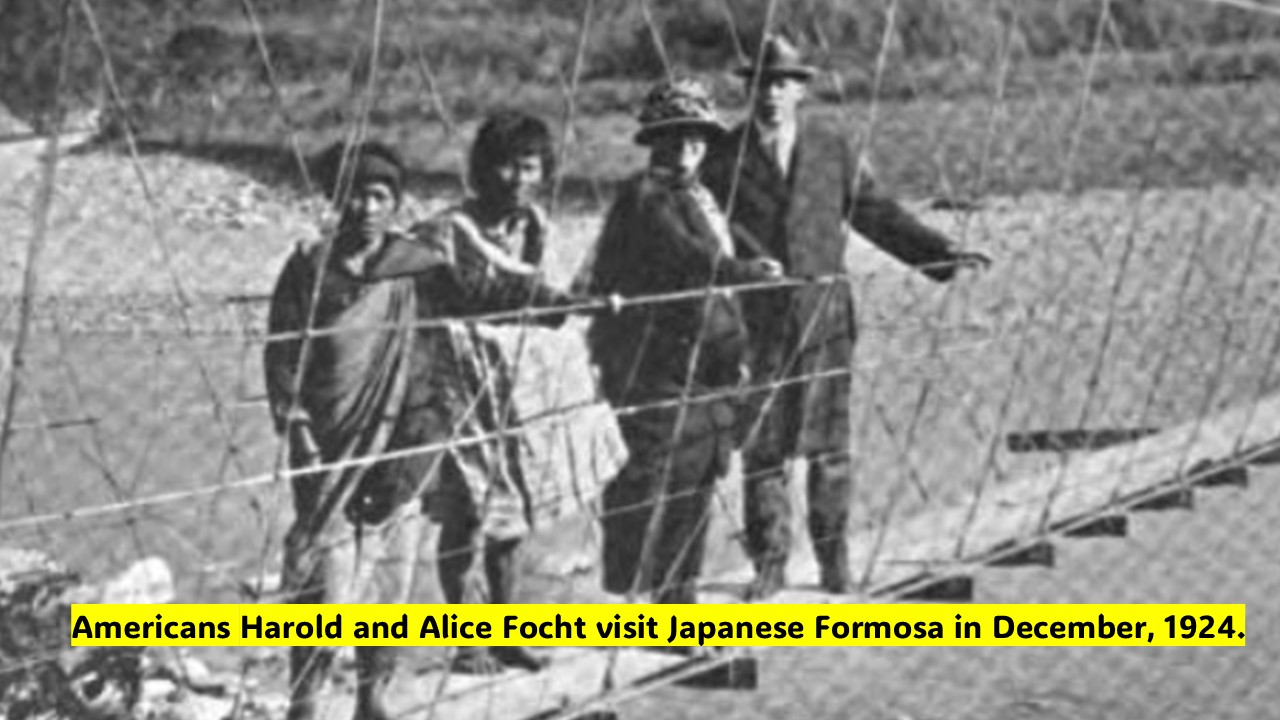
S4-35 - FORMOSA 100 YEARS AGO: AMERICAN VISITORS IN JAPAN’S MODEL COLONY - DEC., 1924
Harold and Alice Focht. He was an educator, she came along to keep him away from the geishas (well, some said). Hear how two middle-aged Americans saw Taiwan at, arguably, the peak of the Japanese colonial era. Lots of civilizing was on display – Asia’s longest bridge and the aboriginal show village of Kappanzan (beautiful modern-day Jiaobanshan). But happily, some local charms were also seen, including the unhealthy but persistent habit of chewing betel nuts, some minor disregarding of cleanliness, and local throngs gawking at big-footed Americans. As a bonus, Eryk and John give away two brilliant ideas for modern-day tourism related to rail pushcarts.

30
Nov. 7, 2024
S4-E30 - The “First” Chinese Person to Visit Taiwan - Chen Di 陳第 (1603)
400 Years: Dutch Formosa - part one: Of course, Chen Di was not actually the first person from China to visit Taiwan. What makes him special is that he wrote an account of what he saw here in 1603, and that account is the earliest surviving manuscript discovered thus far. Chen Di's short travel commentary focuses mostly on the Indigenous Peoples of Taiwan; their customs, diet, etc., a rare and valuable documentation by a man who was both a scholar and a warrior. Chen Di's account of his 1603 trip was only rediscovered in 1955! Interestingly, the same year Chen Di came to Taiwan was when the Dutch East India Company (the VOC) set up a permanent trading post in what's now Indonesia. The Dutch are determined to break into the China trade market - but they'll need another base. Somewhere a bit closer.

19
Aug. 16, 2024
S4-E19 - Taiwan's Olympic GOAT? Mike Chinoy's New Documentary "Decathlon: The CK Yang & Rafer Johnson Story"
The incredible story of Amis Taiwanese Olympic decathlete Maysang Kalimud, better known as CK Yang (楊傳廣), was one of the first stories featured in the first season of Formosa Files (December 2021). At that time, John and Eryk bemoaned how little-known this amazing Indigenous Taiwanese athlete is and expressed hopes a movie about him might get made. Well, we got the next best thing: a riveting documentary about the man who is arguably Taiwan's Olympic "greatest of all time" (GOAT) by CNN legend Mike Chinoy.

Oct. 31, 2023
WELCOME TO THE PODCAST! - The "White Formosan" - S1-E1
The History of Taiwan: Formosa Files, rated as the best Taiwan history podcast, has gained a lot of new listeners of late, and many seem to begin listening from where they first encounter the program. But there are lots of great Taiwan history episodes from seasons 1-2 and, as this one is the one that started it all, we're rereleasing a new edit of Season One, Episode One: “The White Formosan.” Our sound quality and editing skills have improved greatly (um... we hope you agree) since the launch of the podcast in late 2021, but we hope our enthusiasm and love for telling stories from Taiwanese history has only grown with our audience. Thanks to long-time listeners for sticking with us, and a very big welcome to all the newer folks! Originally released on September 6, 2021.

July 4, 2023
Bonus Episode: AIT/K: The American Institute in Taiwan - Kaohsiung Branch
It's the Fourth of July! Happy 247th Birthday, America! It's estimated that around 80,000 U.S. nationals live and work in Taiwan; most, however, do so in the north. But the U.S. State Department has never forgotten southern Taiwan! The American Institute in Taiwan, Kaohsiung Branch (AIT/K), has been serving both Taiwanese and American citizens in the southern port city since 1979. AIT/K's area includes the south, southeast, and outer islands such as Penghu. Check out this fun conversation Eryk recently had with outgoing AIT/K Branch Chief Tom Wong about his time in tropical Taiwan.

June 22, 2023
Bonus Episode: Eryk Calls John for a Meanderingly Interesting Chat
Now that we're well into Formosa Files season three, your co-hosts add some background to stories we've told, try to clear up misconceptions about the ROC’s exit from the United Nations, make some “controversial” comments on Dr. Sun Yat-sen, and finally, we agree that Mongolia is an independent country, which the Republic of China (Taiwan) also agreed is a fact, in 2002.

March 9, 2023
S3-E4 - Madou, Tainan 麻豆: Pomelos and Priestesses
Today, the district of Madou (麻豆區) in Tainan City is home to about 43,000 people. It has a pleasant small-town feel, an economy mainly based on agriculture, in particular, a citrus fruit called the pomelo ( 柚子). Back in the 1620s, when the Dutch arrived, Madou -- then called Mattau -- was inhabited by the Siraya (西拉雅族), a Taiwanese Indigenous group. Siraya resistance to Dutch expansion would lead to bloodshed and bring about a major turning point in early Taiwan history. Join Formosa Files as we visit the childhood home of Chen Shui-bian and recount the clash of cultures in the 1600s. You can also hear us stumble over some lines and words – John learns how to pronounce “pomelo” – in this "raw" edition. We left our mistakes in the episode to give listeners a look behind the scenes.
![[Encore] Japan Puts Paiwan Indigenous Taiwanese on Display at London Expo (1910)](https://s3.us-west-1.amazonaws.com/redwood-labs/showpage/uploads/images/906601c1-483b-470d-9e73-f345cd16d853.jpg "[Encore] Japan Puts Paiwan Indigenous Taiwanese on Display at London Expo (1910)")
Jan. 26, 2023
[Encore] Japan Puts Paiwan Indigenous Taiwanese on Display at London Expo (1910)
At the turn of the 20th century, Japan was on a roll. After taking Formosa and Penghu from Qing China in 1895, Japan beat mighty Russia in 1905. Eager to show the world its newfound economic strength – and to highlight the successful development of its new colony – the Japanese parliament voted vast sums of money to sponsor the Japan-British Exhibition. It was held in London from May to October 1910. Among the most “wild” displays the Japanese brought to London was a recreated Paiwan village, with live Indigenous Paiwan Formosans! NOTE: This episode was first released in September 2021.

39
Jan. 19, 2023
S2-E39 - Kaohsiung to Kenting Road Trip (1875)
The southern peninsula of Taiwan was a "ship graveyard" for a very long time as unseen rocks and reefs gashed holes in the sides of vessels and left them stranded, or on the seafloor. The Western powers and Qing authorities both agreed that a lighthouse at the far southern end of Taiwan would be a good idea, and so it fell upon English engineer Michael Beazeley and fellow employees of the Chinese Imperial Maritime Customs Service to set off from Takao (Kaohsiung) overland into "savage" territory to find and buy a piece of land for a lighthouse. Here's the illuminating origin story of the famous Eluanbi Lighthouse at Kenting.

Jan. 5, 2023
Bonus Episode: Among the Headhunters of Formosa - From Taiwan in 100 Books, by John Ross
This week we have another snippet from the audiobook of John's 2020 book, Taiwan in 100 Books. This extract tells the tale of Janet Montgomery McGovern, a feisty anthropologist who managed to cut through the red tape and official disapproval from Japanese colonial authorities in Formosa during her residence from 1916 to 1918, and headed up into the hills to learn about Taiwan's Indigenous Peoples -- most of whom had already given up headhunting by then. We'll also hear a "rose-colored glasses" 1921 travel account of a very brief visit to Taiwan by Englishman Owen Rutter. Enjoy!

35
Dec. 1, 2022
S2-E35 - Colonial Tourism: Japanese Visit their Model Colony, While Tokyo Brings Indigenous Taiwanese to “The Motherland” to Show Off “Civilization”
We travel back to 1920s Taiwan, first in the company of Terry’s Guide to the Japanese Empire and then follow a Tokyo travel bureau itinerary for Japanese tourists to the island. Ride the rails with us as we visit Shinto shrines, sugar factories, former “savages,” and scenic spots (not just any scenic spots but the official “Eight Views of Taiwan”). And we look at perhaps the most interesting aspect of colonial sightseeing: free guided trips to Japan for Indigenous Taiwanese leaders. These propaganda trips were meant to demonstrate why resistance to the Empire was futile, but they were not always home runs.

Nov. 17, 2022
A Formosa Files INTERVIEW: Tobie Openshaw on the Saisiyat Story of Taiwan's "Little People"
The Saisiyat Indigenous people in Hsinchu and Miaoli counties have a famous story about magical “little people” or “dwarfs” called the Koko’ ta’ay. The legend goes that tensions between the tribe and the “dwarfs” led to an incident that killed off the little people, and which called down a curse on the Saisiyat. While most dismissed these stories as a myth, new research seems to indicate that that there were, in fact, “Negrito” people, such as can still be found in small bands in the Philippines and elsewhere, on Taiwan at least 5000 years ago - which could see the history books rewritten and the Koko’ ta’ay folklore recognized as being based on real experience!

27
Feb. 24, 2022
Bonus Mini-Episode: Eryk Calls John for a Chat About Taiwan's Indigenous Peoples
When did people first get to Taiwan? Was there a land bridge? Plus... a few interesting legends. A short phone call that's a fun intro to Taiwan’s prehistory.

20
Dec. 19, 2021
S1-E20 - The "Iron Man of Asia" - C.K. Yang 楊傳廣
Maysang Kalimud, better known by his Chinese name C.K. Yang (楊傳廣), is arguably the greatest Taiwanese athlete of all time. In 1960, this native Taiwanese from the Amis tribe came within an inch of winning the Olympic decathlon competition held in Rome. He took silver, but C.K. Yang's friendship with the man who won gold in that event in '60, American Rafer Johnson, is the stuff of sportsmanship legend. Here's the story of C.K. Yang (1933-2007) ... a Taiwanese athlete like no other.

15
Nov. 25, 2021
S1-E15 - Japan Puts on a Show
Determined to prove that they were just as fit to be imperialists as the great Western powers, the Japanese were keen to show off the "model colony" of Taiwan. The most ambitious attempt to do this was at the Japan-British Exhibition, held in London in 1910, which included a small Formosan village with real native Taiwanese on display! Here's a lesser-known story of a small group of Paiwanese aborigines from Pingtung who traveled across the world and back as a kind of "zoo" exhibit... but that didn't stop them from making friends and the best of a unique experience.