
The Princess and the Policeman – S6-E18

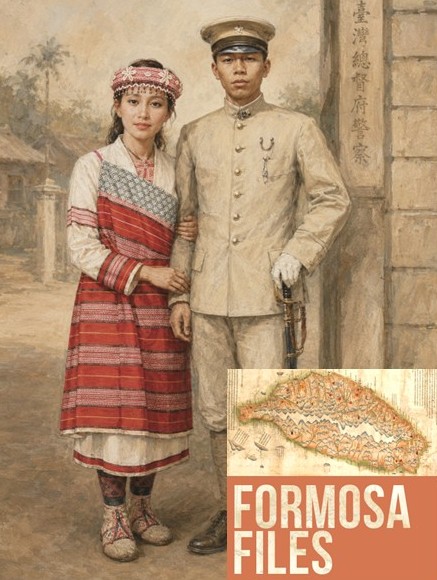
In 1911, Baike Daole, the daughter of a powerful Atayal chief in the mountains of central Taiwan, was pressured to marry the Japanese policeman Shimoyama Jihei. Their “strategic marriage” was intended to help Japan control Indigenous communities, but it produced a family caught between cultures and governments.
We follow their story – and the extraordinary life of their son, Shimoyama Hajime – from Japan’s violent campaign to control Taiwan’s Indigenous peoples and the bloody 1930 Wushe Incident to the 228 uprising of 1947, when Hajime was arrested and tortured, and the uncertain first years of Chinese Nationalist rule.

 Apple Podcasts
 Spotify
 RSS Feed
 RadioPublic
 PocketCasts
 Key Takeaways
- The 1911 marriage between Baike Daole, an Atayal princess, and Japanese policeman Shimoyama Jihei serves as a poignant lens through which to view the complexities of Japanese colonial rule in Taiwan.
- This episode highlights the painful intersection of personal life and geopolitical strategy during a volatile period of Taiwan Indigenous history.
- The life of their son, Shimoyama Hajime, illustrates the multi-generational trauma and identity struggles faced by families caught between the cultural pressures of the Japanese occupation and the subsequent arrival of the Chinese Nationalist government.
- Listeners gain insight into the devastating impact of major historical turning points, such as the 1930 Wushe Incident and the 1947 228 uprising, on the Indigenous population.
- The story underscores how official political agendas, such as the pacification of mountain tribes, fundamentally altered the trajectory of individual Indigenous lives.
AI illustration cover art.
Show notes
This episode is based principally on the Chinese-language family memoir:
《流轉家族:泰雅公主媽媽、日本警察爸爸和我的故事》
Liúzhuǎn jiāzú: Tàiyǎ gōngzhǔ māma, Rìběn jǐngchá bàba hé wǒ de gùshì
The English title would be something like: A Family Adrift: My Atayal Princess Mother, My Japanese Policeman Father, and My Story
The book was a collaboration between Shimoyama Hajime (who adopted the Chinese name Lin Guangming) and his daughter Shimoyama Misako (Lin Xianglan). He narrated it and she translated, organized, and wrote it into book form. The book was originally published by Yuan-Liou Publishing Co. in 2011.
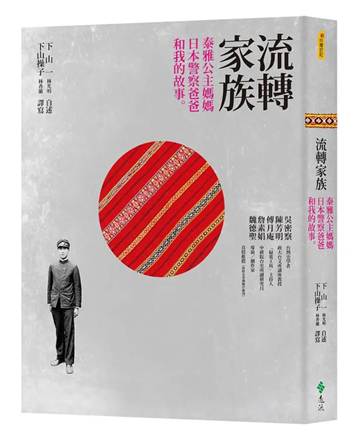
The memoir records the life of Shimoyama Hajime (下山一, Xiàshān Yī ), who was born in Japanese-ruled Taiwan in 1914. His father, Shimoyama Jihei, was a Japanese policeman from Shizuoka Prefecture. His mother, Baike Daole, was the daughter of an influential Atayal chief from Malepa, in the mountains of what is now Nantou County.
“Strategic marriages”
During the Japanese campaigns to extend control into Taiwan’s Indigenous mountain territories, colonial authorities encouraged or arranged marriages between Japanese policemen and the daughters of Indigenous leaders. These were commonly called “strategic marriages” or “political marriages.” Officials hoped that creating family relationships would reduce resistance and help the police exercise influence within Indigenous communities. Sometimes this indeed happened. Other times it backfired, because the mistreatment of the women caused resentment or even triggered violence. The wives were sometimes pressured to marry, not always given the full legal rights of Japanese wives, and sometimes abandoned – the policemen would later return to Japan and leave their Indigenous wives and children behind.
The Atayal (泰雅族, Tàiyǎzú) are one of Taiwan’s largest Indigenous peoples. Traditionally, Atayal communities occupied extensive mountain regions across northern and central Taiwan. They were known for their facial tattoos, both men and women. Baike Daole reportedly received her facial tattoos when she was thirteen. In 1939, she underwent surgery at Taipei Imperial University Hospital to have them removed, apparently because she feared that they would cause embarrassment or discrimination when her son married a Japanese woman. Atayal women were noted for their weaving ability and men for headhunting (and by that we don’t mean recruiting employees).
Do us a favor and rate/review the show! It really helps. Do it on Apple Podcasts or here on our website.
Write us with questions or ideas at formosafiles@gmail.com
AND THE BIGGEST REQUEST: tell others about this free, not-for-profit resource about Taiwan.
Frequently Asked Questions
Who was Baike Daole and why was her marriage significant to Taiwan Indigenous history?
Baike Daole was the daughter of a powerful Atayal chief whose marriage to a Japanese policeman was a strategic attempt by colonial authorities to exert control over Indigenous communities in central Taiwan.
What happened to the son of Baike Daole and Shimoyama Jihei?
Their son, Shimoyama Hajime, lived through the transition from Japanese colonial rule to the Chinese Nationalist period, facing significant political persecution including arrest and torture during the 1947 228 uprising.
How did the 1930 Wushe Incident affect Indigenous people in Taiwan?
The Wushe Incident was a violent uprising against Japanese colonial oppression that resulted in heavy reprisals against the Seediq people and marked a turning point in the Japanese government's strategy toward Taiwan's mountain tribes.