
Guns in the Mountains: Taiwan’s Indigenous Firepower – S6-E8
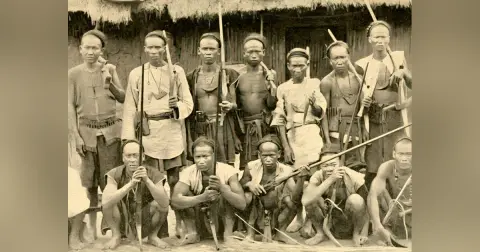
We head into the mountains to tell the story of the deep relationship between Taiwan’s Indigenous communities and firearms. The warriors’ incredible skill and ingenuity with guns enabled them to hold off Qing dynasty forces, Western punitive expeditions, and even the modern Japanese army well into the 20th century.
Far from the familiar image of bows and arrows versus modern rifles, Taiwan’s Indigenous peoples were quick to adopt and adapt firearms. Early on these firearms were simple matchlock muskets – slow to load but still deadly in skilled hands – but in the late 1880s, the Indigenous groups acquired modern rifles. Sometimes they had firepower equal to, or better than, their opponents.
Through the centuries, guns became essential tools for hunting and warfare. They also became items of status and cultural importance. Guns were gifted in marriage, buried with the dead, and woven into customs of justice and belief.
For this episode, we drew on the excellent dissertation by Pei-Hsi Lin (Susan Lin), Firearms, Technology and Culture: Resistance of Taiwanese Indigenes to Chinese, European and Japanese Encroachment in a Global Context (c.1860–1914).

 Apple Podcasts
 Spotify
 RSS Feed
 RadioPublic
 PocketCasts
 Show Notes
For this episode, we drew on the excellent dissertation by Pei-Hsi Lin (Susan Lin), Firearms, Technology and Culture: Resistance of Taiwanese Indigenes to Chinese, European and Japanese Encroachment in a Global Context (c.1860–1914). It’s free to download from the Nottingham Trent University website.
It was also inspiration for an excellent Taipei Times article by Michael Turton.
From Lin’s PhD paper:
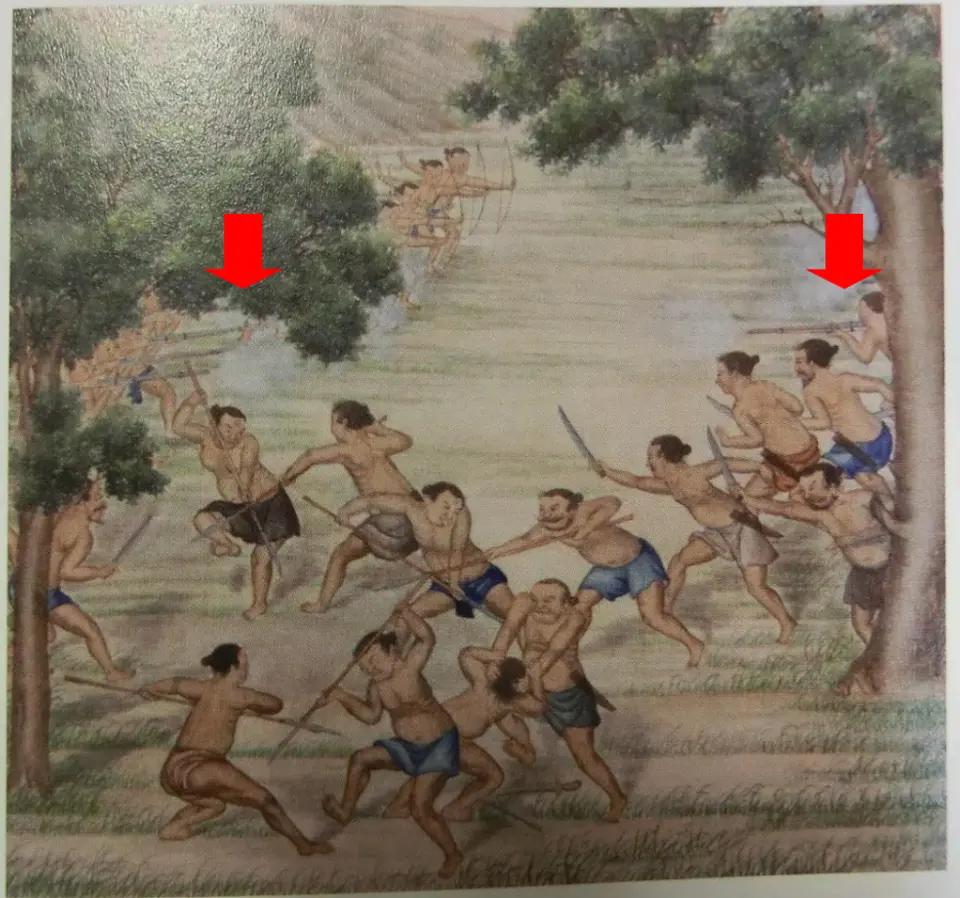
Caption: Chen Zong-Ren 陳宗仁, ed., Fanshi hudou tushuo '番社互鬪圖說' (Illustration of tribal warfare) Wan Qing Taiwan Fan Su Tu. 晚清番俗圖 (Illustrations of Aborigines in Late Qing Taiwan) (Taipei: Academia Sinica Institute of Taiwan History, 2013),
This Taipei Times article from 2016 examines the ongoing tension between wildlife protection and Indigenous hunting rights.
In the episode, we drew on material from previous Formosa Files stories, including.
S3-E8 – Early Photos of Taiwan by John Thomson (1871)
S2-E39 – Kaohsiung to Kenting Road Trip (1875)
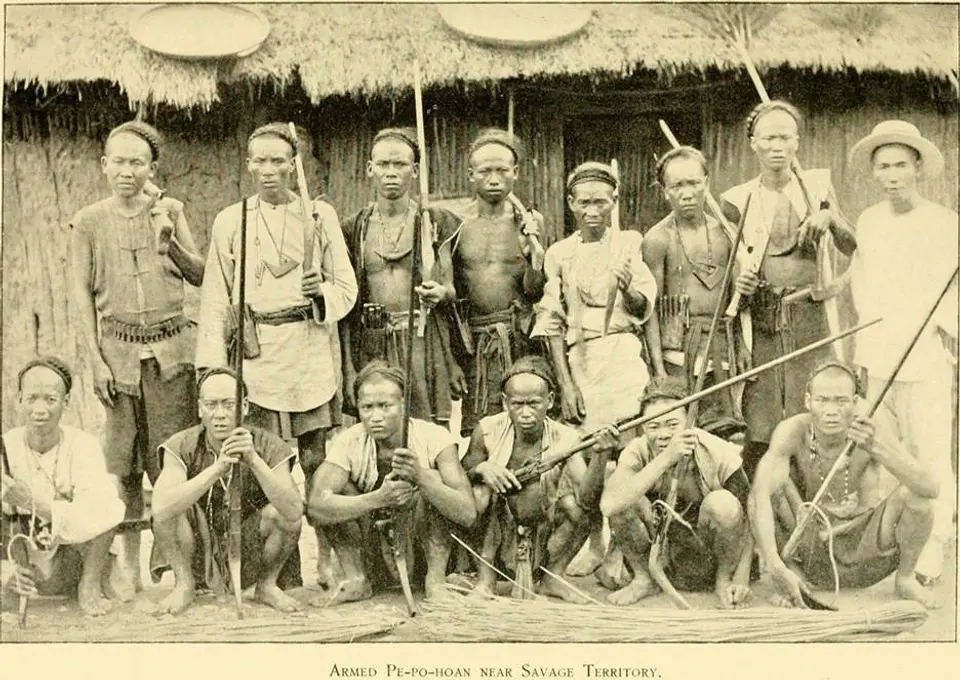
Below: A photo from missionary Dr. George Mackay’s memoir, From Far Formosa (1895). It shows lowland Indigenous with muskets.
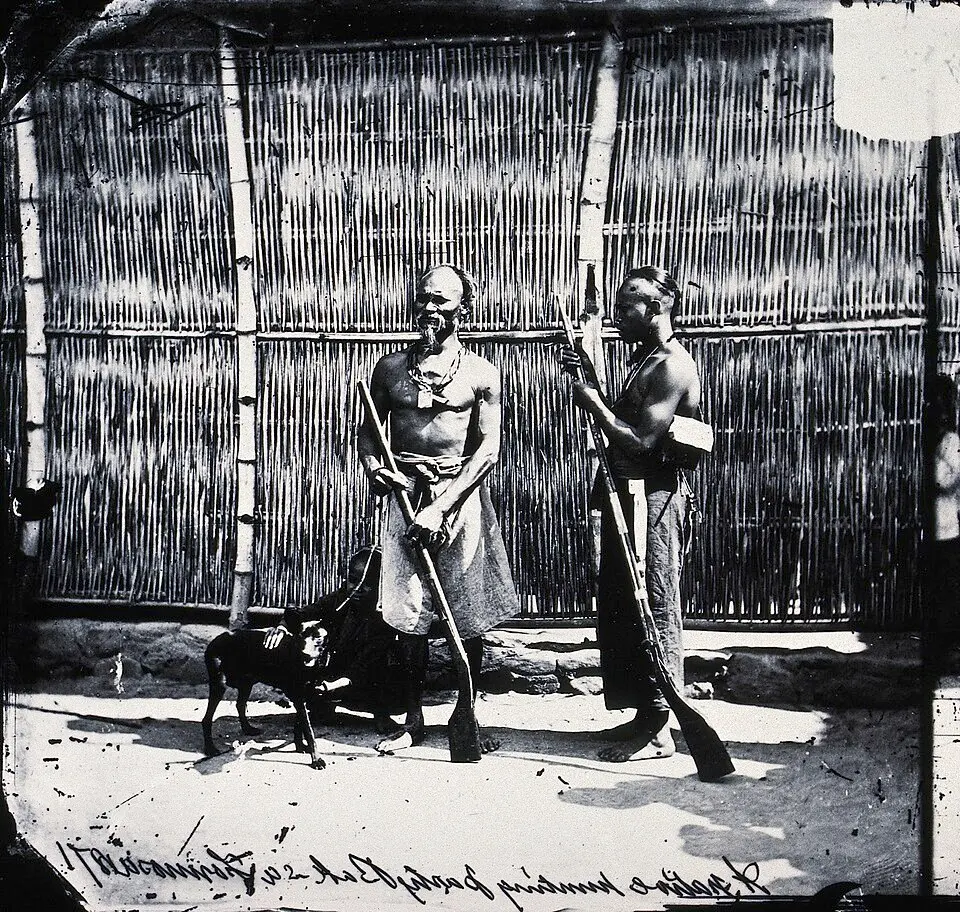
Below: Another photograph of “tame” indigenous with muskets, from John Thomson (1871), via Wiki Commons
https://commons.wikimedia.org/wiki/File:BaksaFormosaHuntingParty1871b.jpg?uselang=vi#/media/File:Baksa,_Formosa_(Taiwan)._Wellcome_V0037227.jpg
Do us a favor and rate/review the show! It really helps. Do it on Apple Podcasts or here on our website.
Write us with questions or ideas at formosafiles@gmail.com
AND THE BIGGEST REQUEST: tell others about this free, not-for-profit resource about Taiwan.
Eric Michael Smith (0:03): Hello, and welcome to Formosa Files. Today, we're exploring an overlooked aspect of Taiwan's history, the important role of firearms in indigenous peoples' history and culture. Now, it's natural enough to assume that through the centuries, the conflict between colonial powers and Taiwan's indigenous people would be, you know, a simple case of modern rifles versus bows and arrows. But the reality was far more complex and more interesting.
Formosa Files (0:29): The Taiwan history podcast, Formosa Files, is made possible through the generous sponsorship of the Frank C. Chen Foundation. Formosa Files.
Eric (0:41): Eric, before we look at Taiwan's aborigines and their use of firearms, could you perhaps indulge me for a moment with a a brief side excursion to New Zealand?
Eric Michael Smith (0:54): Yes. As long as it doesn't involve sheep or a certain fantasy film series that will remain unnamed that was filmed there.
Eric (1:03): No. I promise. I'm thinking of the broader question of tribal societies resisting large, sophisticated empires. The Maori people of New Zealand were tremendous fighters. They adopted firearms as soon as the white man turned up and became skilled in their use.
Eric (1:22): They developed clever tactics and also defenses. In the New Zealand wars of the mid eighteen hundreds, you see the Maori using fortified bunkers to withstand artillery and they use zigzag trenches and just very clever use of cover for firing. They temporarily outfought the British.
Eric Michael Smith (1:43): I see. You're scoring some historical firsts for New Zealand, but I have to say bunkers and zigzag trenches. That's that's pretty cool.
Eric (1:54): I grew up next to the ruins of an old pa. A pa is a hill fort. Yeah. I played in the trenches.
Eric Michael Smith (2:02): Wow. Oh, but you know, at a similar time, right, in The US and The United States, you see Apache warriors using mobility rather than fortifications. Their skillful use of horses and firearms, really let them punch above their weight in their conflict with, US Army troops.
Eric (2:21): But both the Maori and the Apache were not able to resist for long. What stands out with the indigenous people in Taiwan is how they held out for such a very long time.
Eric Michael Smith (2:32): Yeah. For hundreds of years against Chinese settlers and the Qing army in the seventeen hundreds and eighteen hundreds, and then against the Japanese army. The Japanese really only gained complete control in the early nineteen thirties.
Eric (2:47): Impressive, especially when the Qing and the Japanese governments both had superior military forces, you know, technology, overwhelming numbers and resources. Obviously, Taiwan's highly mountainous terrain and the thick forest cover gave protection, but that's only part of the story.
Eric Michael Smith (3:06): Yeah. The indigenous people could remain independent because of their strong fighting spirit, their fighting ability and adaptability. A big part of that was, however, their culture of firearms for hunting and for fighting. So John, when did the indigenous people of Taiwan start using firearms?
Eric (3:25): Well, in the mid sixteen hundreds, you have the Dutch here and then the Chinese, and firearms likely entered indigenous usage during this period. In the early seventeen hundreds, we see official Qing reports, Very clearly they record indigenous ownership of firearms. One document says people in the Jai area normally carried bows and arrows and spears and also muskets. Another document notes aborigines from the mountains of Pindong trading in the plains to buy lead shot, lead shot and gunpowder whenever possible for use in deer hunting.
Eric Michael Smith (4:04): Maybe we should explain what firearms were being used or maybe we start with the basics. What is a firearm?
Eric (4:13): Hey, you're the American. This should be your area of expertise.
Eric Michael Smith (4:18): No, actually, I'm one of those ones who I can say I almost despise guns. I've never fired one. I've had plenty of opportunity to do so. My wife has fired more firearms than I have.
Unknown Speaker (4:32): Oh, okay.
Unknown Speaker (4:33): My daughter as well. You know, in Taiwan, they make students do that.
Unknown Speaker (4:36): Okay.
Unknown Speaker (4:37): You?
Eric (4:38): Well, I got a gun license when I was, I don't know, 16, 17, but I'm not a big gun guy.
Eric Michael Smith (4:44): How does it work in New Zealand? Do you have to be part of a gun club or you can have it at home in a locked case? How does it work?
Eric (4:53): You're okay with a rifle at home. If you want to have a handgun that needs to be kept at a gun club in a safe.
Eric Michael Smith (4:59): And it's probably gotten even stricter over the years.
Unknown Speaker (5:02): Yeah, works pretty Where well,
Eric Michael Smith (5:05): you were growing up, you could actually hunt something?
Eric (5:07): Yes, but I didn't because I was actually planning for overseas explorations. I figured I would be traveling around shooting animals and living off the land when I traveled overseas. So this is from reading too many nineteenth century travel accounts that of course I was foolishly optimistic about.
Eric Michael Smith (5:27): What you actually needed was a can opener.
Unknown Speaker (5:30): Okay. Yeah. Anyway, where were we?
Unknown Speaker (5:34): Okay. Well, okay. I guess I could say the basics of a gun. You have a metal tube, a barrel. Right?
Eric Michael Smith (5:41): You have gunpowder which explodes and sends out a projectile, a bullet at high speed, and the killing force comes from that high speed hitting the target.
Eric (5:53): Yes. The indigenous people mainly used matchlock muskets. These were simple in structure, but listen carefully. Okay? You have a muzzle loaded single shot smoothbore weapon with a matchlock firing mechanism.
Eric Michael Smith (6:08): Oh yeah, I got all of that, especially the part that came after listen carefully. Okay.
Unknown Speaker (6:15): Yeah.
Eric Michael Smith (6:16): That was complicated. What is matchlock?
Eric (6:20): Okay, here it means a burning cord, a small piece of rope. So the rope is slowly burning and it's part of the gun. You pull the trigger, this brings this glowing match cord down and sort of locks into the gun and sets off the priming powder.
Unknown Speaker (6:39): Priming powder, not the powder in the barrel.
Eric (6:43): Right. So this priming powder flashes a quick burst of flame, The flame travels through a tiny hole. It ignites the main charge of gunpowder inside the barrel.
Unknown Speaker (6:54): And boom, the bullet goes flying.
Eric (6:58): Yep. And the bullet was usually a lead ball.
Eric Michael Smith (7:02): Lead. Okay. Easy to shape into a ball, a kind of soft metal, right? But that softness means it does more damage on impact. It kinda opens up, right?
Eric (7:14): Yes, that's right. Yeah. I I know it sounds complicated, but such guns were relatively easy to make and repair and gunpowder and ammunition for them relatively easy to obtain, which is why they remained popular in Taiwan for a long time.
Eric Michael Smith (7:31): You said easy to make and repair, not easy to load and use. Okay. So an enemy warrior is charging at you or maybe a rabies infected squirrel perhaps. You've got time?
Eric (7:46): Okay. You be the judge. Time me. Alright. I take my bag of gunpowder.
Eric (7:51): I put some gunpowder down the barrel, drop in a lead ball, ram it firmly into place with a rod. I place fine powder in the pan of a matchlock or I light the match cord, I aim my weapon, when the trigger is pulled, the first powder ignites, which ignites the main load in the barrel and boom.
Eric Michael Smith (8:10): Okay. After I woke up from my nap, you've long been, that that squirrel has had its way with you. Put it that way.
Unknown Speaker (8:19): Hey. Come on. That squirrel is surprisingly fast.
Eric Michael Smith (8:22): Yeah. They are when they have rabies. But okay. Come on. These muskets are a bit slow to be generous.
Eric Michael Smith (8:30): And a single shot isn't great for warfare, but for indigenous hunters whose main use of firearms was, you know, actual hunting, I guess this matchlock musket is good enough. You don't need to rapidly refire or quick reload. You find your deer, aim steady and shoot. Mhmm.
Eric (8:51): Right. Also good for ambushing enemies.
Unknown Speaker (8:54): Yeah. If you're a good shot.
Eric (8:56): Yeah, you can see why good marksmanship was so highly prized. And you know, also ambushing was a good match because the range of these muskets is not great, maybe 50 to a 100 meters. But because of bad accuracy due to the smoothbore barrel and the irregular gunpowder and shot ball, better just using them at 50 meters.
Eric Michael Smith (9:20): 50 meters is not much better than a bow and arrow.
Unknown Speaker (9:23): Right.
Eric Michael Smith (9:24): And you need dry weather. So sorry Taipei.
Unknown Speaker (9:29): Yeah.
Eric Michael Smith (9:30): That cord, right? That burning cord is gonna go out if you've got drizzly weather.
Eric (9:35): Correct. And the powder for that first flash, which the burning cord touches. It's exposed to the elements. So yeah, rain is a problem.
Unknown Speaker (9:44): So dry weather hunting.
Eric (9:47): These muskets were common in the nineteenth century, both possessed by Han Chinese settlers and indigenous people in Taiwan.
Eric Michael Smith (9:56): I recall back in season three, episode eight, we did a thing on British photographer John Thompson traveling in Southern Taiwan in 1871. He made some interesting observations about muskets.
Eric (10:11): Yes. When his party of so called tame plains aborigines approached the territory of their untamed cousins, Thompson described how his escort prepared for possible combat. They lit their fuses, you know, these match cords.
Eric Michael Smith (10:27): And he says they carried gunpowder in horns made from deer antlers, which they hung around their necks.
Eric (10:35): Yeah. And these plains aborigines, he said, used British made gunpowder obtained from the Han Chinese traders.
Eric Michael Smith (10:43): Thompson had a good eye for details because, he's also got all this equipment, right? He's got cameras, a portable dark room, photographic chemicals and plates and stuff. So when he's looking at a scene, he's noting all of the, Oh, look at that. Look at that element.
Eric (11:02): Mhmm. And speaking of British observations of firearms, a few years later, 1875, we see engineer Michael Beasley, who was employed by the Chinese Imperial Maritime Customs Service. He's heading down to the Southern tip of Taiwan. We covered his story in season two. That was Kaohsiung to Kanding road trip.
Eric Michael Smith (11:24): He was going there to find and buy a piece of land for a lighthouse. And near the present site of the lighthouse, his traveling party was blocked by a group of about 25 warriors and he writes, a great many of them were armed with matchlocks and they held their lighted port fires ready in their hands.
Eric (11:45): Okay. So not the lighted cord, attached to the musket, but a handheld torch to directly light that first charge of gunpowder.
Eric Michael Smith (11:55): And what impressed Beasley was also the fine condition of the weapons. He writes, I have never seen firearms kept in such beautiful order as these matchlocks. The barrels and locks were as bright as silver, and the stocks were of a wood as white and hard as holly.
Eric (12:12): Earlier visitors to Kanding had been on the receiving end of some of those muskets.
Eric Michael Smith (12:19): Now the rover incident in 1867. Small American merchant ship, the rover wrecked on the rocks, sank, but the crew captain and his wife makes it to the shore. They make it to the shore, and then are killed by local Taiwan people. 14 victims in total.
Eric (12:39): Just one survivor, a Chinese sailor who made his way to Kaohsiung and informed the British consul. So a British steamer, the comerant, was dispatched to investigate and check for survivors.
Eric Michael Smith (12:53): And this British steamer puts a group ashore, but they have to make a hasty retreat because they came under a shower of arrows and fire from indigenous muskets hidden in the bush, in the jungle.
Eric (13:07): Right. A couple of small boats land, right? And they're immediately receiving crossfire from muskets. So crossfire that's from two different points, which makes it hard to take cover. The Brits on the ship, they returned fire at the invisible enemy.
Eric (13:23): There were some pretty close calls, musket balls narrowly missing, but no fatalities.
Eric Michael Smith (13:29): And then the Americans sent a punitive expedition, two ships and a 181 officers, sailors, and marines. They landed, also came under musket fire. And the second in command, lieutenant commander Alexander Mackenzie, was shot in the chest and died. The Americans couldn't see or find their enemies, so they sailed away.
Eric (13:50): The aborigines were often using primitive matchlock muskets and yet they were effective enough to drive off Western forces.
Eric Michael Smith (13:59): Yes. But very soon they will have a more determined opponent that would first show itself in the Japanese expedition of eighteen seventy four.
Eric (14:10): Right. Japan sent an expedition to punish the Paiwan for killing Ryukyan castaways. Ryukyan, so that's the islands around Okinawa. This expedition was the first time the Aborigines faced a modernized Asian military. The Japanese brought modern rifles and Gatling guns even, you know, those monstrous weapons, basically the first machine gun.
Eric Michael Smith (14:34): Yeah. The Paiwan fought back with their matchlocks and although the Japanese eventually burned the villages, they couldn't actually catch the warriors who simply vanished into the forest.
Eric (14:46): The indigenous fighters were great at concealment, hiding behind rocks and trees, but they also had another trick, a rather novel firing position. And Doctor. George Mackay, the famous missionary, he saw this used in action in 1877. This was a small battle between two dozen Italia warriors and a group of Chinese settlers, and this was in modern day Taoyuan. He writes, both sides were armed, but the rapidity with which the savages dropped on their backs, lifted one foot, steadied their leveled matchlocks between their toes, and fired was something marvelous.
Eric Michael Smith (15:26): Firing from the ground, lying on your back, using your toes as a tripod support for the musket, that's creative. Also, it kind of gives very little profile for enemy to fire at you from, know, what do you aim at?
Eric (15:43): Interesting. And also a good example of the type of the low level warfare, which was common. So mostly skirmishes rather than battles.
Eric Michael Smith (15:52): And even more common were attacks on small targets, raids or ambushes of weak targets. So against Chinese camper workers, tea growers, and those who got too near or encroached on mountain territory.
Eric (16:08): So defensive in nature, but also sometimes entailed headhunting. But anyway, for today's episode, the main source we're drawing on is a 2016 doctoral dissertation by Susan Lin, who did this for a university in Nottingham, The UK. Her work is titled Firearms, Technology and Resistance of Taiwanese Indigenous to Chinese, European and Japanese encroachment in a global context circa 1860 to 1914.
Eric Michael Smith (16:42): Always gotta have a a nice long title for your news update. But it's great. And a central theme of it is that the indigenous people of Taiwan didn't just use guns as tools of war, but these weapons became part of their culture. So, let's talk about that culture of firearms that developed. First of all, to be a real man or a real teenager, because they started pretty young, you had to have a gun.
Unknown Speaker (17:07): You needed a gun and you needed to be able to use it.
Eric (17:10): And guns were often given as wedding gifts to the girl's family. I've heard of shotgun weddings, but not this kind.
Eric Michael Smith (17:17): No. Also, in some cases in funerals, when a warrior died, his gun might be buried with him, so I guess he could hunt in the afterlife. Englishman George Taylor, who was a lighthouse keeper in Kanding in the eighteen eighties, describes the dead being buried with knives, firearms, and ornaments.
Eric (17:37): Another usage for firearms was conflict resolution.
Unknown Speaker (17:41): Yeah, no kidding.
Unknown Speaker (17:42): Well, okay. Conflict, okay. What's a better way to say that? Reparations. Yeah.
Eric (17:49): If someone committed a crime, adultery, accidental death, they might have to pay a fine in firearms or bullets to restore the peace.
Eric Michael Smith (18:01): And then there were numerous superstitions associated with guns. Dreams were seen as omens. If a man dreamed his gun was lost or broken, it was, well, no surprise, a bad omen.
Eric (18:13): Yeah. That one's pretty easy to decipher. If you dreamed about having a bath, it meant the firearms would not work, not fire.
Unknown Speaker (18:22): Completely logical.
Eric (18:23): Conversely, a dream which involved firing firearms successfully indicated good weather.
Eric Michael Smith (18:31): But a word of warning about all these, you know, customs and so varied and they changed over time. Taiwan has an incredible number of indigenous ethnic groups. It's officially 16 at this point, but subgroups and sub subgroups and everyone had their own version of everything.
Eric (18:49): Yes. Customs might vary from valley to valley, village to And as you said, these are not frozen in time, they're changing.
Eric Michael Smith (18:58): Another theme that comes out in Susan Lin's dissertation was something of a surprise is in the late eighteen hundreds, we see native people, Aborigines, sometimes having more modern weapons than their opponents did, the Qing settlers and soldiers.
Eric (19:16): Yes. The aborigines sometimes had excellent arms such as the Mauser bolt action rifles and Winchester repeating rifles.
Eric Michael Smith (19:25): Now these are guns as we know them, like, you know, from cowboy movies. These are not muskets.
Eric (19:32): In the eighteen sixties, some of Taiwan's ports opened up to foreign trade, and then we see advanced European firearms finding their way into Taiwan. From these ports, indigenous people could obtain guns and also ammunition and gunpowder through trade with Han settlers, Han Chinese settlers. You know they're bartering things like deer skins and antlers for powder and lead.
Eric Michael Smith (19:58): These firearms were often obtained through trade with the very Chinese settlers. They would sometimes be fighting. I guess there's a certain irony there.
Eric (20:08): Yeah. And also the reason for the fighting. At that time, Taiwan was the world's greatest source of camphor from camphor trees, right? This camphor oil, used in making celluloid for film and for smokeless gunpowder. So here's a resource for modern weapons leading to fighting with modern weapons in the hills of Taiwan.
Eric Michael Smith (20:31): Meta, yeah. But the numbers of modern firearms finding their ways to the indigenous people, pretty small until the '85. The Chinese send lots of modern weapons to Taiwan then.
Eric (20:48): Because of the war with France, the Qing government sent lots of troops from Mainland China to Taiwan and even more modern weapons, Mauser rifles, Remington rifles, and Winchester repeaters.
Eric Michael Smith (21:01): And they proved useful. The French won the war overall, but basically lost in Taiwan. At least they failed to seize and hold territory. Danshui, Jilong.
Eric (21:13): Yep. And after that, we see a Qing government campaign to open up the mountains to get their hands on some resources and pacify the indigenous people. And of course, this meant fighting with the aborigines.
Eric Michael Smith (21:29): So the Qing soldiers find themselves up there fighting against indigenous men armed with many of these new rifles from the Sino French war, during this opening the mountain campaign. And, of course, you know, if you fall in battle, your opponent is gonna capture your rifle. But very often, these rifles or these guns were sold to the indigenous people by poorly disciplined Qing soldiers who were more interested in buying opium than in holding their posts.
Eric (22:01): Yeah. Sounds like what a gun hater like you would do. Yes. A really big difference in the gun culture. Right?
Eric (22:10): The aborigines treated their weapons with great respect.
Eric Michael Smith (22:13): Yeah, kind of like a samurai in their katana or sword or whatever.
Eric (22:18): And they kept their firearms in good condition. It's also interesting how they maintained them so well, in contrast to the Qing soldiers who often let their weapons rust.
Eric Michael Smith (22:29): Or sold them for opium money. And what do you do? Like, how how do you explain this away? Sorry, sir. Commanding officer, sir.
Unknown Speaker (22:39): My my rifle was stolen again.
Eric (22:42): Yeah, again. Yeah. So yeah, these Qing soldiers didn't cover themselves in glory when it came to shooting. There are contemporary reports from Qing officials, inspectors, and they're complaining that in target practice, the soldiers had trouble hitting their marks. In one report, only about twenty five percent of the soldiers were proficient.
Unknown Speaker (23:08): Oh, this is perfect. I can picture a Qing soldier at the firing range. Bang. Oh, a miss. Darn it.
Eric Michael Smith (23:16): Missed, you know what, sir? This rifle is just busted. I'm gonna sell it for some opium.
Eric (23:25): You're joking, but not joking.
Eric Michael Smith (23:27): Yeah. Yeah. The paper we're using from Susan Lin says that many Qing soldiers were indeed addicted to opium. She draws on official accounts. I think in one case, only eighty five out of five hundred men weren't addicts.
Eric (23:42): Yeah. I saw those numbers too. It sort of stood out. But I'm gonna surprise you here, Eric. And I'm gonna say that opium is getting too much blame.
Eric (23:52): Aw. I think that there was an anti opium bias in the reports. I don't think the occasional recreational unwinding with some opium or a liquid alternative hurts a fighting force.
Unknown Speaker (24:06): No. Yeah. We're on the same page here.
Eric (24:09): The soldiers were poorly trained and poorly paid and they're sent here, which was a malarial hellhole. Never forget the malaria. I'd blame those factors more than the soldiers being opium fiends.
Eric Michael Smith (24:21): Yeah. Yeah. Good point. They don't wanna be here. It's not just a question of them not being great either, these Qing forces.
Eric Michael Smith (24:29): The indigenous warriors are exceptional, and they have home court advantage.
Eric (24:34): Yes. And after Taiwan becomes a Japanese colony in 1895, we see that the new rulers also struggled to deal with these stubborn mountain dwellers. The Japanese soldiers were better equipped, better trained, and open free, but they still struggled to subdue the tribes.
Eric Michael Smith (24:53): Such a tough task that the colonial authorities implemented a system of guard lines, essentially a huge system of police stations, guard stations, telephone wires, small power stations, fences, some electric fences. And these were meant to just encircle the indigenous territories. So turn them into I don't know if concentration camp is a fair term, but, holding pens.
Eric (25:19): But even with this, it took decades, those guidelines moving ever eastward up into the mountains until finally they weren't needed.
Eric Michael Smith (25:28): And in the meantime, well, while they're working on pacifying, the guard stations become targets, places for the indigenous to swoop in and capture weapons and ammunition.
Eric (25:39): Yeah. And on the other side of the line, there's also violence. There are rebellions here and there in supposedly pacified areas.
Eric Michael Smith (25:49): The Japanese confiscated weapons from the indigenous people, but there were still an incredible number of firearms hidden away. And of course, new ones can be smuggled in.
Eric (26:00): Yeah. The indigenous mountain communities didn't have the industrial base for their own production for firearms and most other things. So they relied on trade from the outside world.
Eric Michael Smith (26:12): Right. They didn't have the iron working skills to make the barrels, but they knew how to take a gun apart, repair it, or even manufacture their own bullets from hardwood.
Eric (26:25): Yeah. That reference is amazing in the doctoral dissertation. Yeah. Talks about bullets made from the heart. So the very hard part of very hard wood cured by a special process.
Eric (26:37): These bullets were only effective when fired from a short range, but when they did hit, they lodged in the flesh, explode like dum dum bullets.
Unknown Speaker (26:48): Wow.
Eric (26:49): Anyway, time for us to wrap things up. An interesting subject and it's given me more sympathy for the indigenous people who say that they should have hunting rights. That's an ongoing question, isn't it? Balancing their traditional rights, hunting as part of the culture, balancing that against environmental concerns.
Eric Michael Smith (27:10): Yep, it's a struggle that's been going on for decades and we're still seeing court battles every now and then over it, but it does seem to be moving in their direction.
Eric (27:20): Yes, I guess if this is some traditional cultural practice, you could stipulate that. What was your suggestion about American firearms?
Eric Michael Smith (27:30): Oh, yes. I'm totally okay with the second amendment, but I think it should be restricted to the weapons that were available during the second amendment when it was written. So you can have as many matchlock plunderbusses as you want, but glocks, no, not so much. You know, I'm an originalist with the constitution, man.
Eric (27:53): Okay. All right. So you support matchlocks for the indigenous in Taiwan? Taiwan?
Eric Michael Smith (27:58): If that's what, their original traditions were.
Unknown Speaker (28:01): Yeah. Okay. Anyway.
Unknown Speaker (28:03): Anyway. Exactly. We better stop shooting off our mouths here.
Eric (28:07): Oh, yes. Okay. Thanks for listening to Formosa Files. Remember to subscribe, like, and all the other things. Take a picture of yourself listening to us post on social media.
Unknown Speaker (28:20): Yeah. That'll work. Thanks for listening. I'm Eric Michael Smith.
Unknown Speaker (28:25): I'm John Ross. Bye.