
Formosa Files Podcast Episodes
The Formosa Files cover the early history of Taiwan (1600 C.E. - 2000) through engaging stories presented by seasoned hosts John Ross and Eryk Michael Smith, who bring their extensive experience living on the island.
32
Oct. 21, 2026
Songshan Airport: Ninety Years in the Heart of Taipei – S6-E32
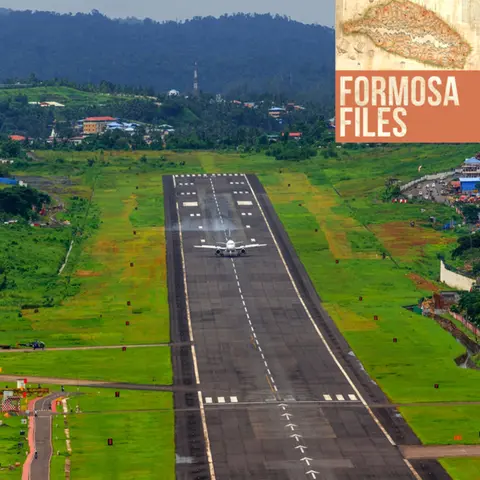
Opened by the Japanese in 1936, Taipei's Songshan Airport has witnessed wartime bombing raids (by aircraft piloted by both Soviet and American pilots), Cold War diplomacy, and tearful family farewells. During the Cold War, it welcomed some of America's most powerful political figures; President Eisenhower landed here to a spectacular welcome in 1960. For decades, Songshan was Taiwan's main international gateway, until the opening of Chiang Kai-shek International Airport (now Taoyuan Internationa...
31
Oct. 14, 2026
Lin Yutang: The Importance of Living – and Coming Home to Taiwan – S6-E31
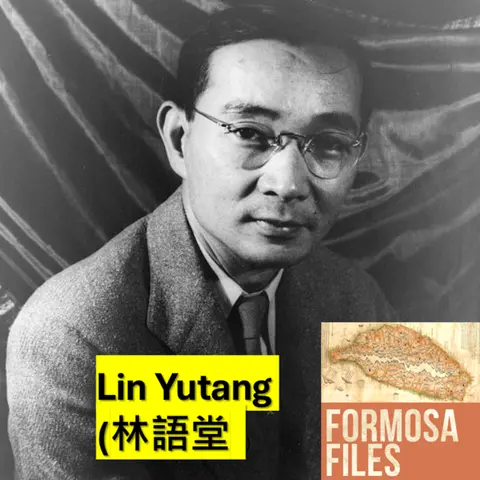
Writer, philosopher, linguist, inventor – Lin Yutang (林語堂) was one of the most famous Chinese intellectuals of the twentieth century, and for decades one of the people most responsible for explaining Chinese culture to English-speaking readers. His My Country and My People introduced millions of Western readers to China, while The Importance of Living preached the virtues of leisure, humor and occasionally doing absolutely nothing. After three decades abroad, the Fujian-born Lin came to Taiwan in 1966. In his final years, living in his beautiful Yangmingshan home overlooking Taipei, he wrote about the small pleasures that made his years in Taiwan among the happiest of his life.

June 27, 2026
The Fake Fishmonger – Snack 08
In the early hours of morning, Eryk and John head to a market in Taichung. Actually, they let Lin Kai-lun do that and all the other hard work. Lin is a third-generation fish seller, whose Chinese-language memoir A Guide to Fake Fishmongering tells a story of family debt, backbreaking labor, and the culture of Taiwan’s wet markets. It’s a moving story (the family brought low by gambling) and funny too (there’s some questionable medical advice). So, gather around the “urine tree” for a work-time break and fish-scented chat.

15
June 17, 2026
The Dragon Boat Festival Story: Qu Yuan, Myth, and History – S6-E15
Looking for the true story behind the Dragon Boat Festival (Duanwu Jie)? There’s much more to it than dragon boat races and sticky rice dumplings (zongzi). Many know the standard origin story of the patriotic poet Qu Yuan, but Formosa Files uncovers the less-tidy roots of the holiday. The Dragon Boat Festival date falls on the fifth day of the fifth lunar month; once feared as the dangerous "Month of a Hundred Poisons." Discover how people responded with temple rituals, protective herbs, and even arsenic-laced wine. John Ross and Eryk Michael Smith also chat about what marks the arrival of summer in modern Taiwan, from peak mango season to the blooming of the yellow golden shower and red flame trees right around when schools celebrate graduations. Plus, Eryk shares ancient wisdom from Ben-Hur ("Row well, and live" – 1959) as he recounts his own dragon boat racing glory.

14
June 10, 2026
Football in Taiwan: From Missionaries to Mulan – S6-E14
As we head into the 2026 World Cup, we take a look at Taiwan’s surprisingly rich football heritage. Although a minor sport today, there have been periods of intense popularity and success. The soccer story starts more than a century ago with British Presbyterian missionary Edward Band, who introduced the sport to students in Tainan. We follow the growth of football during the Japanese colonial era, the White Terror crackdown, and then the unusual “Hong Kong Legs” era when the ROC national team used “football mercenaries.” The country’s greatest international success, however, came with the Mulan women’s football team.

June 6, 2026
The Great Formosa Tsunami Mystery – Snack 06
The disaster was so terrible, so deadly that shocking reports of it reached as far away as Europe; they claimed that in 1782, Taiwan had been devastated by a colossal tsunami. Some accounts said the island had almost disappeared beneath the sea and that 40,000 people had died. Yet strangely, Chinese records seemed to say almost nothing about it. In this snack episode, Eryk and John put on their white coats and get scientific; or, in other words, they use some recent groundbreaking academic papers to explain one of the greatest mysteries in Taiwan’s history. Was there really a massive tsunami on Taiwan’s southwest coast in the 1780s? Listen and learn.
13
June 4, 2026
Should Taiwan Change its Time Zone? A Chat With Sasha B. Chhabra – S6-E13
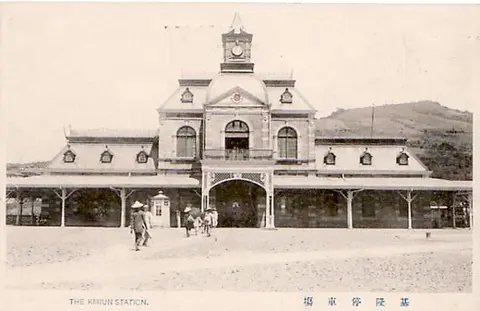
Who owns Taiwan’s time? Taipei-based political commentator and author of Formosa Review substack Sasha B. Chhabra helps us wind back the history of Taiwan’s clocks, from local rhythms before what we now call “standard time,” to Japanese colonial rule, wartime Tokyo time, and ROC “Central Plains Time.” Then we move forward to more recent debates over sovereignty and identity. “What time is it?” seems like a simple question, but this episode delightfully complicates it with stories of daylight, empire, modernization, authoritarianism, and Taiwan’s right to define its own place in the world.
12
May 28, 2026
A German in Dutch Formosa: Caspar Schmalkalden – S6-E12
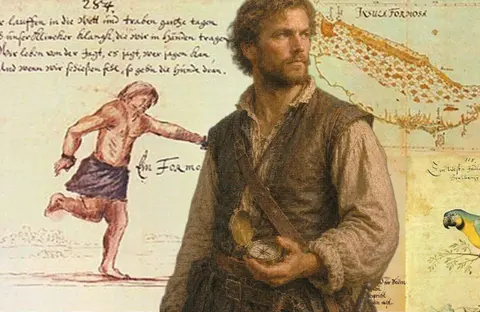
In the mid-1600s, Caspar Schmalkalden left war-ravaged Europe to work as a soldier and surveyor for the Dutch. After spending time in Brazil, he sailed to Batavia and finally to Formosa, where he lived among Dutch colonists, Chinese settlers, and Indigenous communities for several years. Back home in Germany, Schmalkalden wrote a richly illustrated account of his travels. It remained unpublished for more than 300 years and has still never appeared in a complete English translation. For the first time, we tell the story of this observant German traveler and the seventeenth-century Taiwan he encountered: a land of colorful feasts, deer hunts, strange tropical illnesses, herds of wild horses, and a mysterious creature he called the “Tayouan Devil.”

May 25, 2026
Taekwondo in Taiwan: From the Marines to Olympic Gold – Snack 05
Taekwondo may be Korean, but few places have embraced it as enthusiastically as Taiwan. Introduced in the 1960s for the military, the fast-kicking martial art quickly spread to the wider community. Before long, Taiwan had become one of the world’s taekwondo powers; it even sent trainers to the Middle East to teach the Jordanian royal guard. But peak global glory for the island’s taekwondo fighters came at the Athens Olympics in 2004, when Taiwan won its very first Olympic gold medals.
10
May 13, 2026
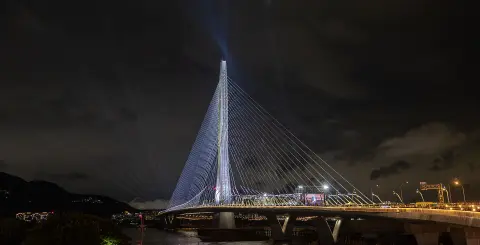
Bridges of Taiwan – S6-E10
John Ross and special guest John Groot celebrate the opening of the remarkable Danjiang Bridge in Tamsui (Danshui). They explore the bridges that transformed Taiwan: the Xiluo Bridge over the mighty Zhuoshui River, once the longest bridge in Asia, and the Taipei Bridge that helped fuel Taiwan’s economic miracle. That bridge is best known for its “Scooter Waterfall,” the tightly packed stream of scooters that pours down the Taipei-side off-ramp during morning rush hour. We follow the Taipei Bridge to the other side, the gritty, industrial district of Sanchong. John Groot shares stories from his many walks, including some hair-raising bridge crossings during his circumnavigation of Taiwan’s coastline. He also outlines his ambitious new walking project and related website, TaiwanCentric.com (formerly the Culture Shack and scheduled to relaunch on May 22)

May 9, 2026
Chen Shu-chu: Taiwan’s Vegetable Vendor Philanthropist – Snack 04
In this Mother’s Day edition, we celebrate the extraordinary life of Chen Shu-chu (陳樹菊), a humble vegetable seller from Taitung who quietly donated millions of NT dollars to schools, charities, and orphaned children – while continuing to live a modest life behind a market stall. Born in 1950 into poverty, Chen Shu-chu was forced to leave school at just thirteen after her mother died in childbirth. For half a century she worked at the stall and saved her earnings, giving them to the needy. Chen’s lifetime of extraordinary generosity eventually brought her international fame. In 2010 she appeared in Time magazine’s list of the world’s most influential people. This is an uplifting story of how a seemingly ordinary market vendor became one of Taiwan’s most admired figures.
9
May 6, 2026
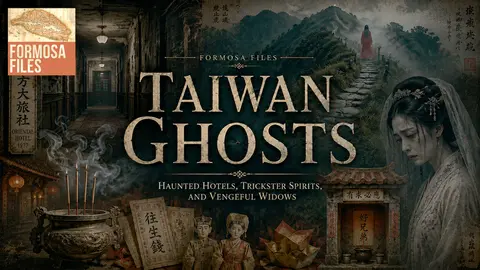
Taiwan Ghosts: Haunted Hotels, Trickster Spirits, and Vengeful Widows – S6-E9
Ghosts of all kinds – wandering spirits, water ghosts looking for substitutes, mountain demons, and many more; welcome to the strange supernatural world of Taiwan. Eryk and John, fortified with protective amulets and holy mantras, bravely step into the murky shadowlands of Taiwanese ghost lore and modern supernatural encounters. For this episode, they draw heavily on anthropologist Lin Mei-rong’s collection of more than 150 ghost stories from across Taiwan. You’ve probably heard of water ghosts. But have you heard of the mysterious “Little Girl in Red” who lures hikers deep into the mountains? Or paper funeral dolls that come alive? How about “Yin” temples dedicated not to gods, but to wandering spirits? Lock your doors and windows, light some incense, and prepare to be spooked (and amused).

March 28, 2026
Wasabi – Green Fire from the Mountains – Snack 03
That little green blob of spicy paste beside your sushi and sashimi has an amazing backstory. The notoriously fussy plant is grown in the mountains of Taiwan (special shoutout to Chiayi County). It arrived in Alishan with the Japanese colonists and their forest railway and flourished in the cool mountain air. After disappearing for a time, it has recently made a comeback. Listen to learn the history of wasabi and find out whether you’ve been eating the real deal or a fake sauce.
3
March 26, 2026
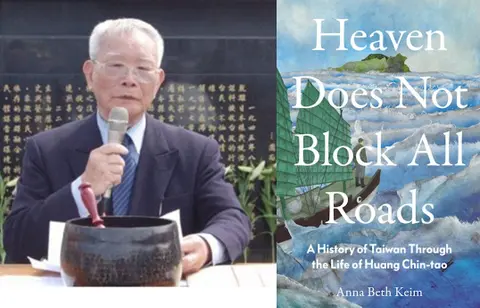
The Extraordinary Life of Huang Chin-tao (Part 2) – S6-E3
Huang Chin-tao (黃金島) was never a household name, but his life story is the story of modern Taiwan. In this concluding episode, we follow Huang from the 2.28 uprising in 1947 as he joins a resistance group led by a rare combination: a Taiwanese woman communist guerrilla commander, Xie Xuehong, whom we've dubbed Agent "Red Snow." After fighting bravely but losing the Battle of Wuniulan Bridge in Nantou, Huang becomes a fugitive and then spends more than two decades in Taiwan’s prisons. There is, however, finally some happiness: a few years after being released, he found love and became a political activist in what would become Taiwan's first real opposition party. For this tale of resistance, survival, and a regular man’s refusal to be broken by history, we drew on Anna Beth Keim’s excellent biography "Heaven Does Not Block All Roads."
2
March 18, 2026
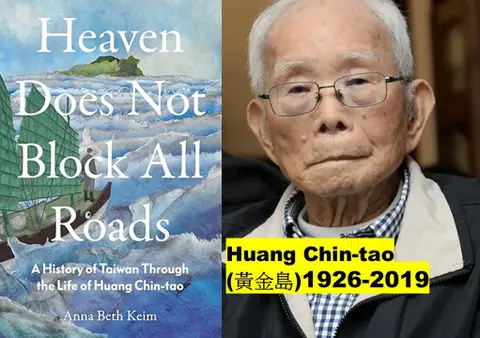
Huang Chin-tao: a History of Taiwan Through One Man’s Life (Part 1) – S6-E2
This is part one of the extraordinary life story of Huang Chin-tao (黃金島 Huáng Jīndǎo). In fact, he seemed to live not one life but many; he was a Japanese naval recruit, a combat soldier, a survivor of typhoons and pirates, an armed rebel during the 2-28 Incident of 1947, a man on the run, a prisoner, and a politician. His lifetime, 1926 to 2019, also gives us the background story of Taiwan’s turbulent 20th century. Although the turns and twists of history were often brutal for Huang, he was unbreakable, a man who refused to let fate decide his path. In the words of the title of Anna Beth Keim’s excellent biography: Heaven Does Not Block All Roads.

March 14, 2026
Chopsticks – The “Quick Little Boys” of East Asia – Snack 02
What do Taiwan, China, Japan, Korea, and Vietnam have in common? Chopsticks. In the second Formosa Files Snack, Eryk and John explore the cultural story behind one of East Asia’s most iconic everyday objects. Why did chopsticks replace spoons in China? What role did noodles, rice, and Confucian philosophy play in their adoption? And how did superstitious Ming-dynasty boatmen turn the ancient word for chopsticks into “kuàizi” (literally “quick little boys”)? The origins of the English word “chopsticks” are pretty interesting too. Enjoy this quick, fun cultural and historical detour through the Greater Asian Chopsticks Sphere.
1
March 11, 2026
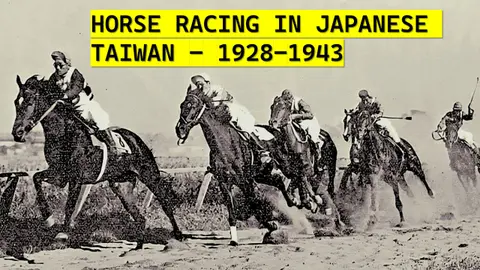
Taiwan’s Forgotten Horse History: Cowboys, Cavalry, and the Racing Craze – S6-E1
Horses have never played a big role in Taiwan’s history – or have they? Eryk and John start Season Six of Formosa Files and celebrate the Year of the Fire Horse by uncovering a series of surprising equine stories. We have prehistoric horses, Dutch cavalry, and Indigenous riders hunting wild cattle in the 1700s. And this will be a revelation to most; horse racing was hugely popular across the island during the later years of the Japanese colonial period. In the 1930s, tens of thousands flocked to the tracks, fortunes were wagered, and the Japanese colonial government even linked betting to imperial patriotism.

March 4, 2026
The Taiwan "Tugou," or Mountain Dog – Snack 01
Their lineage is ancient. They are loyal, smart, and great hunting companions. But Taiwan’s native dog almost went extinct, and today it’s hard to say how many “pure breeds” are left, if any. These medium-sized dogs, with pointy ears and a love for running, were not long ago the underdogs. But they’ve made a remarkable comeback and are finally getting their day -- a story worth sinking your teeth into. Enjoy Formosa Files’ very first “snack episode.” Next week… Season Six begins.
March 4, 2026
Rambling Review of Season Five, and Introducing the Formosa Files "Snack"
Looking back over S5, the adjective "fascinating" is repeatedly used by both John and Eryk, who struggle for words a bit to describe their gratitude to listeners, our sponsor, and for the honor of having a platform to tell stories and hear stories from some amazing guests. Formosa Files Season Six starts next week, but after this conversation, check out the first FF "snack" -- short, single-topic, not-exactly-deep-dive but still rewarding bits of podcast brain food.
50
Feb. 18, 2026
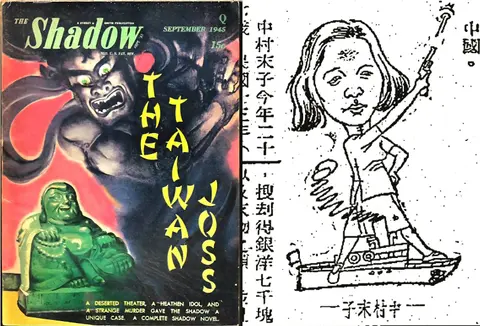
New Year Special – The Taiwan Joss: The Shadow and the Pirates – S5-E50
新年快樂 (Xīnnián kuàilè) from Formosa Files! As we head into the Year of the Horse, we have something different: pirates in the Taiwan Strait, both factual and fictional. We look at a Japanese woman who became a notorious pirate leader in the 1930s. And we follow the Shadow, a mysterious crime-fighter whose 1945 novel The Taiwan Joss centers around a jewel-studded statue of Koxinga (the Ming loyalist who defeated the Dutch in Tainan in the 1660s). Speaking of fiction, Plum Rain Press – our publishing side-venture – released three new titles last year: China Running Dog, The Cuttlefish, and The Wondrous Elixir of the Two Chinese Lovers. Readers thirsting for a historical novel set in Taiwan should get our debut release, A Tale of Three Tribes in Dutch Formosa. Other Formosa Files spin-offs which might be of interest are: the Chinese-language version of Formosa Files which American Eryk does with Taiwanese Eric. John is involved with two other podcasts: Bookish Asia with Plum Rain Pr…
49
Feb. 11, 2026
Wanderings Through Formosa (1898) – Part 3 – S5-E49
In the final episode, the pace picks up as we follow Austrian traveler Adolf Fischer on his 1898 journey through Japanese-ruled Taiwan. He heads into the dangerous hill country of central Taiwan and later gives us some memorably morose lines about gray, cholera-scarred Penghu. Fischer treks from Takao (Kaohsiung) across the southern mountains to the East Coast. Along the way, he has encounters with the Paiwan indigenous people involving fermented maize liquor and canned meat diplomacy, and yodeling. Eryk and John enjoy his often spicy opinions, sometimes agreeing (his observations on Buddhist missionaries) and at other times shaking their heads (he was so very wrong about Kaohsiung). We wrap up by looking at Fischer’s ultimate verdict on Japan’s colonial experiment, and what happened to him and to his remarkable museum legacy in Germany.
48
Feb. 7, 2026
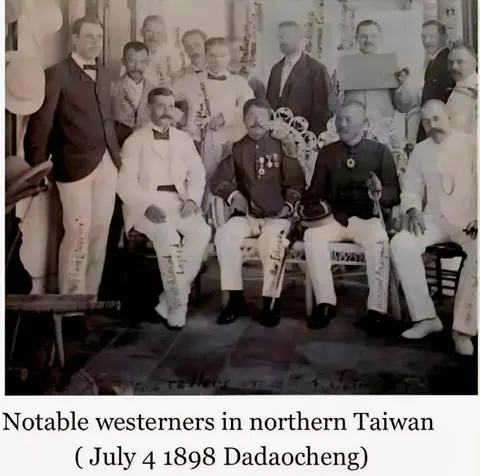
Wanderings Through Formosa (1898) – Part 2 – S5-E48
In Part 2, we continue in the footsteps of the cultured Austrian traveler Adolf Fischer on his 1898 journey in Japanese-ruled Taiwan. From the commercial enclave of Tōa-tiū-tiâⁿ (Dadaocheng), we cruise downriver to Tamsui (Danshui), meet the famed missionary George Mackay, hear warnings about rebels in the nearby hills, and solve a crocodile mystery. After overcoming Japanese suspicions that he might be a spy for the German Kaiser, Fischer heads south to Shinchiku (Hsinchu). Drawing on his 1900 book, “Wanderings Through Formosa,” we get sharp, sometimes surprising observations about the early years of Japanese rule. (The book was specially translated from into English for Formosa Files, and we enjoyed it so much that we had to make it a three-parter).
46
Feb. 4, 2026
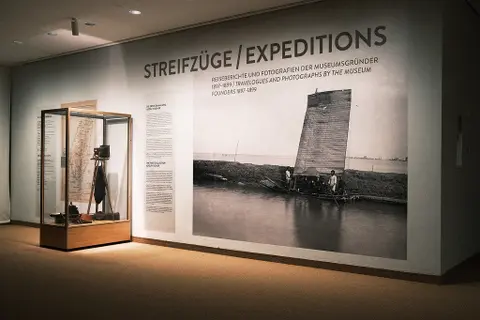
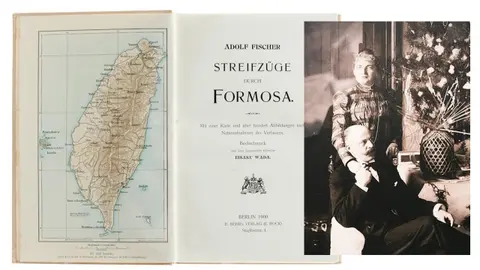
German Wanderings Through Formosa (1898) – Part 1 – S5-E47
The first in a special three-part series, this is a Taiwan travel account never before told in English. Formosa Files has had Streifzüge durch Formosa (1900) translated into English. This travelogue, Wanderings Through Formosa, describes a journey through Japanese-ruled Taiwan in the spring of 1898 by Adolf Fischer, a cultured, sharp-tongued Austrian traveler. It offers a vivid outsider’s view of the island less than three years after Japan took control. What he found here was quite different from the standard glossy images we usually associate with the Japanese colonial period. And we throw in a bonus mystery (plus solution) about the vanishing German consulate in Dadaocheng.

46
Jan. 28, 2026
Taiwan’s Motorcycle Daredevil: Lu Ch’ing-an (呂慶安) – S5-E46
From “Muddy Ditch” in Chiayi County, Lu Ch’ing-an (1944–2011) rose to national fame as Taiwan’s Father of Motorcycle Stunts. The story starts with an apprenticeship at a local scooter repair shop, where the mechanically gifted boy fell in love with motorbikes. Still a teenager, he was inspired by the ROC Air Force’s Thunder Tigers aerobatics team to start flying on two wheels. Over the next few decades, he would amaze audiences and break records. His biggest triumph came in 1983, when he jumped over 14 large buses, surpassing the mark held by Evel Knievel. Lu also undertook some punishing endurance rides, including the first motorcycle circumnavigation of Taiwan in under 24 hours. Behind the accolades and headlines, however, was the heavy physical and personal toll of crashes.