
Taiwan Ghosts: Haunted Hotels, Trickster Spirits, and Vengeful Widows – S6-E9
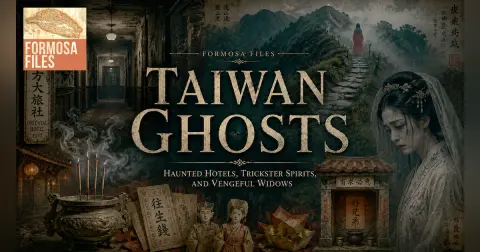
Ghosts of all kinds – wandering spirits, water ghosts looking for substitutes, mountain demons, and many more; welcome to the strange supernatural world of Taiwan. Eryk and John, fortified with protective amulets and holy mantras, bravely step into the murky shadowlands of Taiwanese ghost lore and modern supernatural encounters. For this episode, they draw heavily on anthropologist Lin Mei-rong’s collection of more than 150 ghost stories from across Taiwan. You’ve probably heard of water ghosts. But have you heard of the mysterious “Little Girl in Red” who lures hikers deep into the mountains? Or paper funeral dolls that come alive? How about “Yin” temples dedicated not to gods, but to wandering spirits? Lock your doors and windows, light some incense, and prepare to be spooked (and amused).

 Apple Podcasts
 Spotify
 RSS Feed
 RadioPublic
 PocketCasts
 Cover AI-generated illustrative art.
Watch the video of Eric Hsu and Eryk Michael Smith at a "shadow god" temple -- the time Eryk took his daughter during ghost month.
Show Notes for Taiwan Ghosts
Our main source for today was a 2017 Chinese-language book《台灣鬼仔古》(in English, Taiwan Ghost Tales / Taiwan Ghosts) by anthropologist Lin Mei-rong (林美容). Picture of the author via Academia Sinica.
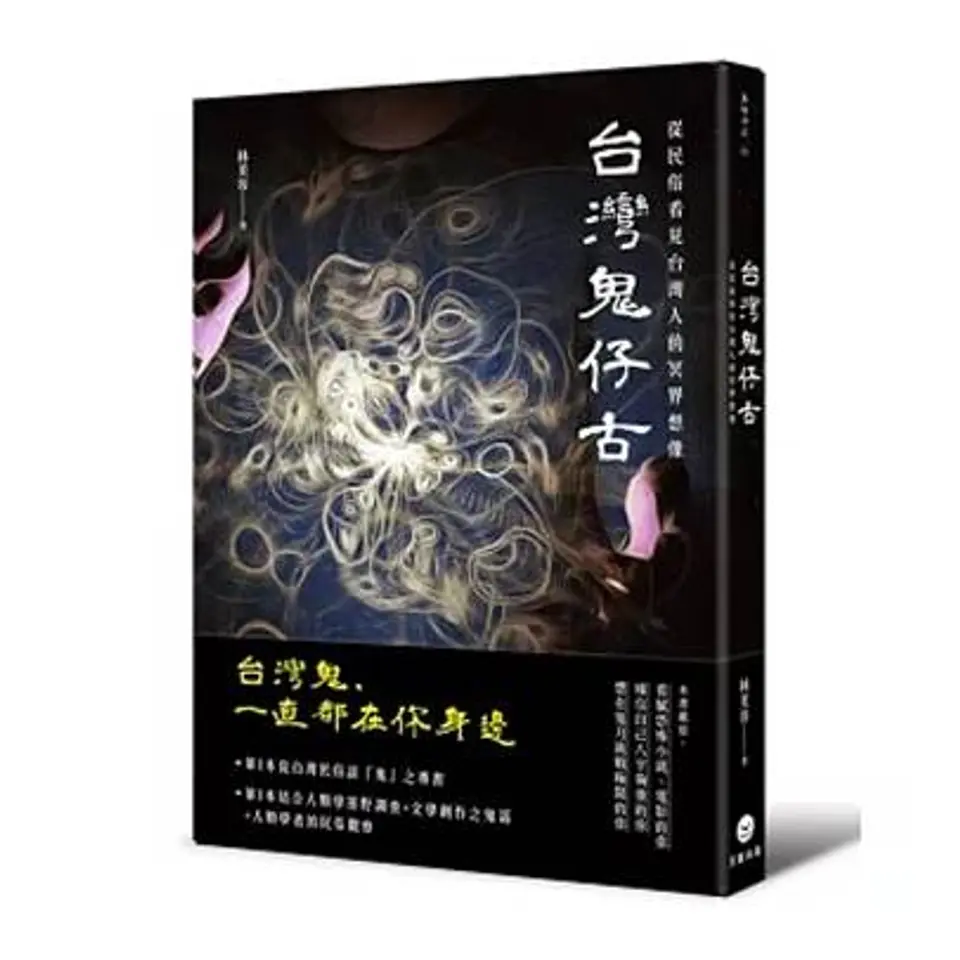

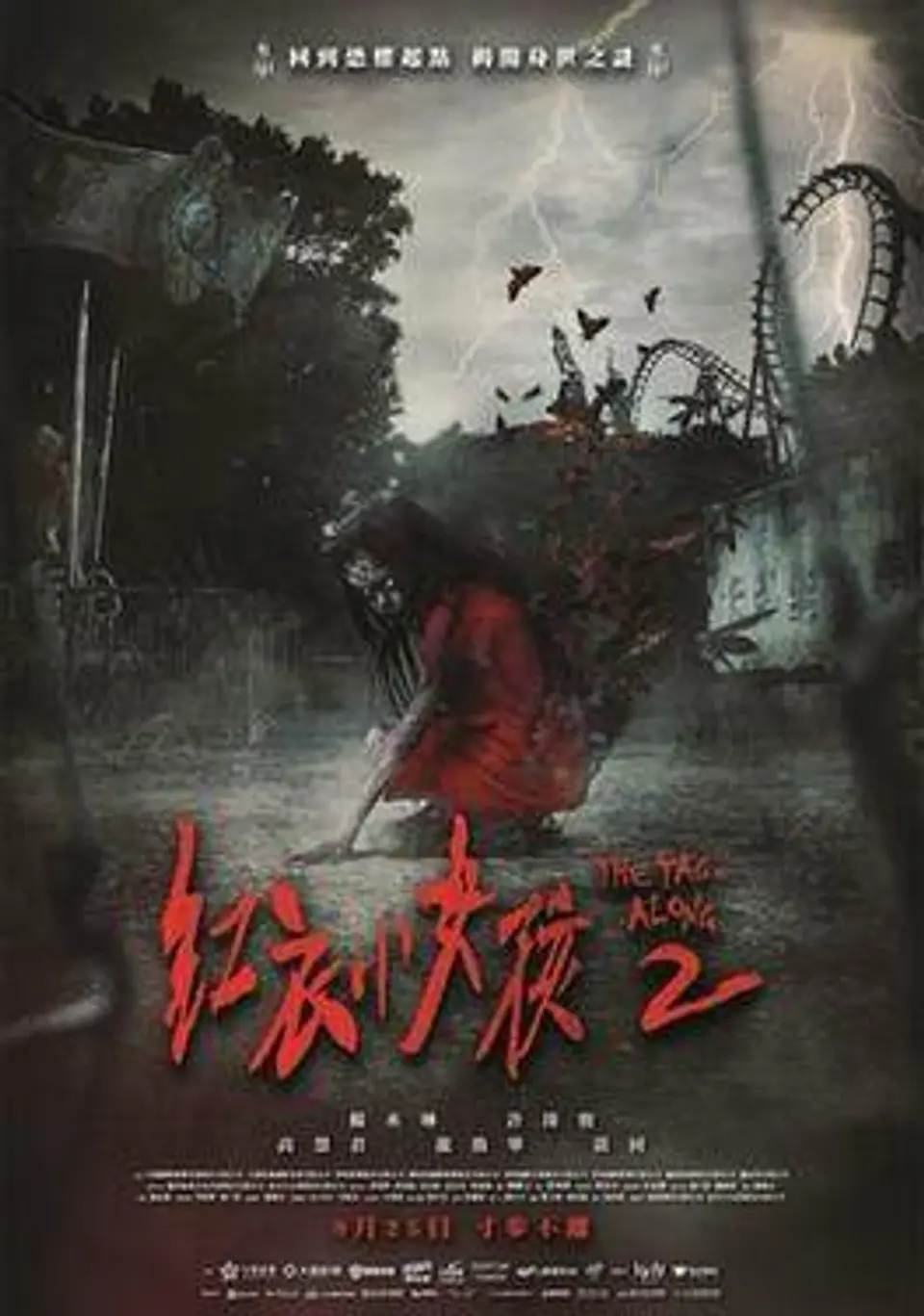
As we note in the episode, she originally set out to research “mountain spirits” known as 魔神仔 (mó shén zǎi / but more commonly as the Taiwanese: môo-sîn-á), which are not actually ghosts in the sense of them being deceased humans. One of these forest or mountain spirits features in an urban legend “The Little Girl in Red,” which we discuss. We also mention the 2015 film of it: The Tag-Along. This movie kicked off something of a mini-boom in horror films based on Taiwanese folklore, including a sequel to The Tag-Along, imaginatively called The Tag-Along 2 . Below: Theatrical release posters for both movies (via Wiki).

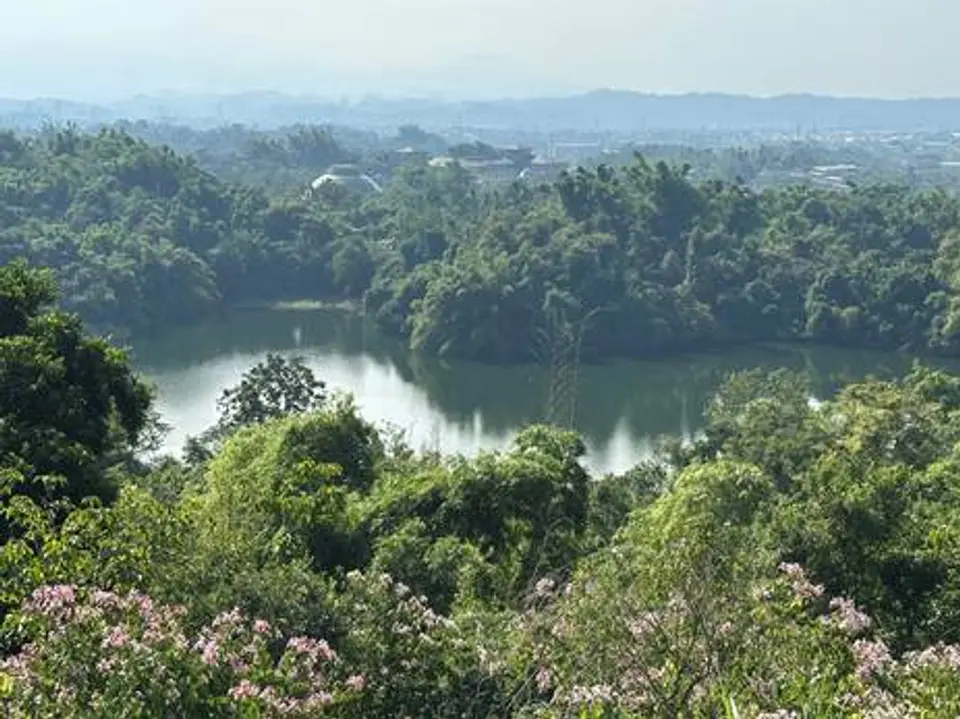
One of our ghost stories takes place in Chiayi, so, by popular demand, (well, John insisted) we give you a picture of the location. Below: Lantan Lake on the eastern outskirts of Chiayi City. (John took the picture). (No, that round object in the tree is not a flying saucer or a flying wok, but a botanical glasshouse at a university. Or so he claims.)
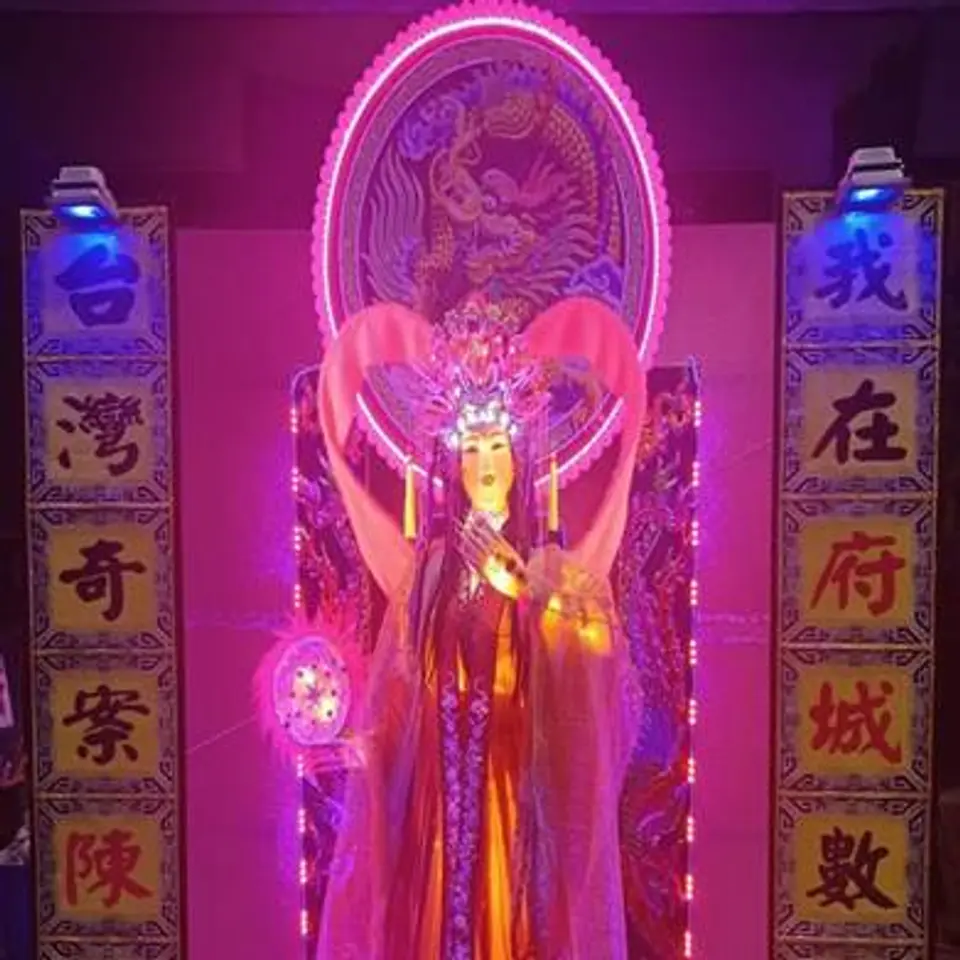
We talked about Chen Shouniang (陳守娘), a real woman from 1800s Tainan, whose spirit allegedly haunted the city after her murder. She’s still remembered (and worshipped) today and she featured in the 2024 Taiwan Lantern Festival, which was held in Tainan. Below: The illuminated lantern display of Chen Shouniang. (Courtesy: Facebook,台灣奇案:陳守娘 photo, via Taiwan News.)
If you enjoy ghost tales, you should check out some past episodes, including S4-E5 - Ghost Brides and S2-E27 - Ghost Planes and the Japanese Fighter Pilot who Became a God.
Do us a favor and rate/review the show! It really helps. Do it on Apple Podcasts or here on our website.
Write us with questions or ideas at formosafiles@gmail.com
AND THE BIGGEST REQUEST: tell others about this free, not-for-profit resource about Taiwan.
Unknown Speaker (0:03): Welcome to From Ozophiles. Today we're exploring the eerie and culturally rich world of Taiwanese ghosts. Yes, ghosts.
Eric (0:12): We're going ghost hunting. But no worries, Eric. I've got all the special protection we need. Amulets, garlic, holy cross. And I've been practicing my chanting.
Eric (0:24): Okay.
Unknown Speaker (0:28): That's quite a variety of protection and inspiration. Wait, garlic and a cross?
Eric (0:35): Hey, you need a wide ranging toolkit for the diversity of supernatural forces here in Taiwan. We've got water ghosts and there are the less well known fire ghosts. There are the wandering lonely souls, you know, the good brothers. And we have headless ghosts, ghost brides, cat ghosts, mountain demons, and don't forget the vengeful female ghost.
Unknown Speaker (1:01): Oh, yeah. Never forget vengeful female ghosts. What protection do you have for fending them off? Nothing. No.
Eric (1:10): No. Yeah. Listeners listeners can stay tuned and and find out what to do.
Unknown Speaker (1:15): The Taiwan history podcast, Formosa Files, is made possible through the generous sponsorship of the Frank C. Chen Foundation. Formosa Files.
Unknown Speaker (1:27): Okay. For today's journey into this shadowy world of spirits, thankfully, we're not relying on our own expertise. We're mainly drawing from the research of anthropologist Lin Mei Rong in her recent book.
Eric (1:40): Yes. It's a Chinese language book, but the English title would be something like Taiwan ghosts, folklore, and encounters. It was the result of many years spent collecting more than a 150 oral accounts of the supernatural throughout Taiwan, and it's a fascinating collection of cases and mostly not sensationalized at all.
Unknown Speaker (2:02): Yeah. Interestingly, miss Lin didn't actually set out to study your classic ghost. She was originally researching which are mountain spirits or forest ghosts.
Eric (2:15): Yeah. Impossible to translate into English, could be nature spirits, demons, forest goblins. In Mandarin, in Taiwanese, and these are not deceased humans, which are called ghosts. And in particular, the ones we have in the scary stories are the solitary, lonely, wandering spirits kind of ghost.
Unknown Speaker (2:42): Yeah. So this is more like nature spirits. Sort of reminds me of Shintoism or something. But in this case, they can take human form. Well Mhmm.
Unknown Speaker (2:52): Kind of. They're often described as small childlike beings with old faces, so, you know, that's creepy. They're known for luring children or hikers into the mountains and then confusing their minds. People end up walking in circles and unable to find the way out.
Eric (3:09): Yeah. And this applies to driving on lonely roads too. You might not actually see any ghost or demon. It's just a feeling.
Unknown Speaker (3:18): And these Mo Shanzai are not always malicious. Unlike evil ghosts, they are often described as playful, trickster like, or as long as curious observers.
Eric (3:30): Well, it's all fun and games, isn't it? Until somebody gets hurt because their tricks can still lead to danger and harm, you know, accidents where the driver being distracted by the ghostly figure of a woman at the side of the road, or hikers getting lost and dying of hypothermia.
Unknown Speaker (3:46): So John, did you know anything about them before doing research for this episode?
Eric (3:51): Only vaguely. About a decade back, there was a popular horror film, something like the little girl in red. I didn't watch it, but some of my students did and they told me about it. And I recall them struggling to explain that the girl in red was not exactly a ghost.
Unknown Speaker (4:10): Yeah. Yeah. In Chinese, but the official English title is the tag along. Taiwanese film came out in 2015. It was directed by Zheng Wei Hao.
Unknown Speaker (4:23): It was a hit, so much so that it kind of sparked a revival of local folklore horror, especially urban legend kind of horror stories.
Unknown Speaker (4:33): Have you seen it?
Unknown Speaker (4:35): No. I don't like horror films. I don't like being scared. I don't get the point. Like, you know, many people enjoy that, but I'm like, I don't wanna be terrified.
Unknown Speaker (4:44): Thank you. I watch the news.
Eric (4:47): Of course. Yes. So this little girl in red film was adapted from a well known Taiwanese urban legend of the same name. It's based on a true story. Well, in a very loose sense.
Unknown Speaker (5:02): Isn't it wonderful how at the beginning of a film based on a true story, you could do anything, you know, because Yeah. Anyway, the origin story is set in the late nineteen nineties. This hiking group is in the mountains, and they're filming. It's like a home video. So kind of a little Blair Witch Project vibe going on there.
Unknown Speaker (5:19): Later, when reviewing the footage, they noticed a small girl in a red coat following them silently, and they ask each other, did you did you see that girl? No. Did you? No. No one remembers seeing her at the time.
Unknown Speaker (5:32): And people die? I don't know. Neither of us have seen a movie.
Unknown Speaker (5:35): Let's just assume. Yeah. It's a it's a safe assumption based on real life.
Eric (5:41): Okay. So the lonely mountains and dark forests are perhaps natural places to feel spooked. Mhmm. But some common locations for ghostly encounters are everyday places, military bases, hospitals. That's kind of understandable.
Eric (5:58): Right? You have people dying And schools.
Unknown Speaker (6:02): Yeah. There's quite a few ghost stories connected to schools. Not sure why. Maybe for kids, it's hell on earth, or maybe they're just doing this to relieve boredom.
Eric (6:14): Yep. In terms of stories set on military camps and schools, I've heard an explanation that they were built on cheap land that formerly served as cemeteries or even execution grounds. And you know what? If you look at old maps of Taiwan, it's amazing how much land on the outskirts of towns and cities was previously used for graves, and that applies to where I'm living here. I I saw a map, and my goodness, the area all around me was once graveyards.
Eric (6:45): Today, people are not buried like that. They're put in those ash and bone towers, the columbariums. Yeah.
Unknown Speaker (6:53): I always like it when somebody says, oh, this place is spooky. Someone died in this house. Like, realize that someone died probably on every inch of the earth's surface at some point and maybe maybe some places they're not, but.
Eric (7:09): Okay. I'll remind myself not to take you to a campfire ghost telling session. A lot of fun you are. Okay.
Unknown Speaker (7:17): Yeah. My other ideas for ghost month, I wanna do everything that they say you shouldn't do, like in a documentary thing
Unknown Speaker (7:24): Okay.
Unknown Speaker (7:25): And then test it out. But I'm afraid I would be offensive. Anyway, it's time to. Last time. We have the case of the diligent student in the night school.
Unknown Speaker (7:34): This account comes from a teacher who had just started a position in the night school department of a university. Every night when he entered the classroom, he noticed a specific student sitting completely alone in the back row.
Eric (7:46): A hot young woman with long shiny black hair, white skin, and
Unknown Speaker (7:52): John, I know how gender fluid you are and how hip you are with the whole, you know, LGBTQI plus No. Minus subtract. But the this is a he. Oh. He has a very pale complexion, but in an unhealthy way as if he were malnourished.
Unknown Speaker (8:10): Rather average in appearance, medium height, thin, eyes singularly bright and piercing. So throughout every lecture, the story goes, the student would watch the teacher with intense focus, never talking to peers or slacking off. Even during breaks, he would remain in his seat quietly organizing his notes or reading. I mean, this would creep me out already. I was a teacher, I would
Unknown Speaker (8:31): have walked over. Right? Yeah.
Unknown Speaker (8:33): I would have walked over and been like, dude, are you on drugs, or what's going on,
Unknown Speaker (8:37): man? Suspicious.
Unknown Speaker (8:39): Mhmm. So the truth is revealed during the final exam. The teacher counted the students and handed out the exact number of exam papers required. When the papers reached the row in front of the diligent student, a female student stands up and walks to the front of the room with an extra paper. The teacher says, there's still one more person behind you.
Unknown Speaker (8:57): She looks back in total confusion. What What are you talking about? There's no one here. No one has sat in that seat behind me the entire semester.
Eric (9:04): Wow. Hard to believe there wouldn't have been some interaction though before this exam. But then again, it's not impossible in Taiwanese schools, is it?
Unknown Speaker (9:13): It's not impossible, but it's just yeah. It doesn't grip me at all, at least.
Eric (9:18): No. Hey, that means it's probably true, Eric. You wouldn't design a story like this, would you?
Unknown Speaker (9:25): I see. That's the logic we're going with. Alright.
Eric (9:28): Anyway, military life in Taiwan is also a major source of ghost stories. Soldiers might report hearing the sound of ghostly troops marching in unison, and lonely sentries might see ghosts as they stand guard at a gate. Or you might even find a ghost sitting on the edge of your bunk at night.
Unknown Speaker (9:49): Yeah. There's a famous legend about a rice dumpling vendor near a remote military outpost. So, right, the thing where you eat for Mhmm. Or Dragon Boat Festival, sticky rice. Yep.
Unknown Speaker (10:01): Centuries would sometimes see an old woman selling the snacks at midnight, but those who bought them found that the leaves were actually filled with mud and worms and and money notes, bills that they got back and changed, turned into joss paper, spirit money by morning.
Eric (10:18): The book goes into detail about the different types of spirit money used in Taiwan. Silver paper is specifically for ancestors and ghosts, while while gold paper is for the gods. There are also paper pieces printed with images of combs, mirrors, and clothes to provide for the needs of the spirits.
Unknown Speaker (10:37): And speaking of paper, there's an interesting account of paper coming to life. It's the case of the strangling table maid. This chilling account was provided by grandma Yang, a woman in her sixties from Hualien. It involves a specific type of funeral object known as a table maid. Paper mache dolls representing male and female servants, also called golden boy and jade maiden.
Unknown Speaker (11:04): They're placed next to a deceased person's spirit table to serve them in the afterlife. So on the second night, after her father-in-law passed away, the family's exhausted from the funeral preparations. Around 10PM, grandma Yang took a nap on a chair in the inner hall just behind the main spirit altar. In a state of half sleep, she suddenly felt the sensation of someone strangling her neck, making it almost impossible to breathe. When she forced her eyes open, she was horrified to see that the entity pinning her down was the table made paper doll from her father in law's spirit table.
Unknown Speaker (11:36): She struggled desperately and eventually managed to pry the paper hands from her throat, at which point she fully woke up.
Eric (11:43): Her daughter who had been sitting nearby watching television told her she thought her mother was simply talking in her sleep and hadn't wanted to wake her. The next day, grandma Young consulted a funeral professional who explained that she had forgotten to offer a bowl of rice to the paper servants. The doll had come to life to ask for food.
Unknown Speaker (12:05): Yeah. I mean, you gotta remember to give a bowl of rice to the paper man. Pretty rude way of asking, but, you know, grandma Young provided the offering and the spirit doll never bother her again, the story goes.
Eric (12:19): Yeah. Just a note of clarification, the spirit in the table made doll was not from the deceased person, but you know, rather it's a separate spirit, one of these spirits which doesn't have a home. Right? It doesn't have someone looking after it. It's wandering, and it's attached itself to this ritual object.
Unknown Speaker (12:40): Right. They're called like shadow spirits. Right? Ying. Ying
Unknown Speaker (12:43): ling. Ying. Yes.
Unknown Speaker (12:45): That case is pretty cool, but some of these modern ones are a bit feeble. Like driving on a country road at night and getting lost, seeing an old woman by the side of the road and crashing because of the distraction. Mhmm. So it could have been a deer. It could have been your imagination.
Unknown Speaker (13:02): You're tired. You should have or what's another one? A ghost pressing down on someone's chest while they're in bed.
Eric (13:09): Yeah. That's happened to me. It's a natural thing called sleep paralysis. But, yeah, your point, I take it very good. Some of these modern day ghosts just aren't up to much.
Unknown Speaker (13:19): Okay. So we need to go back in time. Two hundred years ago. In Taiwan, the Qing era capital of Taiwan is Tainan. This is a story of an actual woman.
Unknown Speaker (13:30): Her name was Chen Shou Niang.
Eric (13:34): Yeah. She was a young widow. Her husband had died not long after they were married, and like many women in that period, she made a vow to remain chaste for the rest of her life. This was kind of expected, the proper Confucian way for a lady to behave. You keep yourself pure and you might get a memorial gate built in your honor to honor your chastity.
Unknown Speaker (13:57): She was determined to remain virtuous, but she happened to be really beautiful, so she attracted the lustful gaze of some admiring men.
Eric (14:05): At some point, a local government official took an interest in her. He wants her. And instead of approaching her directly, which I guess he figures will fail, he goes through her in laws. He bribes her mother-in-law and her sister-in-law.
Unknown Speaker (14:22): They try to force this widowed Chen into a relationship with this official, but she refuses, and no means no. The in laws, however, can't accept that. She's beaten and abused and dies.
Eric (14:34): And then comes another crime. There's a cover up. The family claim she committed suicide out of shame because there'd been some kind of immoral relationship, and then she couldn't live with the consequences.
Unknown Speaker (14:47): But this falsehood doesn't hold up. At her funeral, her younger brother notices the injuries on her body, and that sets off an investigation.
Eric (14:56): Yeah. Like most of these stories, there are multiple versions. In another version, the younger brother sees his sister crying for justice in a dream, and yeah, he's suspicious of the cause of her death.
Unknown Speaker (15:08): Either way, the truth starts to emerge and people in the community begin to realize that something very wrong had happened.
Eric (15:16): Yeah. The problem is that even when the truth did come out, justice was not fully done. The mother-in-law and sister-in-law are sentenced to death, but the county magistrate protects his subordinate, this official. This official is protected. The system closes ranks.
Eric (15:33): Nothing happens to him.
Unknown Speaker (15:34): But something does happen and it's supernatural. This woman Chen, her spirit returns, and this doubly wronged woman is looking for payback.
Eric (15:44): To paraphrase an old Chinese saying, hell hath no fury like a woman murdered and slandered.
Unknown Speaker (15:51): Oh, that was People in Tainan, the story goes, start reporting strange and unsettling events. There are screams at night, sightings of a young woman moving through the streets, and these eerie encounters where food vendors say she comes to buy something, pays in silver, and then by morning the money has turned into ghost paper.
Eric (16:13): And then things escalate. Government offices and staff are attacked, objects are thrown, and the people who were involved in her death begin to suffer. One by one, they die, often in ways that feel deliberate and targeted as though something is actively pursuing them.
Unknown Speaker (16:31): With the situation so bad, the goddess Guineen steps in. Guineen is the goddess of mercy, So she's not going to get bolts of lightning or get into some biblical style smiting. She's looking for a peaceful resolution, and she finds it.
Eric (16:49): Chen Xiong Yang agrees to stop the haunting, but only on the condition that she is officially honored. Her name has to be cleared, her story acknowledged, and her spirit honored.
Unknown Speaker (17:01): And that's exactly what happens. Her memorial tablet is placed in the Confucius Temple in Tainan. Specifically, her tablet was placed in the official shrine of chastity and filial piety where it can still be seen today at the Tainan Confucius Temple.
Eric (17:18): Quite a resting place. That temple was built in 1665, just a few years after Koxinga kicked out the Dutch. Her tablet's still there today.
Unknown Speaker (17:28): Chen Xuanyang is a relatively well known name in Taiwan. In recent decades, her story has been told in comic books, Taiwanese opera, part of cultural tourism, and she's no longer just a warning. She's also a symbol. In 2024, she was featured in a lantern display at the Taiwan Lantern Festival that was held in Tainan.
Eric (17:51): Yes. And people also worship her in I think it's a Gufuma temple. That's in Tainan too.
Unknown Speaker (17:58): So that would be a Yin temple. So this shadow temple. In contrast, like gods live in yang temples and this is the opposite.
Eric (18:10): Right. So these are for individuals who died without descendants to offer them incense offerings, so they're left roaming the world. And to prevent these spirits from causing trouble, communities might build a yin temple.
Unknown Speaker (18:25): So temples dedicated not to gods, but to wandering spirits. And confusingly, sometimes they're also called So
Eric (18:33): that middle character is yin, not ing.
Unknown Speaker (18:37): Yeah. Responder answer. The idea is that the spirit listens to and responds to or helps you with a request. But if you make a promise with one of these shadow spirit things, you better keep it because it's an or else situation.
Eric (18:53): I believe you recently visited one of these temples. Don't tell us what you asked for, but just tell us about your visit.
Unknown Speaker (19:01): Didn't ask for anything. Eric Xu and I were going there to film this 200 year old temple that has basically the same story as the Chen, another abused woman. They built a temple, and then they wanted to build another one. But when they did the Babwei, you know, the divinity moon blocks, she said, no. I don't wanna move.
Unknown Speaker (19:22): So they built a temple on top of a temple. So it's kinda cool. There's, three or four of these in Kaohsiung. We went there very respectfully. We went in and we asked first for permission to film.
Unknown Speaker (19:31): We asked, you know, what we could do to be respectful. Eric did his little, you know, So the only issue is that I brought along my younger daughter that day. Okay. So we we came home and told someone who will remain unnamed, but a female character involved in my life. And she was very displeased because
Unknown Speaker (19:52): Mhmm.
Unknown Speaker (19:53): That sort of temple is not where you take children, especially if you don't know what you're doing and you don't go through the right procedures. So this individual made us go back to the temple and this time, do all the proper rituals and get anointed with holy water, etcetera, etcetera. I was surprised at the degree of I mean, because she's not real religious person, but there was a definite kind of like
Eric (20:20): Yeah. Yes. Very interesting. Anyway, getting back to the ghost experiences in this Taiwan ghosts book, This would not be a proper Formosa Files episode if you and I didn't try to find a Gaoshong or Jai angle for the subject.
Unknown Speaker (20:37): Correct. And no surprise, we just happened to stumble across a couple neighborhood cases.
Eric (20:42): Yeah. Eric, you wanna kick off with your hotel story?
Unknown Speaker (20:46): Okay. But it's not my story. Although it did it happened where I live. It's titled the midnight encounter at a Gaoshong Hotel. In this account, a man named mister Wong shared a terrifying experience from when he was in his twenties and staying at a hotel here.
Unknown Speaker (21:03): The incident took place at midnight on the first day of the seventh lunar month. That was part of the story that I forgot. Uh-huh. When I took my daughter to that temple, it was second or third day of ghost month.
Unknown Speaker (21:15): Oh, you fool.
Unknown Speaker (21:17): So that's probably what really did it. I I totally forgot.
Eric (21:21): Okay. So, yeah, this is this Kaohsiung Hotel. First day of the seventh lunar month, that's the beginning of ghost month. A time when the gates of the underworld open and spirits roam the human world looking for food and drink.
Unknown Speaker (21:37): Or more. Hotel guest mister Wong, was peacefully sleeping when suddenly he's jolted awake by the sensation of a middle aged female ghost grabbing his genitals.
Eric (21:49): A very lonely and hungry ghost. But, Eric, some of our listeners are non native English speakers. I think you better explain genitals.
Unknown Speaker (22:00): Yeah. Yeah. Central organs to reproduction and other functions.
Eric (22:08): Yeah. Alright. Not very helpful. Anyways, sorry for interrupting your romantic moment there. Where were you?
Unknown Speaker (22:14): Okay. Well, young mister Wong is being grabbed, and apparently, the pain is so intense that he physically jumped up on the bed. And in that moment, he caught a clear and frightening glimpse of the ghost's terrifying side profile. So his solution, he closed his eyes tightly. I mean, if you can't see it.
Unknown Speaker (22:32): Right? For the rest of the night, he was unable to return to sleep because there was this continuous, you know, foot sounds in the room. Phantom.
Eric (22:41): Yeah. The sound of phantom footsteps. Never great for a good night's restful sleep.
Unknown Speaker (22:47): The following morning, he goes to the front desk and he wants a room change and interestingly, the staff are like, yes, sure. No problem. They move him to a quieter room.
Unknown Speaker (22:58): They didn't ask for an explanation.
Unknown Speaker (23:00): So mister Wong took this as proof that the hotel management were already aware that the room was haunted and rented it to him anyway because there were no other vacancies when he checked in.
Eric (23:11): Okay. It's a mildly entertaining tale.
Unknown Speaker (23:14): Yeah. Okay. See if you can match my grabbing of the genitals in a hotel in Kaohsiung with something in Jiayi.
Eric (23:22): Okay. Yeah. I've got one with multiple witnesses. Oh. Also involves a guy getting grabbed.
Eric (23:28): The story is called the tug of war at Lan Tan. Lan Tan. Orchid Orchid Lake. Okay? It's a a pretty lake, a reservoir on the eastern outskirts of Jai City.
Eric (23:41): Actually dates back to Dutch time. Anyway, in this account, a middle school student and his friends take a small bamboo raft into the center of the lake to just play around. And while they're doing that, a boy falls into the water and suddenly begins screaming for help. You've got the story in front of you. You can continue.
Unknown Speaker (24:00): Yeah. One second. Yeah. So his friends try to pull him back onto the raft and they feel an unnatural immense weight pulling from the other side. They describe the sensation as a literal tug of war with an invisible source beneath the surface determined to drag the boy down.
Unknown Speaker (24:16): It takes the strength of three students pulling together to finally heave him back on the raft.
Eric (24:22): Once he's safely on the shore, they look at his leg and find deep red marks and hand shaped bruises around his ankle where he had been grabbed.
Unknown Speaker (24:31): Okay. Well, that's pretty clear evidence. I'm changing my mind about all of this and converting to ghostism. Well, okay. This ghost, obviously, was a water ghost.
Unknown Speaker (24:45): Yeah. Quite often blamed for drownings and are among the most feared in Taiwanese folklore. You hear these stories near the fish farms or near coastlines. It's part of a broader group of spirits who are looking to catch a substitute. The belief is that if the spirit died by accident or suicide, they're trapped in a state of suffering, so they must pull a living person in and this person takes their place, and then they can move on to reincarnation, which strikes me as not really a very kind strategy for your own reincarnation.
Eric (25:24): No. It's not good, is it? But yeah. Apparently, if you drown, then you're stuck in the water waiting to grab someone to replace you.
Unknown Speaker (25:33): And you still will hear from many kids today who are warned not to go swimming during ghost month, which just happens to fall in late summer. So it's hot and there's a lot of people swimming. And when there's a lot of people swimming, there's also a lot of people drowning. So just to point that out.
Eric (25:49): Okay. Yes. There's another kind of ghost looking to find a replacement and this one is rather scary.
Unknown Speaker (25:56): Oh, the postpartum ghost or postnatal. The first month after birth or so, first month or so, people might have heard the term postpartum depression.
Eric (26:08): Yes. So this ghost, they usually have a Taiwanese name for it, don't they? Is it I don't know.
Unknown Speaker (26:15): In Mandarin, to fall, right? Or to set is month and then is to die.
Eric (26:23): Strange. So it's something like death at moon set.
Unknown Speaker (26:27): Nice translation. That's poetic. I like it.
Eric (26:30): Moon set, this is when the moon goes below the horizon. Okay. So sorry for the diversion because this case we're gonna talk about doesn't actually involve any moon.
Unknown Speaker (26:39): Okay. Yeah. So according to legend, these spirits will stand outside the window of a woman who's about to give birth. We're talking about home births in the old days here. Even if the family closes the windows, the ghost's gaze remains fixed on the target.
Unknown Speaker (26:54): In one account from a village, a woman died of a sudden hemorrhage shortly after seeing such a spirit outside her window. And her death, of course, fulfilled the substitute cycle.
Eric (27:04): Yeah. They used a traditional folk remedy of throwing filth and chicken blood at the window.
Unknown Speaker (27:11): Oh, when I saw that in the article, filth, in quotation marks, Would you like to explain exactly what that means? Your turn Yes. Give a
Eric (27:19): Oh, okay. I think it means this is an impure, unclean substance. Yes. Human waste. Okay.
Unknown Speaker (27:27): Yes. Darn. That should have worked. Should have scared off basically everyone or anyone, anything.
Eric (27:34): Yeah. Unfortunately, it didn't work, so the spirit continued to stand silently outside the window and death came. As a side note, the ghost was a woman known to the family and she herself, the ghost, had recently died after giving birth.
Unknown Speaker (27:50): Also interesting that the spirits are visible and seen in broad daylight, which is unusual for ghosts. But Yep. Anyway, we're running late and we definitely need a happier note to finish than an unending cycle of mothers dying during or after childbirth.
Eric (28:08): Okay. Some stories run counter to this catching a substitute trope and in one such legend, a water ghost refuses to drown a substitute and he refuses again and again. Eventually, he's released by the king of hell and is rewarded for his kindness by being promoted to a city god.
Unknown Speaker (28:29): There you go. You see, now that makes sense. You don't do the evil thing, and then you get to be reincarnated.
Unknown Speaker (28:36): Yes.
Unknown Speaker (28:37): It's interesting that there I'm sure you've had this experience here as well. There's plenty of Taiwanese people who are not, you know, like, I guess the word would be superstitious, but they they definitely believe in ghosts and take them relatively seriously.
Eric (28:52): Yes. I I've had my own encounters with the supernatural world, so I'm not going to mock much. A little.
Unknown Speaker (29:00): Don't don't mock. Yeah. I'm I'm a bit of a a hardcore skeptic, but anyway. It's definitely a huge part of Taiwanese culture, that's for sure.
Eric (29:10): Yes. But you know, Taiwanese can have fun with ghosts as well, but also believe and be careful when it's needed.
Unknown Speaker (29:16): Alright. So what advice should we leave people with?
Unknown Speaker (29:20): Don't take your daughter to a shadow temple. Yes. At bingoismuth. Bingo.
Unknown Speaker (29:27): You got it. That is the lesson. Alright. Thanks for listening, folks. I'm Eric Michael
Unknown Speaker (29:32): I'm John Ross. Bye.