
Expert Interviews Episodes
This category features insightful interviews with historians, authors, and cultural figures, providing in-depth perspectives on Taiwan's diverse history and heritage.

Oct. 10, 2026
Abacus: A Grandfather’s Journey from China to Taiwan – S6-Bonus
When his grandfather died during the COVID pandemic, Hudson Wei realized how little he knew about the man who had raised him. Determined to uncover his story, he interviewed relatives, pieced together family memories, and eventually turned this into a historical novel, Abacus. Hudson joins John from California to discuss this multigenerational saga. They begin with his grandfather’s journey from war-torn Wuhan, China, to Pingtung, Taiwan, in 1946. They then follow him to Yuanlin in central Taiwan, where he nearly lost his life during the 228 Incident of 1947. Later, in Taipei, he became involved with the mysterious Bai Tuan (White Group), a secretive organization of former Japanese military officers. John and Hudson also discuss immigration to the United States and the complicated family relationships that inspired him to turn his family history into fiction. (BTW, some listeners might know Hudson as Leeway (藍力威) from his time with the Taiwanese-American pop group Cool Silly (傻酷, Shǎ…
30
Oct. 7, 2026
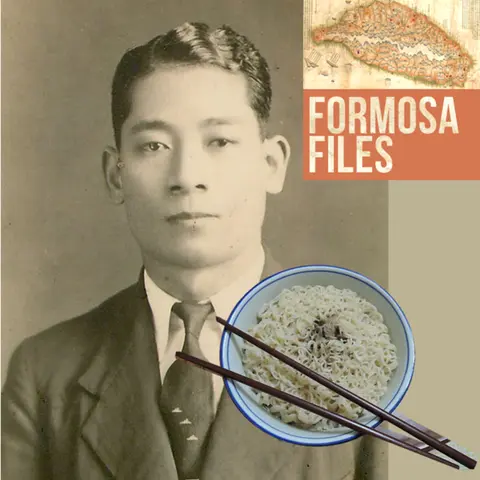
Andō Momofuku: Was the Inventor of Instant Noodles Taiwanese? – S6-E30
Andō Momofuku is a household name in Japan, celebrated as the inventor of instant noodles. But his story actually begins in Puzi, a small town in southern Taiwan, where he was born Wu Baifu in 1910. John is joined by Tom Gibb, a Japan-based translator and author of the cycling travelogue Charinko. Together they unravel the complicated history of the man and his noodles. Going behind the familiar mythology, they explore his Taiwanese childhood, early business career, wartime troubles, an interest...
28
Sept. 23, 2026
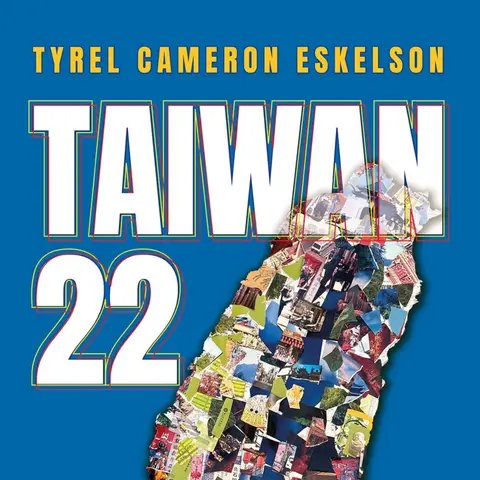
Tyrel Eskelson’s Taiwan 22: Travels in Paradox – S6-E28
What happens when curiosity about Taiwan turns into something of an obsession? Canadian academic Tyrel Eskelson, who lives in Japan, set out to understand an island nation that kept appearing in the international news. The result was months of travel, hundreds of conversations and his book Taiwan 22, published by Formosa Files’ very own Plum Rain Press. John chats with Tyrel about his travels and his impressions of Taiwan. Along the way, they attend an unusual Indigenous festival in the mountains, visit a Taipei charity helping the homeless, and stand on the frontline islands of Matsu and Kinmen.

25
Sept. 10, 2026
The History of Comic Books in Taiwan – S6-E26
John is joined by writer, artist and comics enthusiast Ray Hecht for a journey through Taiwan’s manga history. This story is sometimes reduced to Japanese comics and their Taiwanese spinoffs. Ray and John, however, get into the forgotten influence of Shanghai liánhuán túhuà – “linked-picture” storybooks – in the post-WWII years. Also, central to today’s episode is the humble neighborhood rental bookstore, which put cheap popular reading into the hands of generations of Taiwanese. These books and shops were too popular at times for the government. Censorship and crackdowns were needed to protect the citizens. Enter the Comics Cleansing Movement. And listen and learn why the censors once objected to illustrations of talking animals. We wrap up with a mention of Ray’s anthology Memories of Taiwan: 37 stories about life in Taiwan by 19 artists from around the world. It’s being released with support from a Kickstarter campaign. To learn more about Ray Hecht, visit his Linktree profil…
25
Sept. 7, 2026
VIDEO - Drones: From Toys to Weapons, with Bryce Barros – S6-E25
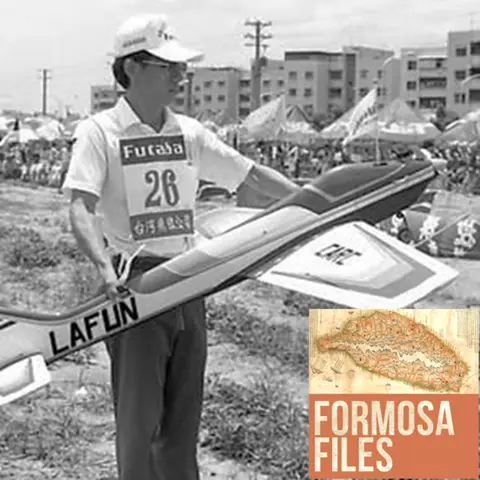
Defense analyst Bryce C. Barros tells Formosa Files about M.I.T. drones and their surprising connection to Taiwan's remote-controlled toy industry. Before China became the "world's factory," Taiwanese companies emerged as major manufacturers of inexpensive toys and electronics during the 1960s, 1970s, and 1980s, producing them for customers globally. The skills in the production of small motors, electronics, and plastics, as well as precision manufacturing, for remote-controlled toy planes, helicopters, boats, and cars would later lay the groundwork for Taiwan's early drone industry, providing the skills and supply chains. But beginning in the 1990s, Taiwan lost ground as manufacturing moved across the Taiwan Strait and China invested heavily in research and development and in large-scale drone production. Chinese companies such as DJI, founded in Shenzhen in 2006, have emerged and now lead China's dominance in the global commercial drone market, holding a lead in military drone…
25
Sept. 7, 2026
Drones: From Toys to Weapons, with Bryce Barros – S6-E25
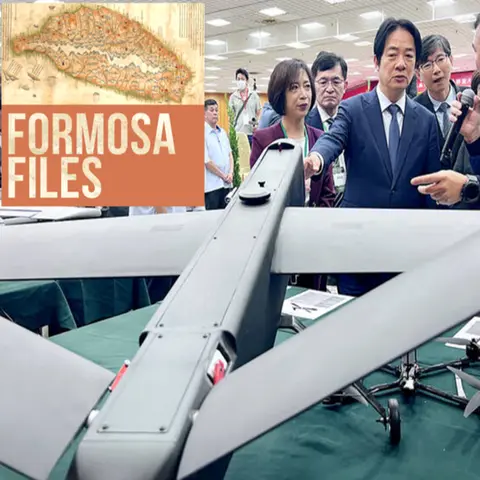
Defense analyst Bryce C. Barros tells Formosa Files about M.I.T. drones and their surprising connection to Taiwan's remote-controlled toy industry. Before China became the "world's factory," Taiwanese companies emerged as major manufacturers of inexpensive toys and electronics during the 1960s, 1970s, and 1980s, producing them for customers globally. The skills in the production of small motors, electronics, and plastics, as well as precision manufacturing, for remote-controlled toy planes, helicopters, boats, and cars would later lay the groundwork for Taiwan's early drone industry, providing the skills and supply chains. But beginning in the 1990s, Taiwan lost ground as manufacturing moved across the Taiwan Strait and China invested heavily in research and development and in large-scale drone production. Chinese companies such as DJI, founded in Shenzhen in 2006, have emerged and now lead China's dominance in the global commercial drone market, holding a lead in military d…
24
Sept. 2, 2026
The 1652 Revolt: The Guo Huaiyi Rebellion – S6-E24
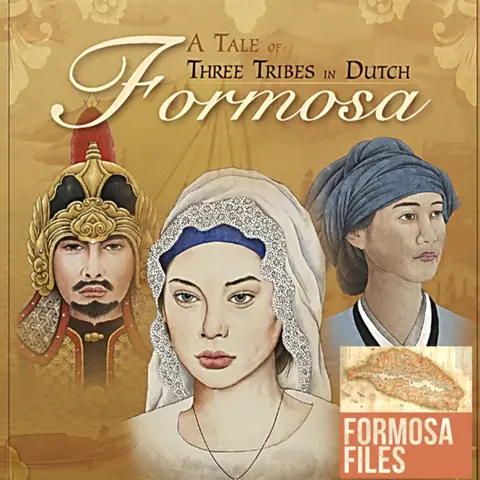
John is joined by writer and historian Scott Crawford to recount the bloodiest episode in the history of Dutch Formosa. A revolt, led by Guo Huaiyi, resulted in the deaths of several thousand Chinese. We look at what drove farmers to rebellion and the tragic events of September 1652. This episode grew out of John and Scott’s special ten-part read-along of Dr. Chen Yao-Chang’s novel A Tale of Three Tribes in Dutch Formosa, which follows Dutch, Chinese and Siraya characters in the mid-seventeenth ...

17
July 2, 2026
Sky Cop TC Brown Returns – S6-E16
TC Brown returns to Formosa Files – and to Taiwan – after 53 years away. A former U.S. Air Force security policeman stationed at CCK Air Base in Taichung for most of 1968-73, TC reflects on his recent trip back to the island, the Taiwan he remembers from the Vietnam War era, and the Taiwan he found today. John talks with TC about his memoir Made in Taiwan and town patrol in Taichung’s “Dirty Dozen” bar district. We also visit Hualien through Wang Chen-ho’s bawdy novel Rose, Rose, I Love You, one of the few works of fiction to touch on Taiwan’s role in Vietnam War R&R.

16
June 24, 2026
Snakes of Taiwan (with Gerrut Norval) – S6-E16
Does a “triangular head” mean danger? Did the wartime Japanese release experimental snakes on Yangmingshan? Do you really collapse after a hundred steps if a hundred-pacer bites you? Herpetologist Gerrut Norval joins John Ross to talk snakes. They focus on Taiwan’s six important venomous species: the green bamboo viper, Chinese cobra, many-banded krait, Russell’s viper, Taiwan habu, and the famous hundred-pacer. The biggest surprise for John was learning about the wild population of Burmese pythons on Kinmen. Be sure to visit the Formosa Files website for pictures and names of the snakes mentioned.
13
June 4, 2026
Should Taiwan Change its Time Zone? A Chat With Sasha B. Chhabra – S6-E13
Who owns Taiwan’s time? Taipei-based political commentator and author of Formosa Review substack Sasha B. Chhabra helps us wind back the history of Taiwan’s clocks, from local rhythms before what we now call “standard time,” to Japanese colonial rule, wartime Tokyo time, and ROC “Central Plains Time.” Then we move forward to more recent debates over sovereignty and identity. “What time is it?” seems like a simple question, but this episode delightfully complicates it with stories of daylight, empire, modernization, authoritarianism, and Taiwan’s right to define its own place in the world.
10
May 13, 2026
Bridges of Taiwan – S6-E10
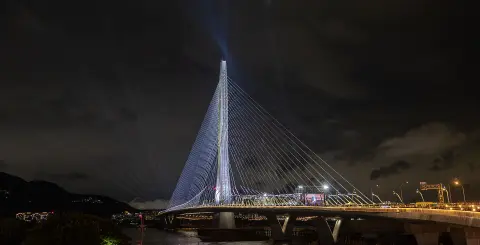
John Ross and special guest John Groot celebrate the opening of the remarkable Danjiang Bridge in Tamsui (Danshui). They explore the bridges that transformed Taiwan: the Xiluo Bridge over the mighty Zhuoshui River, once the longest bridge in Asia, and the Taipei Bridge that helped fuel Taiwan’s economic miracle. That bridge is best known for its “Scooter Waterfall,” the tightly packed stream of scooters that pours down the Taipei-side off-ramp during morning rush hour. We follow the Taipei Bridge to the other side, the gritty, industrial district of Sanchong. John Groot shares stories from his many walks, including some hair-raising bridge crossings during his circumnavigation of Taiwan’s coastline. He also outlines his ambitious new walking project and related website, TaiwanCentric.com (formerly the Culture Shack and scheduled to relaunch on May 22)

May 9, 2026
Chen Shu-chu: Taiwan’s Vegetable Vendor Philanthropist – Snack 04
In this Mother’s Day edition, we celebrate the extraordinary life of Chen Shu-chu (陳樹菊), a humble vegetable seller from Taitung who quietly donated millions of NT dollars to schools, charities, and orphaned children – while continuing to live a modest life behind a market stall. Born in 1950 into poverty, Chen Shu-chu was forced to leave school at just thirteen after her mother died in childbirth. For half a century she worked at the stall and saved her earnings, giving them to the needy. Chen’s lifetime of extraordinary generosity eventually brought her international fame. In 2010 she appeared in Time magazine’s list of the world’s most influential people. This is an uplifting story of how a seemingly ordinary market vendor became one of Taiwan’s most admired figures.
7
April 22, 2026
Ping-Pong with Mao in Taiwan: The Chairman (1969) – S6-E7
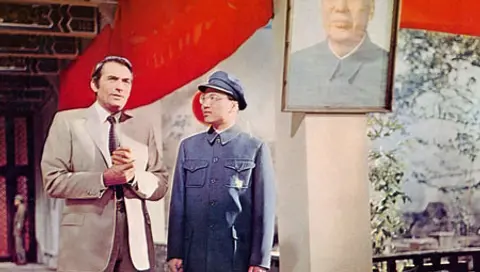
We step into the strange Cold War world of The Chairman, a forgotten 1969 spy thriller starring Hollywood great Gregory Peck. The movie, which was partly filmed in Taiwan, is about a scientist sent behind the Bamboo Curtain to steal a miracle agricultural formula. The plot is outlandish, but behind the absurdity lies an interesting snapshot of global fears in the late 1960s, from overpopulation and famine to superpower rivalry. We follow the film production here in Taiwan (a stand-in for off-limits communist China). This takes us to locations such as Taipei’s spectacular mountainside Zhinan Temple, where Peck plays ping-pong with Mao Zedong. Yes, The Chairman was a flop – deservedly so, we think – but the film certainly makes for a fun podcast episode. Watch movie for free on YT; link below.
6
April 15, 2026
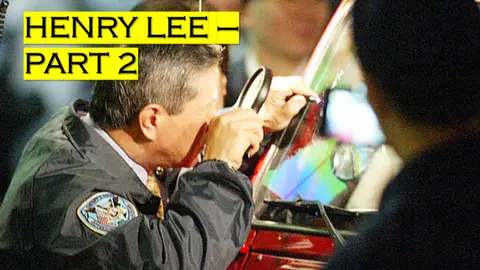
The Celebrity Forensics Expert: Henry Lee – Part 2 – S6-E6
It’s 1965, and Henry (27) and Margaret (26) Lee have moved to the USA. She’s working as a schoolteacher, and he’s trying to make ends meet however he can, including by washing dishes at a Chinese restaurant and teaching kung fu. After some hard years — and a long stint in school — Henry Lee secures an academic position at New Haven University and builds its forensic center into a world-class institution. He soon begins working with legal authorities and solving cases. Being called as an expert witness for the defense in the 1995 OJ Simpson trial cements Henry Lee’s status as a modern Sherlock Holmes. But unlike fictional characters, Lee was human, and humans make mistakes and sometimes also lie. There’s no question Lee made some significant mistakes. Some, however, think he crossed the line into deception. Still, the errors, big or small, can be counted on one hand — most of the roughly 8,000 cases he worked on are not under review. Stick around after the end for a five-minute r…
5
April 8, 2026
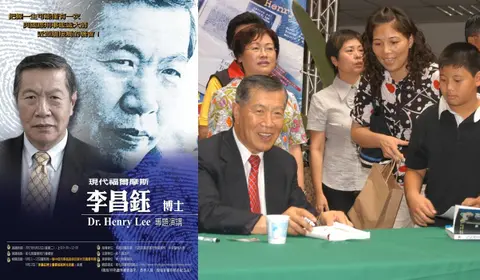
Shoes, Graves, and Fingerprints: Henry Lee in Taiwan – Part 1 – S6-E5
To mark the recent passing of Henry C. Lee (李昌鈺), one of the world’s most famous forensic scientists, we examine his extraordinary life. In Part 1, we’re in impoverished postwar Taiwan. Lee is the eleventh of thirteen children. That, and his father dying on “China’s Titanic,” means it’s a childhood marked by tragedy and hardship. Lee walked barefoot to school to save his shoes. We follow his police training and work, service on Kinmen, a visa-overstay romance, and an unlikely detour running a tiny newspaper in Borneo. Part 2 follows Lee to the United States, where he rises to international fame through major criminal cases and where his golden reputation is somewhat tarnished by controversy.
April 5, 2026
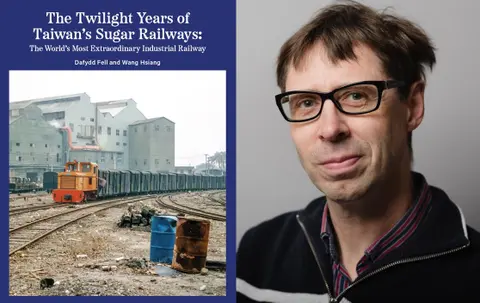
Bonus episode: Taiwan’s Sugar Railways (with Prof. Dafydd Fell) -S6
John talks with Professor Dafydd Fell of SOAS University about "The Twilight Years of Taiwan’s Sugar Railways", his new book co-written with Wang Xiang, a researcher who has spent years documenting the remains and memories of this once vast railway network. Fell’s own fascination with the sugar railways dates back to the 1990s when he was living in Taiwan. John and Dafydd explore how sugar helped build modern Taiwan, how the narrow-gauge railways moved far more than just sugar cane, and how the network had a Cold War strategic purpose. The episode is full of nuggets, from mystery Belgian locomotives to propaganda train tours.
52
Feb. 27, 2026
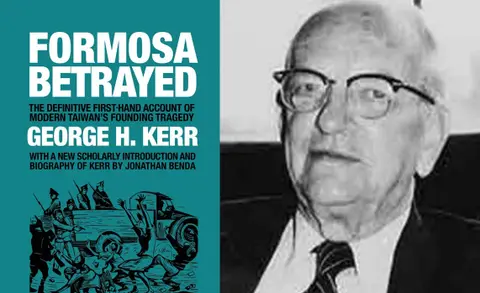
George Kerr and Formosa Betrayed (with Prof. Jonathan Benda) – S5-E52
American George H. Kerr was the most important Western eyewitness and chronicler of the February 28 Incident of 1947, the violent uprising and brutal crackdown that shaped Taiwan’s modern politics and identity. Kerr first lived in Taiwan in the late 1930s, when the island was a colony of Japan. During the war, he worked for the U.S. Navy as a Taiwan expert, and then from 1945 to 1947 served as the U.S. vice consul in Taipei. His account of Chinese Nationalist (KMT) misrule, Formosa Betrayed (1965), is arguably the most influential English-language book ever written about Taiwan. John chats with Kerr scholar Jonathan Benda about the book and the man behind it. Why did it take Kerr so long to publish his account? What does the “betrayed” in the title refer to? How did the book inspire Taiwanese democracy and independence activists? Drawing on new evidence, Benda explains it all and gives us a full picture of this complex man.
51
Feb. 25, 2026
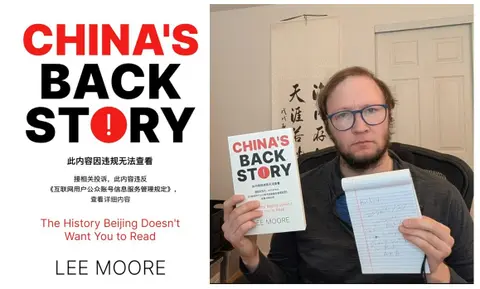
"China’s Backstory: The History Beijing Doesn’t Want You to Read" by Scholar and Podcaster Lee Moore – S5-E51
John talks to Lee Moore about his 2025 book China’s Backstory: The History Beijing Doesn’t Want You to Read, which focuses on four important China-related stories that often make headlines: Taiwan, Xinjiang, the Chinese economy, and Hong Kong. In this conversation, Lee and John focus on Taiwan before 1800. Who were the earliest Chinese arrivals in Taiwan? Which ruler’s fondness for older women would impact the island’s future? And were there Indigenous cowboys (as in horses and lassos)? Lee takes an unusual "pop-scholarship" approach to history in this book. For example, he uses colloquial translations of Chinese texts and names (meet Mr. Success Zheng), and employs...um..."colorful language." His controversial style will likely generate a mix of head-shaking and nodding approval, but almost everyone will learn something new from this episode and enjoy a few laughs.
42
Dec. 24, 2025
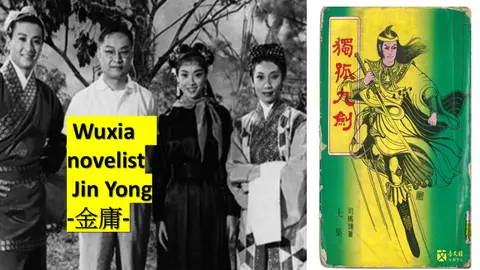
War Against Wuxia: Jin Yong, Banned Books, and Taiwan’s “Rainstorm Project” – S5-E42
Wuxia (武俠) novels are martial-arts stories full of swordsmen and swordplay, secret techniques, and chivalrous outlaws. Think Robin Hood crossed with Taoist mysticism and Chinese history. John talks with Taipei-based writer Scott Crawford about the genre – and Jin Yong 金庸 (1924-2018), the most popular and influential wuxia writer. Generations of admiring readers across Asia have devoured his many books. But Taiwan’s government was not a fan. Enter, the Rainstorm Project – a long-running crackdown launched in 1960 that targeted wuxia, especially Jin Yong’s works. Within days, 120,000 novels were seized; and, over the years, hundreds of wuxia titles were banned. But why? Was this simply Cold War paranoia about possible communist cultural “contamination”? Or a kind of moral panic about the impact on children; after all, this fantasy fiction was inspiring Taiwanese students to run off to the mountains in search of kung fu masters.

40
Dec. 10, 2025
AUDIO ONLY - Taiwan’s Funeral Strippers: “Dancing for the Dead” – S5-E40
THIS IS AUDIO-ONLY. A 47-MINUTE VIDEO VERISON IS AVAILABLE. This episode may not be suitable for minors. Yes, funeral strippers are real, and their story is far more complicated than the headlines. With anthropologist Marc L. Moskowitz as our guide, we climb aboard Taiwan’s infamous Electric Flower Cars, neon-lit mobile stages where dancers perform during funerals and temple processions. In this dual episode (video/audio only), Eryk chats with Professor Moskowitz about his documentary, Dancing for the Dead. The discussion explores how this controversial tradition took root, why it exploded into public debate in the 1980s, and what it reveals about Taiwan’s rural-urban cultural divide. Critics call it immoral. Performers call it a livelihood. Fans say it keeps the spirits and the crowds entertained; enjoy this provocative, colorful, and surprisingly heartfelt look at one of Taiwan’s most misunderstood cultural practices.
40
Dec. 10, 2025
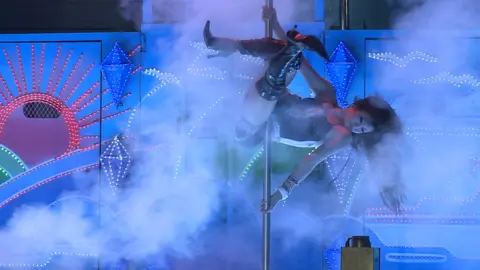
Taiwan’s Funeral Strippers: “Dancing for the Dead” – S5-E40
Note: This episode may not be suitable for minors. Yes, funeral strippers are real, and their story is far more complicated than the headlines. With anthropologist Marc L. Moskowitz as our guide, we climb aboard Taiwan’s infamous Electric Flower Cars, neon-lit mobile stages where dancers perform during funerals and temple processions. In this dual episode (video/audio-only), Eryk chats with Professor Moskowitz about his documentary, Dancing for the Dead. The discussion explores how this controversial tradition took root, why it exploded into public debate in the 1980s, and what it reveals about Taiwan’s rural-urban cultural divide. Critics call it immoral. Performers call it a livelihood. Fans say it keeps the spirits and the crowds entertained; enjoy this provocative, colorful, and surprisingly heartfelt look at one of Taiwan’s most misunderstood cultural practices. Audio only version also available. Follow us on social media and leave a comment/review!
39
Dec. 8, 2025
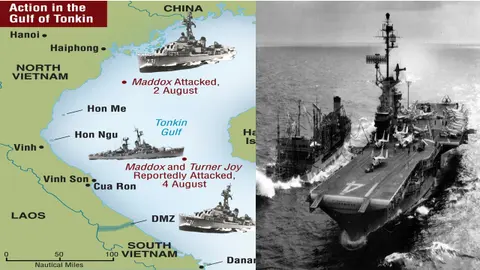
Shulinkou Air Station – Part 3: Taiwan and the Gulf of Tonkin – S5-E39
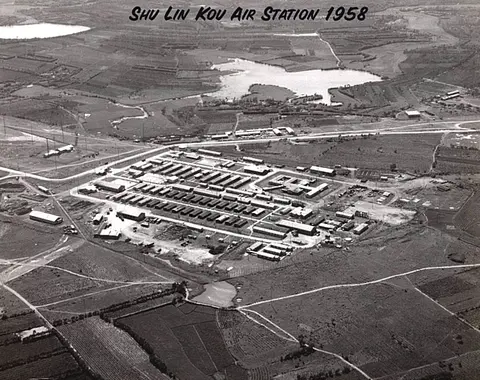
We end our Shulinkou trilogy by tying together the surprisingly interconnected Taiwan–U.S.–Vietnam story. It’s July 1964, and two U.S. Navy destroyers are in Taiwan preparing for an intelligence-gathering mission off the coast of North Vietnam. Shulinkou Air Station provided intel, specialized equipment, and trained personnel for the USS Maddox and USS Turner Joy – ships about to play starring roles in the controversial incident that helped draw the United States fully into the Vietnam War. Amid this geopolitical drama, we follow the story of a young Navy intelligence specialist, Joe Miller. A forbidden romance costs him his posting at Shulinkou. But his reassignment to the aircraft carrier USS Ticonderoga will give him a front-row seat to the Tonkin crisis, and change the course of his life.
38
Dec. 3, 2025
Shulinkou Air Station – Part 2 – S5-E38
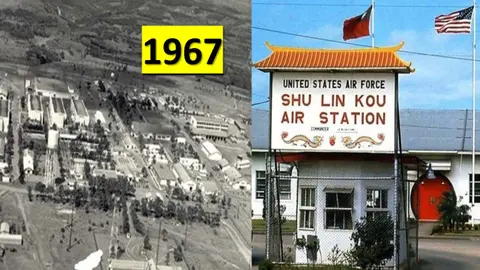
We continue the story of the Shulinkou Air Station and the American military in the early 1960s. We tackle Taiwan’s infamous gravel-truck killers (urban legend or fact?), get slapped by Typhoon Gloria, and have our duck-hunting excursion interrupted by the Generalissimo’s latest China invasion plans. And we follow the trail of controversial crimes and court verdicts which led to the ROC and U.S. finally signing a Status of Forces Agreement. On a lighter note, we also take time out for some catered Mongolian barbecue.
37
Nov. 26, 2025
Shulinkou Air Station – Part 1 of 3 (early 1960s) – S5-E37
It was one of Taiwan’s most secretive Cold War outposts: Shulinkou Air Station (樹林口空軍情報站), a joint-service U.S. intelligence base perched on a misty plateau west of Taipei. Built in 1955, it was a hub for the interception, decryption, and analysis of enemy radio and electronic communications. In Part 1 of this three-part series, we focus on the early 1960s and the everyday world of the young servicemen and officers stationed there. Join them as they resist the character-destroying temptations of Taipei’s back alleys, face vengeful thieves, ride the rails in a stolen locomotive (probably a tall tale but you be the judge), and encounter ghostly road vehicles. This is Part 1. Parts 2 and 3 will take us deeper -- into the looming Vietnam War. For this episode, we relied heavily on the excellent Shulinkou Air Station Taiwan website, which is run by men who served there between 1955 and 1977.