
Chen Shu-chu: Taiwan’s Vegetable Vendor Philanthropist – Snack 04
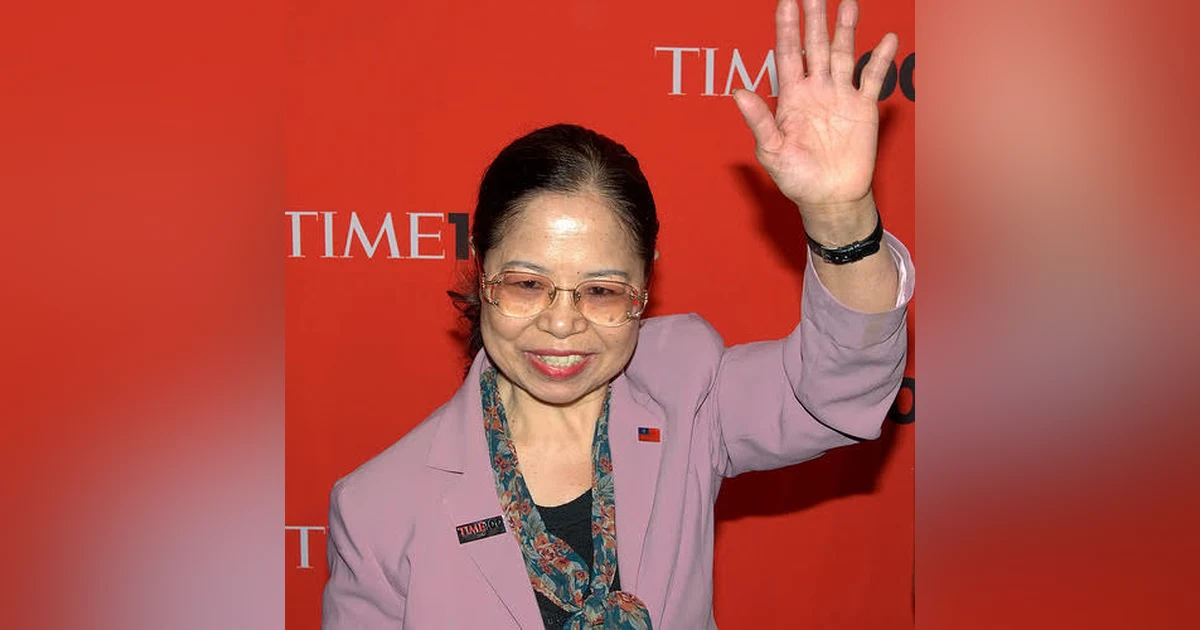

In this Mother’s Day edition, we celebrate the extraordinary life of Chen Shu-chu (陳樹菊), a humble vegetable seller from Taitung who quietly donated millions of NT dollars to schools, charities, and orphaned children – while continuing to live a modest life behind a market stall.
Born in 1950 into poverty, Chen Shu-chu was forced to leave school at just thirteen after her mother died in childbirth. For half a century she worked at the stall and saved her earnings, giving them to the needy. Chen’s lifetime of extraordinary generosity eventually brought her international fame.
In 2010 she appeared in Time magazine’s list of the world’s most influential people. This is an uplifting story of how a seemingly ordinary market vendor became one of Taiwan’s most admired figures.

 Apple Podcasts
 Spotify
 RSS Feed
 RadioPublic
 PocketCasts
 Cover: English: Chen Shu-chu 陳樹菊, a 2010 Time 100 “Heroes” honoree
Date: 4 May 2010, Author: David Shankbone, Wiki Commons.
In this Mother’s Day edition, we celebrate the extraordinary life of Chen Shu-chu (陳樹菊), a humble vegetable seller from Taitung who quietly donated millions of NT dollars to schools, charities, and orphaned children – while continuing to live a modest life behind a market stall.
Born in 1950 into poverty, Chen Shu-chu was forced to leave school at just thirteen after her mother died in childbirth. For half a century she worked at the stall and saved her earnings, giving them to the needy. Chen’s lifetime of extraordinary generosity eventually brought her international fame.
In 2010 she appeared in Time magazine’s list of the world’s most influential people. This is an uplifting story of how a seemingly ordinary market vendor became one of Taiwan’s most admired figures.
Do us a favor and rate/review the show! It really helps. Do it on Apple Podcasts or here on our website.
Write us with questions or ideas at formosafiles@gmail.com
AND THE BIGGEST REQUEST: tell others about this free, not-for-profit resource about Taiwan.
Unknown Speaker (0:00): Formosa Files.
Speaker 1 (0:02): Snack. Welcome to Formosa Files for a snack. And today, it's a vegetarian flavored snack because in honor of Mother's Day, we're looking at a remarkable woman, vegetable seller, So the is like the most common name ever. Is like a tree, and is like a chrysanthemum, the Japanese flower, the the mayor, that same So spent nearly fifty years behind a small wooden stall in a traditional market selling cabbages and carrots, quietly raising money for charity, and then was suddenly thrust into fame. She ended up on the cover of Time Magazine in 2010 as one of the world's most influential people.
Unknown Speaker (0:45): An amazing woman and it's a heartwarming story. But Eric, I don't wanna be the killjoy, but miss Chen is not a mother. I think we need one of your cliches. Mother to the nation or something similar.
Speaker 1 (1:01): Yeah. A mother mother like figure. She okay. She was not actually a mother, but she definitely embodied those motherly virtues of love and kindness. Okay.
Unknown Speaker (1:12): And in many ways, a mother to her younger siblings.
Unknown Speaker (1:15): Going back to her childhood and she's born in 1950 to a working class family in Taedong, Southeast Taiwan. They have a vegetable stall at the market and she was the oldest of five siblings. So, yeah, taking care of her younger brothers and sisters.
Speaker 1 (1:33): And then tragedy struck. Her mother passed away when Suju was 13, so she effectively became the mother to her five younger siblings, taking on the cooking, cleaning, financial support for the entire household.
Unknown Speaker (1:46): Financial support as in working at the market selling vegetables. She had to drop out of school and take over the store. She was the youngest vendor in the entire market, just 13 years old. Now this is before junior high school became compulsory.
Speaker 1 (2:03): But let's go back to the mother's death for a moment because the circumstances would shape her future ideas about charity.
Unknown Speaker (2:10): Her mother is about to give birth to another child and she went into labor and there were complications. She needed a C section. The hospital however required a 5,000 NT deposit before they would operate. In today's money, I don't know off the top of my head, maybe 10 times more, 50,000 NT, a lot of money, but not that hard to put together.
Speaker 1 (2:33): Yeah, unless you're really, really poor. The family couldn't come up with the money in time, and her mother passed away due to her difficult labor. This is like impossible for us to imagine today, you know? Hospitals take care of people, but it wasn't always this way.
Unknown Speaker (2:49): Yeah, that moment really branded itself on Chen Xucu's heart. She watched her family suffer so much because they lack such a small amount of money.
Unknown Speaker (3:01): And the tragedies didn't stop there.
Unknown Speaker (3:03): Yeah. One brother died at age 11 from a mysterious high fever. The teachers and classmates at his school raised money to help, but he also passed away shortly after reaching a hospital in time. So yeah, the question there, if they had been able to do it sooner, who knows?
Speaker 1 (3:22): She kept working, selling vegetables to support the family, not thinking about herself or her own happiness until she became friendly with a young man.
Unknown Speaker (3:31): Around the age of 20, Xu Zhu had the one significant romantic relationship of her life. Her boyfriend worked at a nearby stall in the market and his parents approved of her.
Speaker 1 (3:44): However, when marriage was discussed, her father was initially opposed asking, if you get married, no one will look after the vegetable stall. Are you gonna look after your five brothers and sisters or or just yourself? And isn't this really supposed to be my responsibility as your father? Well, he did.
Unknown Speaker (4:01): Exactly. Yeah. I think you added that last bit there. Mhmm. She was not deterred.
Unknown Speaker (4:07): She could wait, take care of her siblings, and then marry. She asked her boyfriend to wait until after his mandatory military service and they would get married.
Unknown Speaker (4:18): But to her shock, he married someone just a week later. So not surprisingly, this experience caused her to lose interest and confidence in, the institution of marriage almost entirely.
Unknown Speaker (4:31): Yeah. That's a pretty devastating shock. So she found Jesus.
Speaker 1 (4:36): Close.
Unknown Speaker (4:37): Well, close. Okay. Around this time, she became a devout Buddhist and her religious faith has been a central part of her life, influencing her lifestyle, her philanthropy, and her diet.
Unknown Speaker (4:51): She became a vegetarian shortly after her mother's death and committed to a full vegetarian diet at the age of 19. Now in Taiwan, if you're a Buddhist, there's a bit of a difference in the concept of vegetarian. No garlic, no onions. There's specific things that you don't eat, but you also don't eat any meat or fish. So it's not exactly a vegan, but close to it, plus no garlic.
Unknown Speaker (5:18): Right. So we've translated that phrase from Chinese, full vegetarian. We wouldn't use that in the West, would we?
Unknown Speaker (5:24): Right. In Taiwan.
Unknown Speaker (5:27): Mhmm. Anyway, the years go by, her vegetable business is doing well, her siblings, well, the surviving ones because another brother died, it was a traffic accident I think. The siblings are comfortably off, so she has fewer responsibilities. She could ease up, not work so hard, not live so frugally.
Speaker 1 (5:47): But no, she doesn't relax. She wants to help people in need. And that's the story of the next few decades. Working hard, saving hard, and donating money. Over the years, she donated 1,000,000 NT to the Ful Guang Shan Buddhist Academy, another million NT to her old school, Renai Primary School, to establish an emergency scholarship fund, and a staggering 4 and a half million NT to help that same school build a library.
Unknown Speaker (6:15): Wonderful, and she didn't stop there. She also adopted three orphans through the Christian Children's Fund and donated money, 1,000,000 NT to the group. This is very Taiwanese in its admirable religious tolerance, a devout Buddhist happily helping a Christian organization.
Speaker 1 (6:35): And just to clarify, adopted in this sense, in this sense, we're talking about providing financial support, not actually bringing them to her house or her home.
Unknown Speaker (6:44): Right, thanks. Yes, she remained unmarried and without kids. Despite staying single, Shu Zhu once held a secret dream, a hope of having her own family. When she bought her own house, she decorated three rooms specifically for children, choosing wallpaper, furniture, and toys for boys.
Unknown Speaker (7:06): And she did this because a fortune teller had once told her she would have three sons. Those rooms, however, were never used.
Unknown Speaker (7:14): I'm biting my tongue. My goodness, I hate those fortune tellers.
Unknown Speaker (7:19): Yes. Moving on.
Unknown Speaker (7:20): Moving on. Okay. So she's deeply religious but she also keeps a realistic, know, pragmatic, sometimes critical view of religious institutions. She eventually decided to focus her donations on helping people directly, schools, orphanages or just poor people, rather than giving to religious organizations. She found that some monks and nuns that she met did not live up to the compassionate ideals of Buddhism.
Speaker 1 (7:51): Yes, this is something you will discover in pretty much every tradition. Yeah, she concluded she didn't want to provide for temples anymore. She decided it was more meaningful to do the charity work myself for herself. She would give her hard earned money directly to those who she thought truly needed it and would use it responsibly.
Unknown Speaker (8:13): Excellent. And after decades of quite charity work, Chen Shu Zhu found herself in the media spotlight. She was featured in the Liberty Times in about 2005, I think, and then in a much bigger piece, 2009.
Speaker 1 (8:29): Then things blew up in 2010. She became an international hit. Forbes Magazine featured her, and that's all local reporters swarming her vegetable stall asking for interviews. Then a month later, another swarm of reporters, this time asking her about being featured in the Time Magazine 100 Heroes special edition.
Unknown Speaker (8:49): Yeah. Director Li An, he wrote the profile for her in the magazine.
Unknown Speaker (8:54): She was rather surprised by all the fuss. In fact, she'd never heard of Time Magazine.
Unknown Speaker (8:59): Funny, right? So she kept working and donating her savings. She finally retired in 2018 due to poor health after more than fifty years running that same store in Taedong Central Market, but she kept doing her charity work.
Speaker 1 (9:16): And according to the most recent thing we saw, she's still doing what she does at the age of 75. So happy Mother's Day to Chen Xu Zhu and all the okay. We don't wanna get into stereotypes, but, John, there is something special about mothers where they are tender, caring, in a way that is just different from any other living human. And she was one. Whether or not she actually had children in this case is immaterial, I rule.
Unknown Speaker (9:48): Yeah, you know, we mentioned her being in Time magazine, those things come and pass. A much better place to be is in the Taiwanese textbooks.
Unknown Speaker (9:57): That's She
Unknown Speaker (9:57): has a household name here, everyone knows her, elementary school books feature her. Though I don't know what kind of lesson the kids will learn. They can drop out of school after elementary and Be
Unknown Speaker (10:09): a vegetarian.
Unknown Speaker (10:10): Okay.
Unknown Speaker (10:11): Thanks for listening to, Formosa Files Snack. I'm Eric Michael Smith.
Unknown Speaker (10:15): Happy Mother's Day. Bye. Formosa Files is made possible through the generous sponsorship of the Frank C. Chen Foundation.