
Taiwan During Qing Dynasty Rule Episodes
Taiwan came under Qing dynasty rule in 1683 after the defeat of the Zheng regime, which had used the island as a base of resistance against the Qing on the mainland. Initially, Qing authorities viewed Taiwan as a remote and unruly frontier rather than a core province. Migration from Fujian and Guangdong increased rapidly, bringing Han Chinese settlers who developed agriculture, trade, and local communities, often pushing into lands inhabited by Indigenous Austronesian peoples. Governance was limited and uneven, with periodic rebellions and conflicts reflecting weak state control and the island’s frontier character.
Through the eighteenth and nineteenth centuries, the Qing gradually expanded administrative structures, creating prefectures and counties to manage population growth and economic activity. Taiwan became an important producer of rice and sugar for regional markets, especially Fujian. However, ethnic tensions among settlers from different regions and clashes with Indigenous groups remained frequent. The Qing often relied on local elites and militias rather than a strong standing bureaucracy, reinforcing Taiwan’s reputation as a volatile but economically promising borderland.
Only late in the nineteenth century did the Qing attempt more systematic modernization, especially after foreign pressure increased following incidents involving Western and Japanese forces. In 1885 Taiwan was elevated to provincial status, signaling greater strategic importance. This effort was short lived, as Qing defeat in the First Sino Japanese War led to Taiwan’s cession to Japan in 1895, ending more than two centuries of Qing rule.
Through the eighteenth and nineteenth centuries, the Qing gradually expanded administrative structures, creating prefectures and counties to manage population growth and economic activity. Taiwan became an important producer of rice and sugar for regional markets, especially Fujian. However, ethnic tensions among settlers from different regions and clashes with Indigenous groups remained frequent. The Qing often relied on local elites and militias rather than a strong standing bureaucracy, reinforcing Taiwan’s reputation as a volatile but economically promising borderland.
Only late in the nineteenth century did the Qing attempt more systematic modernization, especially after foreign pressure increased following incidents involving Western and Japanese forces. In 1885 Taiwan was elevated to provincial status, signaling greater strategic importance. This effort was short lived, as Qing defeat in the First Sino Japanese War led to Taiwan’s cession to Japan in 1895, ending more than two centuries of Qing rule.
23
Aug. 26, 2026
Bits and Pieces: Patriots, Traitors and New Plum Rain Press Books – S6-E23
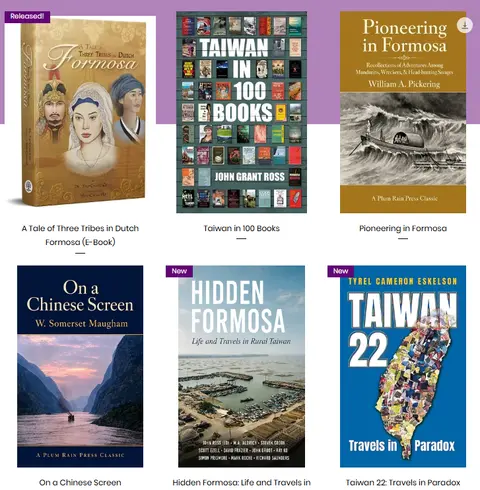
Show Notes Listen to the first episode of the Bookish Asia episode about Three Tribes. Listen to John chatting with Tyrel about his Taiwan 22: Travels in Paradox, published by Plum Rain Press. Eskelson travelled extensively around Taiwan, talking to people – including Eryk – and using those encounters to explore the island’s history, politics, identity and present-day predicament. The Books on Asia interview covers subjects including Taiwan’s Japanese colonial legacy, a controversial take on 228...
22
Aug. 19, 2026
1683: The Battle of Penghu – S6-E22
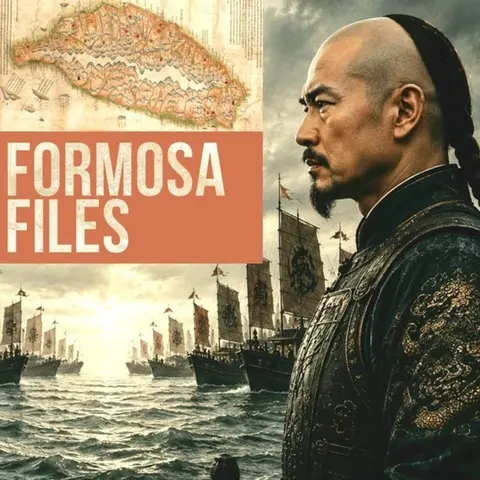
In July 1683, more than 400 warships clashed around the Penghu Islands in one of the greatest naval battles in Chinese history. Qing admiral Shi Lang had come to destroy the last major stronghold of Ming loyalist resistance: the Zheng regime on Taiwan. The naval campaign would decide Taiwan’s fate. More than three centuries later, the Battle of Penghu is politically explosive once again. A Chinese blockbuster about Shi Lang’s victory was due to open in late July 2026, complete with the message that “the unification of Taiwan is unstoppable.” Then, just before its release, the movie mysteriously disappeared from cinemas. John and Eryk tell the story of the battle that brought Taiwan under Qing rule, and ask why Beijing got cold feet with their propaganda piece. Note: this episode is also available as a video (on Spotify and YouTube). Oh, and apologies for the er… creative madness of Eryk’s movie trailer – blame it on the summer heat.
22
Aug. 19, 2026
VIDEO: 1683: The Battle of Penghu – S6-E22
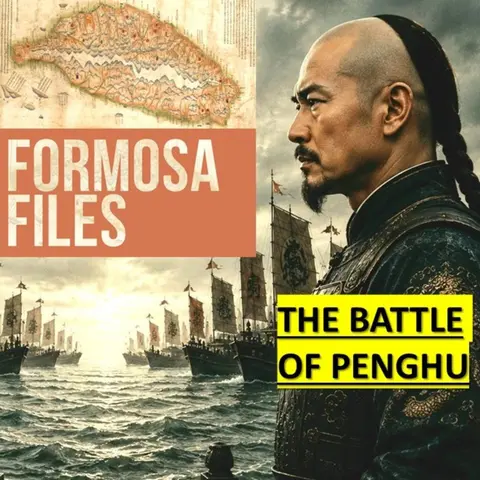
AI images used are illustrations and most are not historically accurate. In July 1683, more than 400 warships clashed around the Penghu Islands in one of the greatest naval battles in Chinese history. Qing admiral Shi Lang had come to destroy the last major stronghold of Ming loyalist resistance: the Zheng regime on Taiwan. The naval campaign would decide Taiwan’s fate. More than three centuries later, the Battle of Penghu is politically explosive once again. A Chinese blockbuster about Shi Lang’s victory was due to open in late July 2026, complete with the message that “the unification of Taiwan is unstoppable.” Then, just before its release, the movie mysteriously disappeared from cinemas. John and Eryk tell the story of the battle that brought Taiwan under Qing rule, and ask why Beijing got cold feet with their propaganda piece. Note: this episode is also available as a slightly shorter audio only version (on Spotify, Apple and other podcast platforms) Oh, and apologies…
8
April 29, 2026
Guns in the Mountains: Taiwan’s Indigenous Firepower – S6-E8
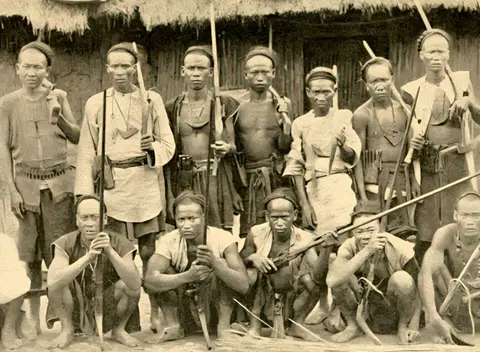
We head into the mountains to tell the story of the deep relationship between Taiwan’s Indigenous communities and firearms. The warriors’ incredible skill and ingenuity with guns enabled them to hold off Qing dynasty forces, Western punitive expeditions, and even the modern Japanese army well into the 20th century. Far from the familiar image of bows and arrows versus modern rifles, Taiwan’s Indigenous peoples were quick to adopt and adapt firearms. Early on these firearms were simple matchlock muskets – slow to load but still deadly in skilled hands – but in the late 1880s, the Indigenous groups acquired modern rifles. Sometimes they had firepower equal to, or better than, their opponents. Through the centuries, guns became essential tools for hunting and warfare. They also became items of status and cultural importance. Guns were gifted in marriage, buried with the dead, and woven into customs of justice and belief. For this episode, we drew on the excellent dissertation by…
6
March 20, 2025
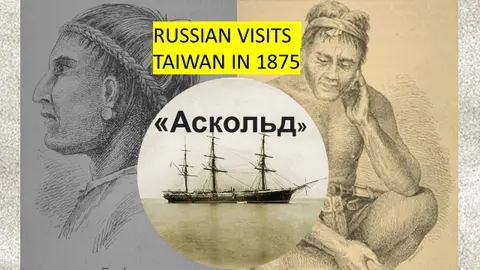
S5-E6 – A 22-year-old Russian (spy?) Visits Taiwan in 1875
Pavel Ivanovich Ibis, or Paul Ibis, a 22-year-old Russian naval officer (he was born in today’s Estonia) embarked alone on a dangerous and adventurous journey – on foot – through Taiwan in the winter of 1875. At the time, much of the island was under Qing rule; a prefecture of Fujian Province. So, what was he doing here? He left very detailed accounts of places, people and customs, and Paul Ibis seems to have had a genuine “anthropological” interest in this island. But was he also possibly a spy? Or at least gathering data for his superiors in the then-still powerful Russian Empire under Tsar Alexander II? (And, yeah, that was the Tsar who sold Alaska to the US in 1867.)
Oct. 3, 2024
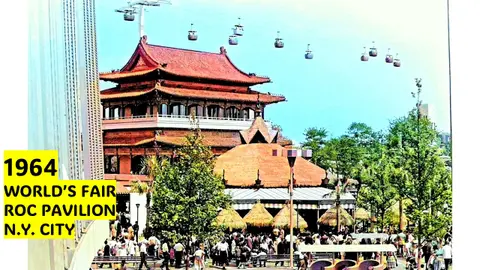
S4-E25 - The ROC (Taiwan) at World Expos & World Fairs
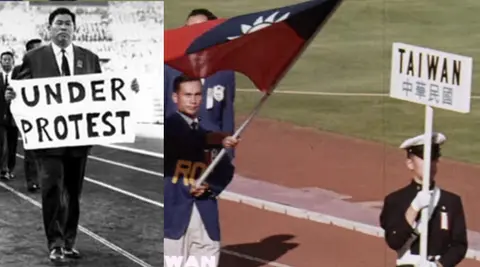
In the first few decades after retreating from the mainland, the Republic of China on Taiwan needed to shine as brightly as possible in foreign spotlights to keep alive the idea (or some might say fantasy) that the government on Taiwan really did represent all of China, the most populous nation on earth. And so, for today’s episode, we turn to one of Taiwan’s biggest promotional efforts abroad; its largely forgotten appearance at the 1964 World’s Fair in New York City.
22
Sept. 5, 2024
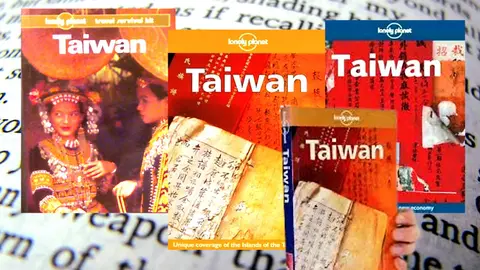
S4-E22 - Lonely Planet Travel Guidebook: Taiwan (1997-1998)
Lonely Planet travel guidebooks provided some of best info on a new destination in the pre-internet era, and the late Robert Storey (1954-2017) wrote quite a few of them... including the first four editions for Taiwan. Robert Storey’s Lonely Planet Taiwan editions are funny, sarcastic, and insightful, and they now serve as wonderful “time capsules.” So, join us as we peek back at the late 1990s, and discover what’s changed - as well as what hasn't.
![S4 - [ENCORE] The Qing Dynasty Doesn't Really Want Taiwan (1683)](https://img.podpage.com/u-VBQg6yMQN8JX4ZbYkLsRbUSts8Gzn0trf3mgFPQh4/rs:fit:480:0:1/q:75/aHR0cHM6Ly9tZWRpYS5wb2RwYWdlLmNvbS9zaG93cGFnZS91cGxvYWRzL2ltYWdlcy9iMTE0NGYwOC0xNDJkLTRjNjMtYmIxYi01NmQ4MmFmZDliYzUuanBn.webp "S4 - [ENCORE] The Qing Dynasty Doesn't Really Want Taiwan (1683)")
June 27, 2024
S4 - [ENCORE] The Qing Dynasty Doesn't Really Want Taiwan (1683)
The current Beijing authorities make bombastic claims as silly as “Taiwan has been part of China since the dawn of the universe!!” The reality, however, is quite different. Some Chinese dynasties may not have even known of Taiwan’s existence, while others definitely knew, and stayed away. Taiwan was an island filled with “savage” native people, and a great place to die from malaria. After the forces of Koxinga’s grandson, Zheng Keshuang 鄭克塽, were defeated by Admiral Shi Lang 施琅 in 1683, Qing dynasty China didn't jump at the chance to make the island “a part of China.” In fact, the great emperor Kangxi 康熙帝 initially thought it best to evacuate Chinese back to China, and leave Taiwan alone. Kangxi went as far as comparing Taiwan to a “skin rash,” saying it will require a lot of “scratching” once they got it. In the end, Shi Lang convinced the Emperor and Taiwan was absorbed into the Qing dynasty. But only parts of Taiwan.
28
Sept. 21, 2023
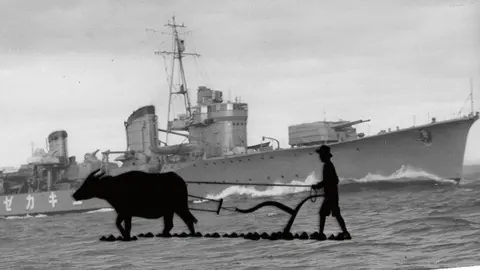
S3-E28 - More Bits and Pieces: Ox Ditches and an Unsinkable Warship
Remember those two Polish cargo ships and one oil tanker from the USSR seized by the ROC Navy in the 1950s? Well, the story has one highly interesting extra element we didn't have time to get to in the last episode. Plus, John wants to write a book about an "ox ditch."
26
Sept. 7, 2023
S3-E26 - Taiwan as part of the Philippines? Or a British or German colony? “What Ifs” of Formosan History -- With Michael Turton
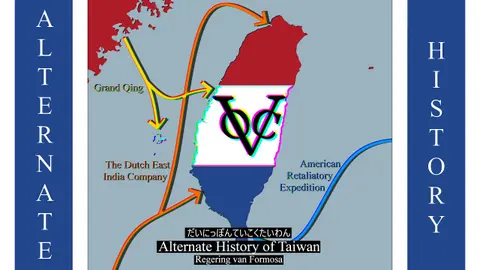
Taiwanese history would have been very different except for a few pivotal moments. “Sure,” you might be thinking, “that's true everywhere.” However, the “what ifs” Michael Turton and Eryk Michael Smith talk about today are especially fascinating because of Taiwan’s strategic location. The Spanish and Dutch had short-lived settlements here in the 17th century, but either could easily have lasted for centuries. Later would-be colonizers included the UK (they considered using the east coast as a penal colony à la Australia), the US, and Germany. Turton lays out an interesting list of “what ifs” to support his argument that Taiwan being in the sphere of “Chinese” influence is an anomaly of history -- and was never inevitable. Check out formosafiles.com for links to articles by Michael Turton, pics, images, and more.
20
July 21, 2023
S3-E20 - John Groot and John Ross Walk and Talk Historic Tamsui 淡水 - Part Two
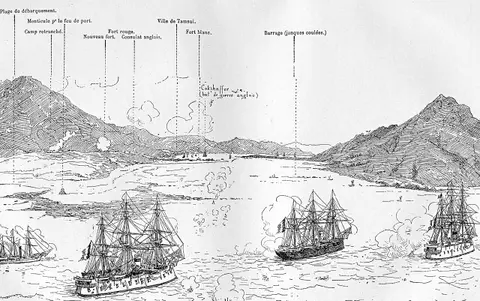
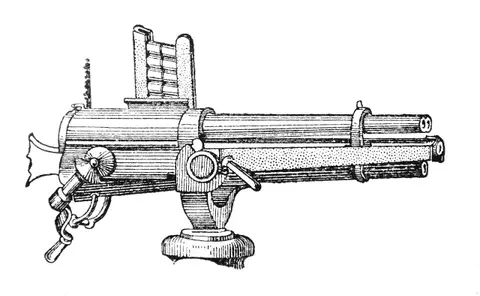
Tamsui (Danshui) native John Groot and Formosa Files' John Ross continue their walk and talk around the old town. They’re on the trail of the 1884 Battle of Tamsui between French and Taiwanese forces, a battle which was a rare victory for the beleaguered Qing dynasty. As well as military matters, the two Johns chat about the wider history of Tamsui. It’s a fun mix of travel and history.
19
July 20, 2023
S3-E19 - Two Johns Take a "Walking Tour" in Historic Tamsui 淡水 - Part One
Strategically located near the mouth of the Tamsui (Danshui) River, the port town of Tamsui has a long, rich history. The Spanish built a fort here in the 1600s, as did the Dutch, and numerous European traders came here in the nineteenth century when it was a treaty port. But perhaps the most surprising foreign presence was the brief and bloody stay of the French military. This was the Battle of Tamsui of October 1884, which was a part of the Sino-French War. John Groot, the author of “Taiwanese Feet: My walk around Taiwan,” takes John Ross on a walking tour of his beloved hometown on the trail of this forgotten historical conflict.
June 22, 2023
Bonus Episode: Eryk Calls John for a Meanderingly Interesting Chat
Now that we're well into Formosa Files season three, your co-hosts add some background to stories we've told, try to clear up misconceptions about the ROC’s exit from the United Nations, make some “controversial” comments on Dr. Sun Yat-sen, and finally, we agree that Mongolia is an independent country, which the Republic of China (Taiwan) also agreed is a fact, in 2002.
12
May 18, 2023
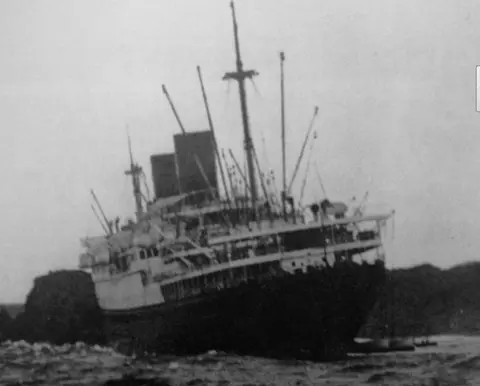
S3-E12 - American Luxury Cruise Ship Runs into Green Island 綠島 (1937)
The SS President Hoover was a ship ahead of its time, with innovative engine designs, air conditioning in all cabins, and space for almost a thousand passengers. But just seven years after being commissioned, the ship ran aground just off Green Island, which in 1937 was a part of the Japanese Empire. Listen to this week's story for a riveting adventure involving a possibly intentional bombing, a journey along the unfamiliar East Coast of Formosa in the dark, a shipwreck, drunken sailors, and some heartwarming pre-WWII kindness between Japan and America
10
April 27, 2023
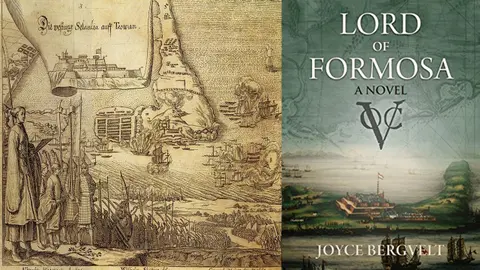
S3-E10 - Lord of Formosa - Part Two: Coyett VS. Koxinga
Joyce Bergvelt's book Lord of Formosa is a novel, but she's an author who has extensively studied the Dutch colonial period and the main characters involved. Lord of Formosa, therefore, might be closer to a history book than fiction. Listen to John speak with Joyce as they discuss the complicated, brash, and violent personality of Koxinga (Zheng Chenggong 鄭成功) and hear the details of how this pirate-warlord Ming loyalist clashed with Frederick Coyett, the Dutch governor of Formosa (who was actually Swedish).
8
April 6, 2023
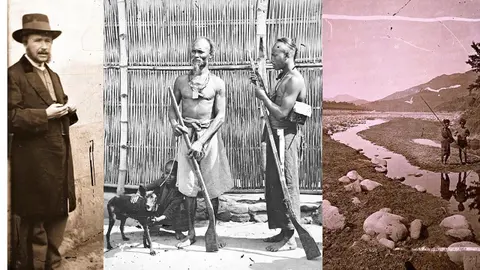
S3-E8 - Early Photos of Taiwan - by John Thomson - 1871
Some of the earliest photos we have of Taiwan were taken by a British photographer who visited the southwest of the island in 1871. Taking pics back then was far from “point and shoot.” It was “get inside portable darkroom, grab delicate glass plate, cover with chemical A, then B, then C, then expose the plate to light, then more...” and on and on. We owe John Thomson a debt of gratitude for his short but significant expedition to “photograph wild Formosa!” In particular, his images of the “Pingpu” (Plains) Indigenous peoples of the Tainan and Kaohsiung hinterlands captured the twilight of their old ways.
39
Jan. 19, 2023
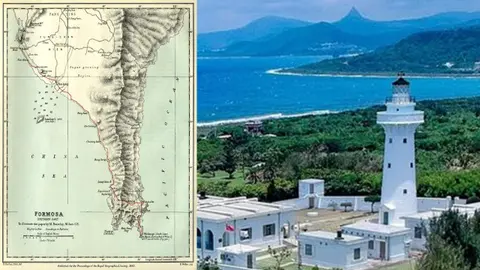
S2-E39 - Kaohsiung to Kenting Road Trip (1875)
The southern peninsula of Taiwan was a "ship graveyard" for a very long time as unseen rocks and reefs gashed holes in the sides of vessels and left them stranded, or on the seafloor. The Western powers and Qing authorities both agreed that a lighthouse at the far southern end of Taiwan would be a good idea, and so it fell upon English engineer Michael Beazeley and fellow employees of the Chinese Imperial Maritime Customs Service to set off from Takao (Kaohsiung) overland into "savage" territory to find and buy a piece of land for a lighthouse. Here's the illuminating origin story of the famous Eluanbi Lighthouse at Kenting.
37
Dec. 15, 2022
S2-E37 - A Cunning Count Contemplates Colonizing Formosa
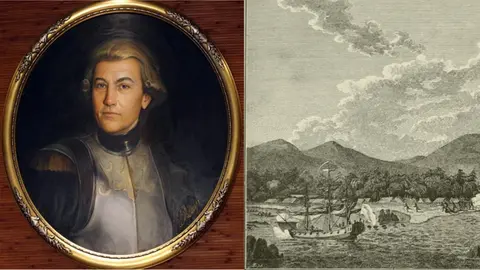
Ever heard of Count Maurice Benyovszky? He's not well known in Taiwan, but after this Polish-Slovakian-Hungarian semi-nobleman had a chance encounter with this island in 1771, he wrote a travel account that remained influential into the twentieth century. And the best part? Most of what he wrote is almost certainly fiction! His fanciful stories, however, included a call for Europeans to colonize Formosa. Finally, a century after his death, Benyovszky's tall tales would be part of the inspiration and justification for Japan’s “joining the big kids’ table” with its moves to conquer Taiwan.
34
Nov. 24, 2022
S2-E34 - "Galloping Oxen" - Emperor Kangxi’s Jesuit Mapmakers in Taiwan
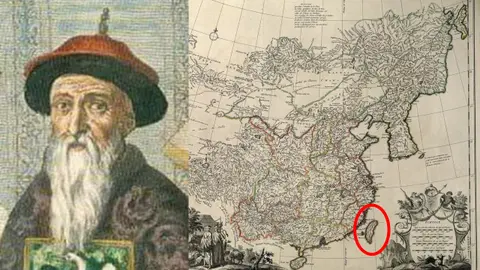
Between the late 1600s and mid-1800s, there was no Western presence on Taiwan. There were, however, a couple of special Western visitors of whom the wonderfully-named Joseph-Anne-Marie de Moyriac de Mailla was the most notable. This Jesuit priest was a hardcore scholar who spent 45 years in China. Emperor Kangxi gave de Mailla and fellow Jesuits a mission: "Go map my empire... including Taiwan!" This is the story of what the esteemed Jesuit priest saw when he visited Formosa in 1714.
Sept. 8, 2022
S2-E25 - Searching for Black Gold in Taiwan
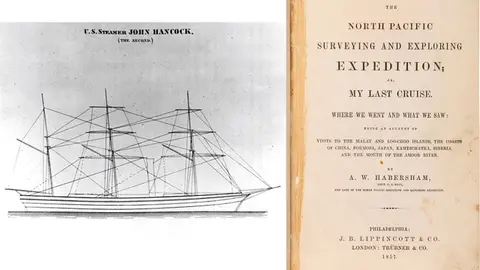
Commodore Matthew C. Perry’s two expeditions of 1852–1854 pried open Japan. Less well known is that one of the American ships visited Keelung in northeastern Taiwan to investigate the harbor and its coal resources. And completely forgotten is another American project, the North Pacific Exploring and Surveying Expedition of 1853 to 1856, which saw two visits to Taiwan. At that time, the United States was one of several Western powers which had an eye on establishing a foothold on Formosa’s wild East Coast. The mysterious region lay outside of Chinese control and promised all sorts of possible utility, whether as a coaling station or a penal colony. In today’s podcast we’re aboard the John Hancock in the company of Lt. Alexander Habersham, who wrote an account of the expedition.
20
July 14, 2022
S2-E20 - Mr. and Mrs. Giles
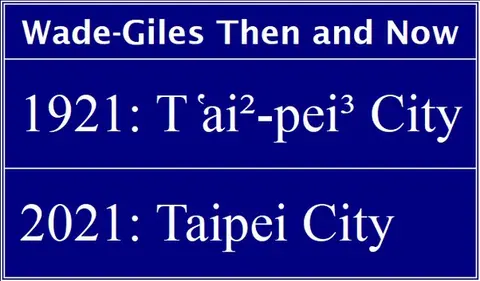
Why is "Kaohsiung" spelled so strangely? Shouldn't it be closer to "Gao-Shung"? (Or we could just use Hanyu Pinyin, "Gāoxióng"). Well, many names in Taiwan are spelled with the Latin alphabet, using a romanization system popularized by Mr. Herbert Giles, a British consul who spent 25 years in the treaty ports of China and Taiwan. The -- for some -- infamous Wade-Giles system renders "Pingdong" as "P’ing-tung," and "Taidong" as "T’ai-tung." It’s big on hyphens and apostrophes, too – T’ai-pei, T’ai-wan, Nan-t’ou – but this punctuation is seldom used correctly. Mr. Giles played an important role as an early Sinologist and Chinese translator, while the second Mrs. Giles chronicled treaty port life in a series called China Coast Tales, which included two stories set in Danshui, where the couple lived in the 1880s. Mr. and Mrs. Giles were not only prolific writers, but both also had some strong opinions and were not shy in expressing them, which makes for a fun episode.
17
June 23, 2022
S2-E17 - The Brief and Often Forgotten Kingdom of Dongning 東寧王國
Koxinga's eldest son, Zheng Jing, -- the ruler of the short-lived Kingdom of Dongning (1661-1683) -- almost lost his head in his late teens. Daddy Zheng Chenggong (Koxinga) twice ordered his execution for fooling around with a wet nurse. But Zheng Jing survived and soon after became ruler-warlord upon Koxinga's sudden death. Koxinga (鄭成功) and his armies had defeated the Dutch in modern-day Tainan, but their goal wasn't Taiwan. They wanted to use Formosa as a base from which to retake China and restore the Ming Dynasty, which had been toppled by northern foreigners -- the Manchus -- who established the Qing Dynasty. When Koxinga's son Zheng Jing (鄭經) came to power, however, he and some of his generals set themselves a different goal -- conquering the Spanish Philippines!! (What??)
13
May 26, 2022
S2-E13 - A Cruise on an Opium Clipper to Takao (Kaohsiung)
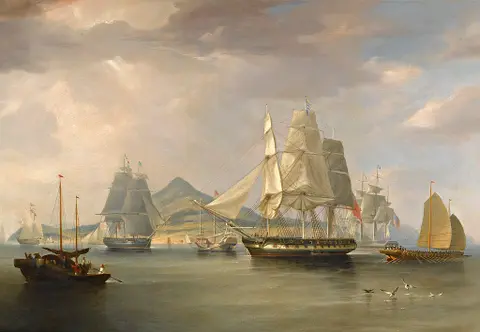
Kaohsiung Harbor was, in the late twentieth century, one of the world's busiest ports, but back during the time of the Opium Wars, it was still a rather secluded and hard-to-find place. Based on the somewhat embellished "A Cruise in an Opium Clipper," this is the story of how a British merchant ship carrying chests of opium found its way to Takao -- modern-day Kaohsiung. Today, of course, opium is mostly illegal, but as you'll hear... back then it was quite popular, and considered by many to be no worse than alcohol. So, trim the mainsail, hard to starboard... and another barrel of grog! We're sailing to 'Ta-ku'!
10
May 5, 2022
S2-E10 - Christian Samurai – Japan’s Katana Diplomacy in Taiwan
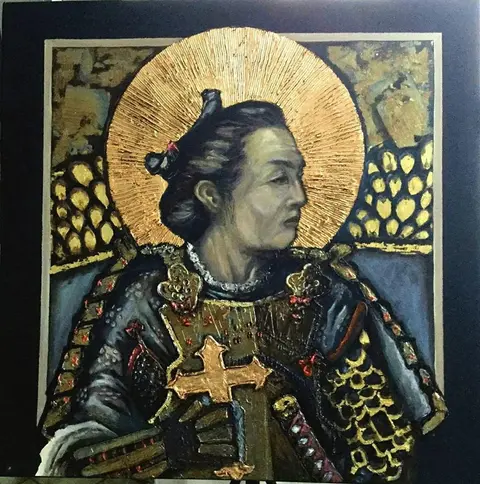
After unifying Japan’s warring states, supreme feudal lord Hideyoshi launched a massive invasion of Korea. In 1593, a year into this Imjin War of 1592-1598, he sent an envoy to Taiwan on a doomed mission to establish formal diplomatic and trade relations. In 1609 and 1616, the Japanese Shogun Tokugawa Ieyasu, hoping to establish indirect trading links with China, sent two larger missions to Taiwan. They were led and manned by Christian samurai from the island of Kyushu, which in the late 1500s had seen amazing success by Portuguese and Spanish missionaries in converting the population. Both expeditions to Taiwan were failures to the point of farce, but the many misunderstandings and missteps make for fantastic stories. Get ready for some katana-flavored diplomacy, with generous servings of piracy, abducted envoys, and a lot of seppuku.