
Should Taiwan Change its Time Zone? A Chat With Sasha B. Chhabra – S6-E13
Who owns Taiwan’s time? Taipei-based political commentator and author of Formosa Review substack Sasha B. Chhabra helps us wind back the history of Taiwan’s clocks, from local rhythms before what we now call “standard time,” to Japanese colonial rule, wartime Tokyo time, and ROC “Central Plains Time.” Then we move forward to more recent debates over sovereignty and identity. “What time is it?” seems like a simple question, but this episode delightfully complicates it with stories of daylight, empire, modernization, authoritarianism, and Taiwan’s right to define its own place in the world.

 Apple Podcasts
 Spotify
 RSS Feed
 RadioPublic
 PocketCasts
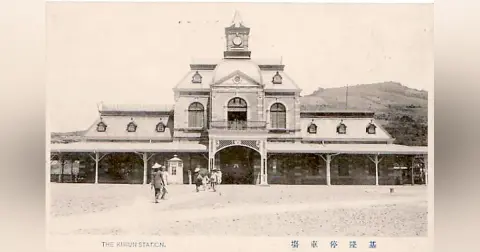
 Cover: Built in 1908, the former Keelung Train Station building was one of Taiwan’s first to feature a clock tower.
Caption: Taiwan in Time - Colonial masters of time, By Han Cheung
Photo: Wikimedia Commons
Other images courtesy of Formosa Review Substack/Sasha B. Chhabra
Who owns Taiwan’s time? Taipei-based political commentator and author of Formosa Review substack Sasha B. Chhabra helps us wind back the history of Taiwan’s clocks, from local rhythms before what we now call “standard time,” to Japanese colonial rule, wartime Tokyo time, and ROC “Central Plains Time.” Then we move forward to more recent debates over sovereignty and identity. “What time is it?” seems like a simple question, but this episode delightfully complicates it with stories of daylight, empire, modernization, authoritarianism, and Taiwan’s right to define its own place in the world.
Do us a favor and rate/review the show! It really helps. Do it on Apple Podcasts or here on our website.
Write us with questions or ideas at formosafiles@gmail.com
AND THE BIGGEST REQUEST: tell others about this free, not-for-profit resource about Taiwan.
Eryk Michael Smith (0:04): Welcome to From I'm Eric Michael Smith, and today we have a special guest joining us from Taipei, mister Sasha Chhabra. Welcome to the program.
Sasha Chhabra (0:12): Glad to be on.
Eryk Michael Smith (0:13): Perhaps you could tell us who you are, what you do.
Sasha Chhabra (0:16): Yeah. So I'm very happy to be on Formosa Files. So people who know my work may know I run a newsletter called Formosa Review. So that goes hand in hand where I write about all things related to Taiwan's foreign policy and politics, Taiwan US relations, and additional topics related to China as well. So I'm a Taipei based political commentator, analyst.
Sasha Chhabra (0:38): I've spent a long time working here, working in China and in Washington DC, and I have a lot of opinions that I like to share about, you know, how I think Taiwan can improve its foreign policy and how we can improve Taiwan's connections with countries that are really important to it, such as The United States and regionalized. But importantly, I think to all this is, you know, how does Taiwan get better known around the world? So that's a lot of what I work on.
Eric Michael Smith (1:01): Yeah. So you caught my eye recently with an article that you did about time. And just, real quick here, it's 02:00 in the afternoon here in Kaohsiung. And where you are in Taipei, it's also 02:00 in the afternoon. Incidentally, it's also 02:00 in the afternoon in Beijing, Nanjing, Chongqing, Urumqi.
Sasha Chhabra (1:20): Urumqi as well. Yeah.
Eric Michael Smith (1:21): Yep. But also Singapore and Hong Kong.
Speaker 2 (1:23): The Taiwan history Podcast, Formosa Files, is made possible through the generous sponsorship of the Frank C. Chen Foundation. Formosa Files.
Eric Michael Smith (1:35): So you wrote an article where essentially you're arguing for a variety of reasons that we should switch our time zones, but I thought we would start by maybe going back to the history we once were not in this time zone.
Sasha Chhabra (1:49): Yeah. So the history of time zones and just time in general is quite interesting, and Taiwan is no exception. And you'll find that as Taiwan has changed hands, so changed sovereignty over the past couple centuries, time has also changed. And of course, Taiwan hasn't moved where it is, but the time zone has changed, which tells us something about you know what does it really mean when we say that it's 02:00 here or 02:00 in Singapore or you know lived in The United States where you jump ahead half the year and you jump back for another half of the year. There's nothing fixed about that.
Sasha Chhabra (2:20): So time zones and standard time was only created in the late nineteenth century when you had the development of railroads and telegraphs and all this industrial quickness to the world that made it necessary to say that it's one time here and in this whole area, and then in another space over there where the sun rises earlier or later, it's a different time. Before that, you know, you got up when the sun was out and you went you went to sleep when the when the sun was gone. And maybe different towns had a town clock you may or may not have followed. So when the Japanese came to Taiwan in 1895, there was no standard time. In a largely graying society, people saw the sun, they got up.
Sasha Chhabra (2:57): People, you know, saw the darkness, they went to sleep. Or, you know, they lit a fire and drank some Xiaomi Jiao and then went to sleep. But what the Japanese first did in 1895 when they had just started coming up with a Japanese standard time and they called it a central time, they just established that time zone very quickly here. That's UTC plus nine. UTC is a coordinated universal time, basically means Greenwich Mean Time.
Sasha Chhabra (3:20): What time is it in London? And we can pass over all the colonial reasons for that, but basically UTC plus nine. That's nine hours ahead of whatever time it is in London. But a few months after that, when they started really organizing Taiwan and figuring out how to govern, administer, set up this place, they decided because at the same time they were consolidating control of the Ryukyu Islands, which are quite close to Taiwan, and those islands are actually closer to Taiwan than they are to Mainland Japan. So they decided this new Japanese empire needs two time zones, a Western time zone and an Eastern time zone.
Sasha Chhabra (3:52): And the the Western time zone covered the Ryukyu Islands or the Westernmost Ryukyu Islands and Taiwan, and that's UTC plus eight. So that continued for a few decades, but of course, still largely agrarian society, and Japan was consolidating control as they're instituting, you know, laws and a standard language and all these things that are markers of sovereignty. Eventually, realized they need a standardized time as well. So in 1920, they institute a national time day, and this is trying to get everyone to follow a one time, one time zone. And so they basically make everyone move on to adopt this standardized time, UTC plus eight, throughout Taiwan and the respective time zones of the different parts of of Japan.
Unknown Speaker (4:33): Including Korea?
Sasha Chhabra (4:34): Yes. Including Korea. I'm I'm gonna not speak on Korea because it's a little trickier case with a little different time zones, but generally, it followed the Western time zone. The the interesting thing happens in 1937 as the Japanese empire is expanding, you know, quite voraciously throughout Asia, they decide everyone needs to follow Tokyo time, and they move Taiwan to UTC plus nine, and I'd say move back because this was actually the first time zone that Taiwan ever had. And this lasts until 1945, Japan surrenders.
Sasha Chhabra (5:04): Just after Japan surrenders, the Japanese governor general in Taiwan, so not the Chinese occupying forces who came before the KMT occupying forces came, the Japanese governor of Taiwan moved Taiwan back to the Western time zone as it was called in Japan. Now this is where Taiwan and Japanese time end up diverging. As people may know, Japan is all on one time zone now. They've all gone back to just what they call central time. But for this brief moment at the end of World War two, the Western time zone is restored to the Ryukyu Islands and to Taiwan, and I believe to Korea as well.
Sasha Chhabra (5:38): But a few months later, the forces of the Republic Of China arrive and accept the surrender of the Japanese and start taking over and deciding not only are they accepting the surrender of the Japanese, but they're gonna start making this part of China. This idea that actually this is a place that's historically part of China and they wanna make everyone know that this is China. Even though the people there had, you know, didn't feel Chinese, never been part of China, never been ruled from China. So they decide that they need to bring Taiwan into the time zone system of the Republic Of China. Now earlier you'd mentioned, you know, that the time is same in in China, in Beijing, in Nanjing, and even as far west as Urumqi in in Xinjiang, East Turkestan, very, very far in into Central Asia.
Sasha Chhabra (6:20): This because the People's Republic Of China only has one time zone, and it's this crazy thing that time zone nerds all know about and is is a way that China's decided they wanna assert their sovereignty, that as far west as Central Asia, you're running on Beijing's clock to let everyone know that Beijing runs that place. The Republic Of China, which claimed those areas but didn't have control of them, came up with like six time zones to decide that this is much more reasonable place to to end up at. And they ended up assigning Taiwan to what's known as the Central Plains time zone. And the Central Plains or Zhongyuan, a very commonly used historic term referring to the Central Plains area. It's the cradle of Chinese civilization in North China around kind of Hebei.
Sasha Chhabra (7:02): This, you know, lasts for a couple years. We we know that China ROC loses China, loses the mainland in 1949. So then when the whole ROC government relocates to Taiwan in in 1949, there's only one time zone left in the ROC, and that's central time. And they are very clear on maintaining this as the one time zone that ties Taiwan to Nanjing, to the Central Plains area, to the historic center of China, making sure that this is known to be China. They did implement daylight savings time for a couple decades and then sporadically throughout the seventies before getting rid of daylight savings time entirely.
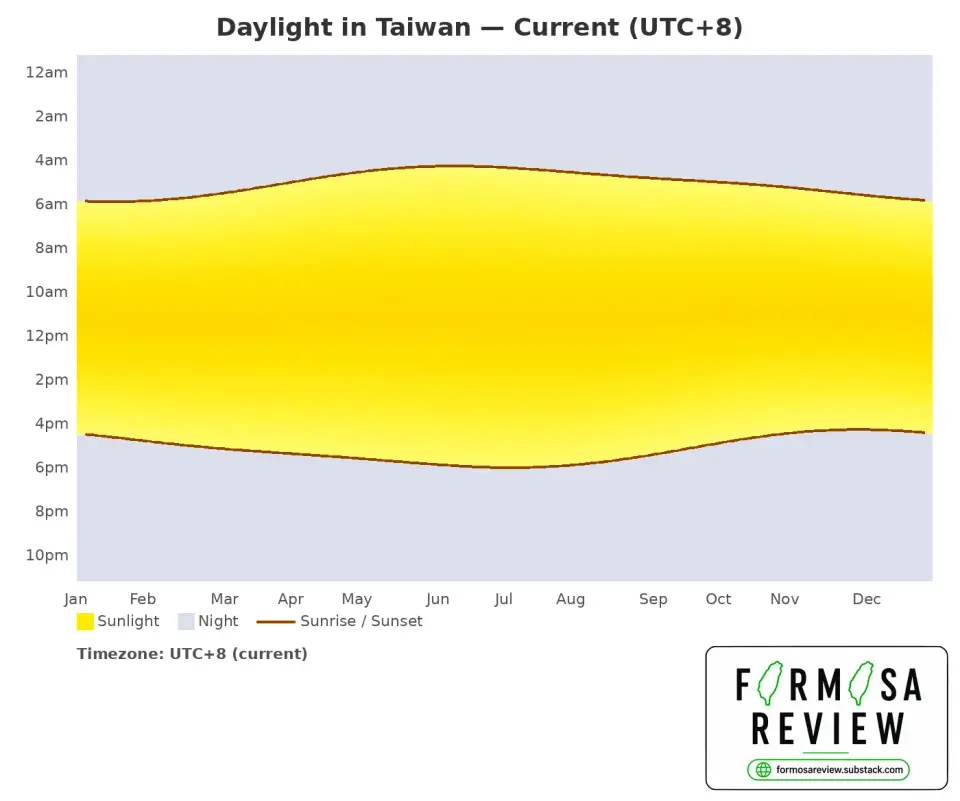
Sasha Chhabra (7:41): Basically, since 1979, Taiwan has all year round been at UTC plus eight. But as as you can see from that brief explanation, it's changed a lot. Before 1979, the time zone had changed throughout the year, throughout the decades, and historically been a tool of of sovereignty that, you know, the Japanese, the ROC, different institutions had used to assert sovereignty over time. That's the historical layout of of where things are.
Eric Michael Smith (8:08): When the Japanese moved it to their time, did anything actually change in Taiwan? Was there anything that made Taiwan feel like administratively closer to Japan because of this change?
Sasha Chhabra(8:18): I think this is a question you'd have to look at at the community level because, you know, what the Japanese did is they, you know, they unified Taiwan. Right? Even the the Qing dynasty only controlled the western part of Taiwan, and they had very tenuous control. So, you know, the extent to which aboriginal people were using indigenous people were using various time zones, I I think it it's unlikely they were. And to what extent any time was followed before the Japanese instituted this is spurious.
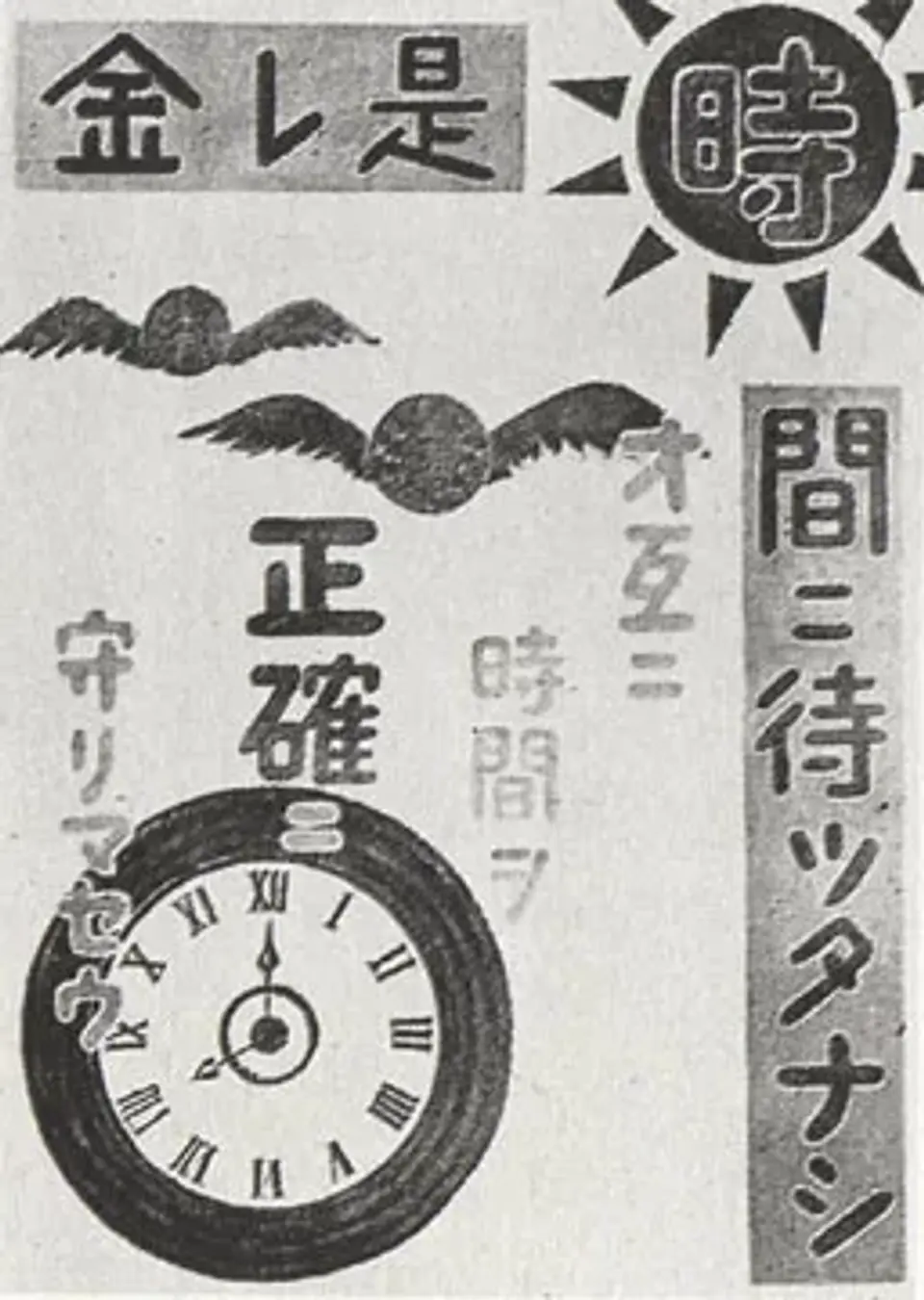
Sasha Chhabra (8:45): So we can see that there's orders have been issued. In 1895, there's an order saying that this is all on one time zone, but did anyone follow it? Unlikely. And when the second order was issued creating the Western time zone, still unlikely it was followed, and the evidence for that is the creation of the Time Memorial Day in 1920. So in Mainland Japan, it was implemented in 1920 and 1921, it's established as a holiday actually.
Sasha Chhabra (9:10): And in Taiwan they do these basically this propaganda campaign, they have posters on celebrate time memorial day, set your clocks correctly, be a modern person and they had celebrations, know, they have like a cannon go off at noon to mark that so everyone would know this is noon. And you know that's as much a marker of I would say modernity as Japanese administration. The things really went hand in hand with the colonial regime as you know they mark that you're now following standard time it's also you're now becoming Japanese. But, of course, there's no contrasting influence. I I don't know know that there's any record of any, you know, resistance to that as a resistance of being jeopardized.
Sasha Chhabra (9:48): And same with when, you know, the ROC implemented their time zone, there's not necessarily any record that I'm aware of of of of there being some resistance that we'll keep following Japanese time in in opposition because remember, UTC plus nine was only followed for a brief period during the second world war. But certainly, it was part of how you asserted that regime. You know, the the time was was stated as as Zhongyuan, Central Plains time when the ROC came and really put this this out. And now now it's called standard time in in Chinese post democratization, which again, we can see as a marker of how time is used by different regimes to show. Right?
Sasha Chhabra (10:24): The democratization and the move towards green led governments has led to a shift of not saying Central Plains time, a term associated with China, but saying Standard Time, which is just Standard Time. It's whatever government's in charge.
Eric Michael Smith (10:38): So we're not a political podcast, but we have to kind of stray into it a little bit here because the argument that you make in your article essentially boils down to Taiwan should change its time zone as a marker of sovereignty?
Sasha Chhabra (10:53): Well, there are two arguments I make. One is that, which is it's not a new argument. I didn't come up with this argument. Famously, in 2017, there was a petition made to change the time zone, and that got a lot of support and discussion in Taiwan. There was also a counter petition.
Sasha Chhabra (11:08): But yes, it was to show that, look, Taiwan isn't part of China. Its links aren't with with China. It's better to move to the time zone that it once shared with Japan and with Korea. And this is a way also of just demonstrating the sovereignty, the fact that it could be changed regardless of whether it's going an hour forward, an hour back, or a half hour forward as North Korea did for a brief period of time, the fact that you can change the time itself shows that you have sovereignty. It shows that there's no other government that can change the time in that area.
Eric Michael Smith (11:38): Of course, some people were not happy with the idea because they're like, you're going back to being a colonial Japanese.
Unknown Speaker (11:44): For sure. And they're entitled to that view and that's that's the debate.
Eric Michael Smith (11:48): Yeah. And then the other side of the argument you make is much more practical.
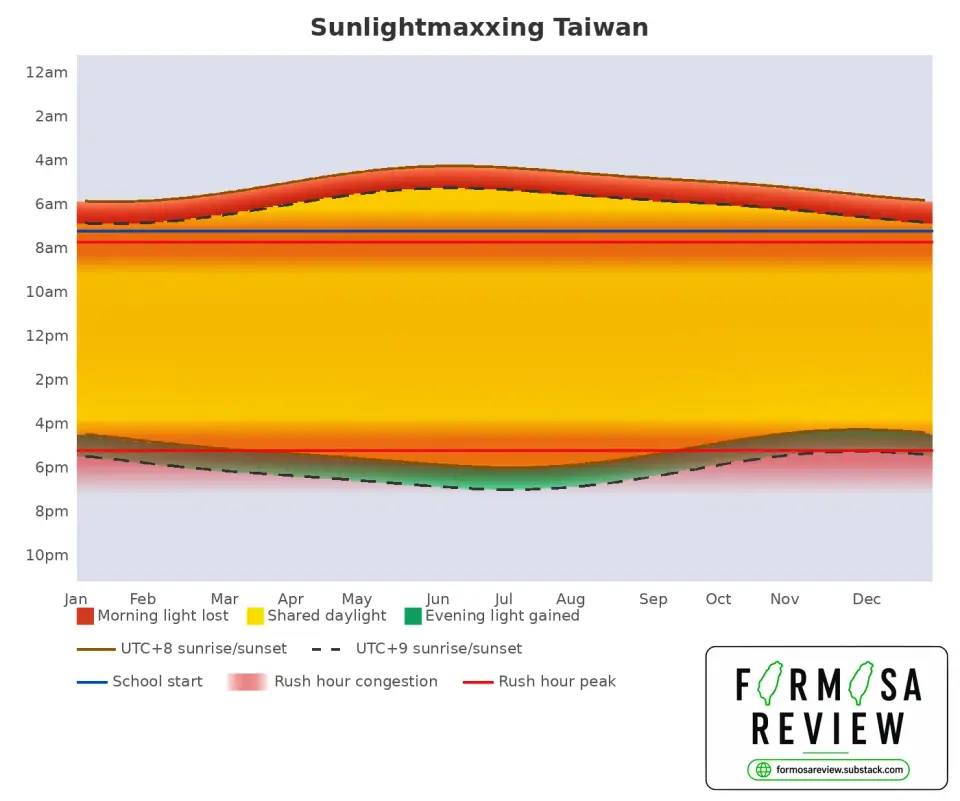
Sasha Chhabra (11:53): Yeah, I mean look, one thing that really frustrates me here living in Taiwan is it gets dark around five and that's you know when most people are still in the office. In many other parts of the world, particularly northern latitudes, very common in Europe that has its own skewed time zones, You get to really enjoy a lot of life after work ends. You can go outside in the park. You can go for a run. You can have a nice, you know, happy hour or a meal, out in the outside where there's there's all sorts of sunlight.
Sasha Chhabra (12:18): And, you know, it's quite interesting in Western Europe, this is really common because the time zones are not quite where they should be geographically as a result of World War II when they were in France and Spain. The time was changed to match Germany, and they never changed it back after the war the way, you know, in Taiwan it was moved during World War II and it flipped back. And that leads to this very vibrant, you know, after work night culture. And, of course, Taiwanese don't necessarily need a a sunlight to go and have night markets and all of that. But one thing we can think about is also how it makes commuting time safer.
Sasha Chhabra (12:50): So the sun sets at around five, 06:00. Never never always before seven. It never sets at at at 7PM, which is roughly when rush hour peaks. That's when people get off work. They get off work between six and seven.
Sasha Chhabra (13:04): And we know Taiwan has really, really bad road traffic fatalities, road safety incidents. And one cause of this is perhaps the fact that the biggest rush hour on the roads is when it's dark outside. And adding an hour of sunlight, giving just a little more light so people can see things when they're driving home, might actually help a lot with road safety. So there are a lot of benefits, and this is something that should really be taken seriously, not just as a political idea, but as a practical idea, and also as a just fun social idea of wouldn't it be nicer if there was another hour of sunlight to enjoy outside?
Eric Michael Smith (13:38): The only bone I have to pick with your, article about this part is you write here that, office workers lazily making their way in around 10AM. Don't know what city you're living in, but we have to be in the office by 8AM, many of us.
Sasha Chhabra (13:55): I I mean, absolutely, I won't speak for every office, but, know, the offices I've worked in in Taiwan and I don't want to get anyone in trouble here but you know not a lot of people there at 9AM if you if you show up there and you know I'm not saying Taiwanese are lazy. I mean lazily They walking work very hard very late and that's part of the culture here is that you know people stay out late, they stay up late, they get up late. Not a lot of stores are open early in the morning. The workday tends to start around ten. I don't think I've ever been invited to a meeting or a call at 9AM.
Sasha Chhabra (14:24): It's a bit early but you know, working at six, 7PM is quite normal here. So it makes sense that the sunlight should match that work clock where if you're going to get in the office at ten or at nine, you don't need sunlight at 6AM, right? Even if you're getting there at 8AM, there'll still be sunlight if you move to UTC plus nine when you're commuting.
Eric Michael Smith (14:42): Sorry, do we have enough of a change in summer and winter to mandate any sort of saving time?
Sasha Chhabra (14:47): That's another possibility, right? And there has savings time has been used. That was basically for saving energy back in the day. I don't think the energy savings makes sense with sort of modern technology and and how things work now could be investigated. But certainly for just having sunlight hours, it's a possibility.
Sasha Chhabra (15:05): Personally, I hate daylight savings time having lived in a daylight savings time country. I lived in a few, actually. It it's it's not you know, it doesn't make any sense. If it's designed for energy savings, there's much smarter ways to save energy. If it's designed to give farmers more sunlight, which is largely a myth, you know, farmers can get up whenever they wanna get up.
Sasha Chhabra(15:24): You know, the sun is there. It doesn't matter what what time it says. There's no office time. So, you know, it's an idea. And, again, I think the political benefits would would also be retained somewhat there if if Taiwan institutes daylight savings time.
Sasha Chhabra (15:36): It's showing it doesn't have to ask Beijing for permission. And that's the larger point I'm trying to make is that, you know, if you're flying into Taiwan, they're gonna say, look, the clocks are on Taiwan time, and you're moving an hour forward. It's very clear. This is something everything is gonna have to say and show that there's a different time in China, a different time in in Taiwan, and there's nothing Beijing can do to stop that because Woah. The only authority here is the government elected by the people of Taiwan.
Eric Michael Smith (16:00): I can imagine something Beijing could do. They could not recognize it. And in, like, the international aviation things, I can think of them being irritating.
Sasha Chhabra(16:09): They'll be irritating, but at the end of the day, you're going to come to Taiwan. You're going to have to change your watch to Taiwan time. You're to call somebody in Taiwan for a business meeting. You're going to have to check the time zone. That's Taiwan time, not Beijing time.
Sasha Chhabra (16:21): These are the sort of things that will show people who interact with Taiwan regularly that the sovereignty is being asserted. Right now, there's so many symbols of Chinese sovereignty that remain that will still give people who come to Taiwan or interact with Taiwan the impression that it's really tied to China because, you know, you fly here on China Airlines, you see The Republic Of China everywhere, and that may give you an impression that actually this is just a region of China that's, you know, being autonomous like in Hong Kong, but actually the reality is quite different. It's You don't see any an
Eric Michael Smith (16:54): any downsides related to stock markets or business connected to Singapore or Hong Kong?
Sasha ChhabraSasha Chabra (16:59): No. There's no difference. I mean, look, there are people working in Romania who trade on New York time. There's people working in Hong Kong who trade on, you know, London time. You know, you wake up when the markets open.
Sasha Chabra (17:12): And if there are traders in Taiwan, which there aren't many, they can wake up when they need to wake up for the Hong Kong markets. You know, there's people who trade on the Japanese markets. So actually, maybe it makes more sense to tie in with when the Japanese markets open rather than when the Hong Kong markets open. So you know, these are the arguments that people come up with to try to claim that there's going to be a big cost to it. At the end of the day, people work based on their work schedules, whether it's markets or sunlight.
Sasha Chhabra (17:37): And time is just a political invention that we all agree to agree to.
Eric Michael Smith (17:42): Yeah. The students or young people that I don't I don't think know, they give, a hoot about the exact what they want is school to start later. Yeah. Yeah. So Japan, as you noted, is on one time zone.
Eric Michael Smith (17:57): But looking at the map, theoretically, it should probably be broken up.
Sasha Chhabra (18:02): Well, I mean, this this is again, it's arbitrary. So if you look at a map of world time zones, you can see UTC plus nine and UTC plus eight. They're overlapping all over the place. You went to Singapore is on one time, but then go to you know, Thailand is East of Singapore, but it's an hour behind Singapore. Right?
Sasha Chhabra (18:20): And Singapore would say that they wanna align themselves with Beijing. That's why they use simplified characters. That's why they speak Mandarin. So that's why they use Beijing time. So, again, it's it's political.
Sasha Chhabra (18:30): You know, there's this that you could say you could say there's a a naturalness of you could put Japan in two different time zones. But, again, when they added the second time zone, it's when the, you know, Japan got a lot bigger. They got not just the Western Ryukyus, but also Taiwan. And, you know, I it'd probably make things very confusing for the Japanese to have two time zones. I don't know.
Sasha Chhabra (18:50): I wouldn't speak for Japan. If they wanna do three time zones, they can go ahead and do it. It's their own country. They have sovereignty. If Taiwan wants two time zones, one for Taiwan and Penghu and one for Kinmen and Mazu, that's also a great idea.
Sasha Chhabra (19:02): I recommend that in fact. You know, there's just there's so many different ideas.
Eric Michael Smith (19:07): Twenty seventeen one, there was a lot of people screaming that, okay, so you're de colonizing us from China and recolonizing us to Japan.
Sasha Chhabra (19:16): Yeah. And people are entitled to that viewpoint. But I think the question about colonialism is, you know, who's control are you being controlled by a foreign power? You know, is is it Japan that's making Taiwan move to this time zone? I don't think so today.
Sasha Chhabra(19:29): If the Taiwanese people decide, the government elected by their people makes this decision, that's not colonialism, and arguably, it's decolonialism of moving away from a a Chinese time zone. And if they're really, you know, worried about being the same time zone as Japan, which again, I think majority of Taiwanese would be totally fine with being closer to Japan, but geographically even, it can go the North Korea option. North Korea for about a period of a few years moved a half hour away because South Korea and and and Empire of Japan are on one time zone, and they didn't wanna be on the Japanese time zone. So they wanna desert that they're more decolonial than South Korea, so they moved a half hour in the other direction. It's a possibility.
Sasha Chhabra (20:12): Taiwan and North Korea are actually already on the same year system.
Unknown Speaker (20:15): I was just
Unknown Speaker (20:15): gonna say.
Unknown Speaker (20:16): Yeah. Yes.
Unknown Speaker (20:17): They're already in the same time system if you look at at the annual. You know, you're you're Ming Guo.
Unknown Speaker (20:21): they're one other country in the world. One five right now.
Unknown Speaker (20:25): Yeah. So they're also in year 01/2015 based on the Kim dynasty. So, you know, this is an idea. You know, why not?
Unknown Speaker (20:32): Didn't Nepal do 15 or and there's a part of India as well that No. Is also
Sasha Chhabra (20:37): So actually, this is very interesting. And there's an article in the New York Times this week about this, that Nepal is fifteen minutes off from its neighbors. And it's from the north, it has China, which all runs or Tibet, right, which runs on Beijing times. Even though Tibet should probably be a little later in the day, it runs on Beijing time. And then India all runs on on one time.
Sasha Chhabra (20:56): Even Northeast India, which is, like, a little far off of maybe where it should be, all runs on one time zone because the Indians, the Chinese, won't think that unifies the country. And Nepal is this little country sandwiched between great powers, much as Taiwan is or Korea are. And they decided that one way they wanna assert their sovereignty is make the time difference. So when you cross over from, you know, India to Nepal, which is, you know, largely an open border in many ways in the sense of people can move freely, you know, people work between the two countries and there's quite, you know, there's quite a degree of concern that many Nepalis have of being kind of in a vassal kind of state with India. And one of the ways they assert their sovereignty is through running on a different time zone from India.
Sasha Chhabra (21:38): And that seems to be something that the people there are proud of. And I guess it makes people take note as well that when they go over from India to Nepal or vice versa, they're going they're changing borders and they're changing time zones. And it's Are something Taiwan should study as
Unknown Speaker (21:52): there train links between the two?
Unknown Speaker (21:54): I'm not a 100% sure. I've never been to Nepal, so don't quote me on it. But you know, there are many links between the two countries. There's, you you can walk across the border in many places, sometimes accidentally.
Unknown Speaker (22:05): I'm just thinking about people who've gotten their time wrong or fifteen minutes wrong and they missed the
Sasha Chhabra (22:10): Yeah, yeah. Like I mean, but so that's another reason why it's a good marker of sovereignty because you realize when you have to catch a train or flight or whatever it is, that you have to check the local time zone. And incidentally as well, we think about how you express sovereignty and soft power differentiation. Taiwan and Nepal are the first two countries in Asia to legalize same sex marriage. So these are among the many things that the links between Nepal and Taiwan.
Unknown Speaker (22:36): Okay, before we finish this, do you have anything else from the article?
Sasha Chhabra (22:41): I want to encourage people to read my article at foremostreview.substack.com, you can find it, and other writings. One of the interesting things I found was that because under Taiwan's system where if you get enough signatures and a petition, the government has to respond. They don't have to follow it, but they have to do a thorough investigation and come up with a policy response from each ministry that deals with it. And because one of the stated reasons for this time zone shift was to assert sovereignty, to assert Taiwan's soft power and make it known to the world, they did a interagency review of Taiwan's soft power initiatives of how does Taiwan make itself known to the world, How does it differentiate itself from China? And each ministry prepared a report about this.
Sasha Chhabra (23:22): So I've actually gone through and analyzed that, and I've summarized I've translated and put the summaries of what each ministry said they were doing. And then, you know, just about ten years later now, about nine years later, I've done my own reflection on, you know, did this work? Is what, you know, the Ministry of Foreign Affairs is saying or Ministry of Transportation is saying as their way of differentiating themselves. Can we say that's worked? Because their response has been, you know, we don't need to do this because this has already been made clear in other ways.
Sasha Chhabra (23:50): And a lot of what I found is, you know, these strategies have not worked so well, and there's a lot to be learned. And some of them, they put some good ideas, but I haven't seen those implemented or haven't seen them implemented so effectively. So if people are interested in Taiwan's soft power, how it communicates to the world and its sovereignty, encourage you to go visit my Substack, foremostreview.substack.com.
Eric Michael Smith (24:09): Yeah. And a lot of good stuff over there. And listeners, feel free to weigh in in comments, and we'll we'll do an informal poll should we change our time zone. Alright. Thank you so much for being on the program, and, hopefully, you'll come back.
Unknown Speaker (24:24): We've got lots of other stuff to discuss.
Unknown Speaker (24:26): Thanks for having me. Happy to raise any of these issues.