
The US Decision To Recognize Beijing Over Taipei - 1979 Episodes
32
Oct. 15, 2025
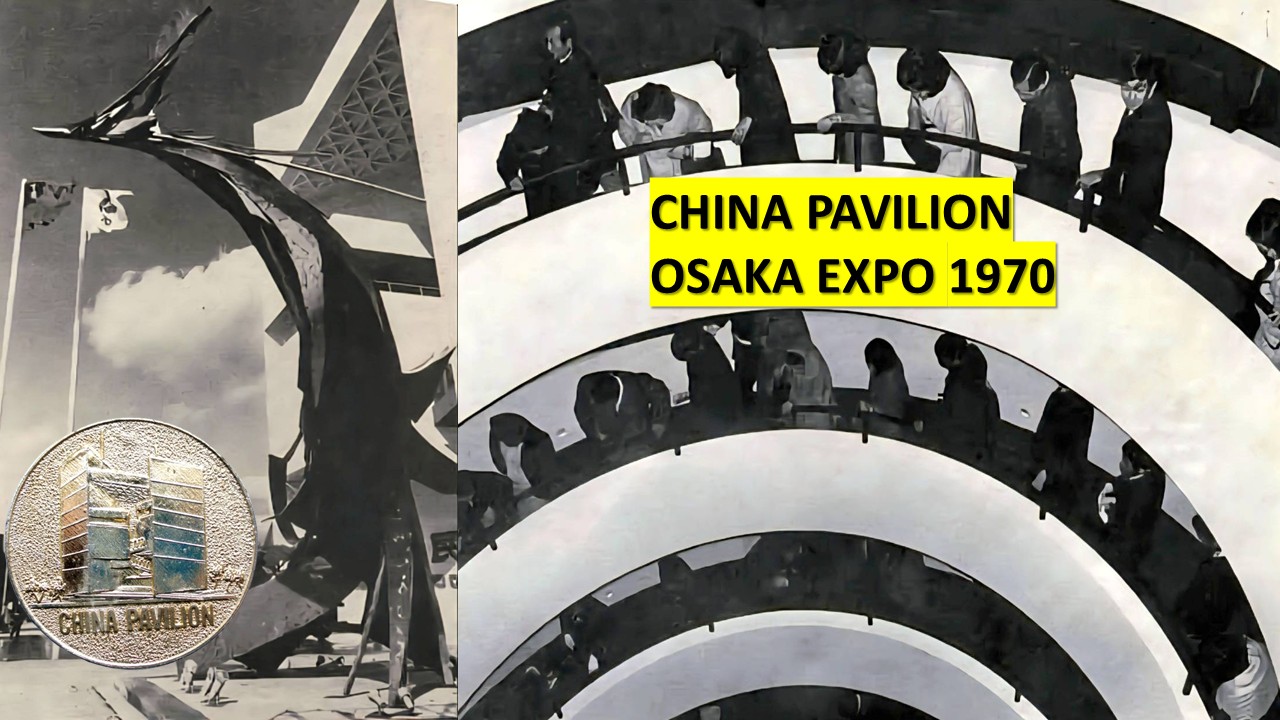
From Ashes to Innovation: Japan, Taiwan, and the Spirit of the Osaka Expo of 1970 – S5-E32
In 1968, just 23 years after the end of WWII, Japan became the world’s second-largest economy (and would remain so until 2011, when it was overtaken by China). In 1970, Japan highlighted its rise from the ashes by holding the Osaka Expo, a showcase of technology, culture, and confidence — from a monorail to moving walkways to videophones. It was the first World’s Fair held in Japan, and also in Asia. For the Republic of China (Taiwan), however, it would turn out to be something of a swan song on the international stage; in 1971, Taiwan lost its seat at the United Nations, and in the following years numerous countries switched diplomatic recognition to the PRC. But join Formosa Files as we visit Osaka in those happy days of 1970, when the future looked bright; astronauts had just landed on the Moon, Japan’s miracle was in full swing, and the world gathered to imagine tomorrow. Take a tour around the ROC’s futuristic pavilion, designed by I.M. Pei, which was a break from the classic Chi…
30
Oct. 2, 2025
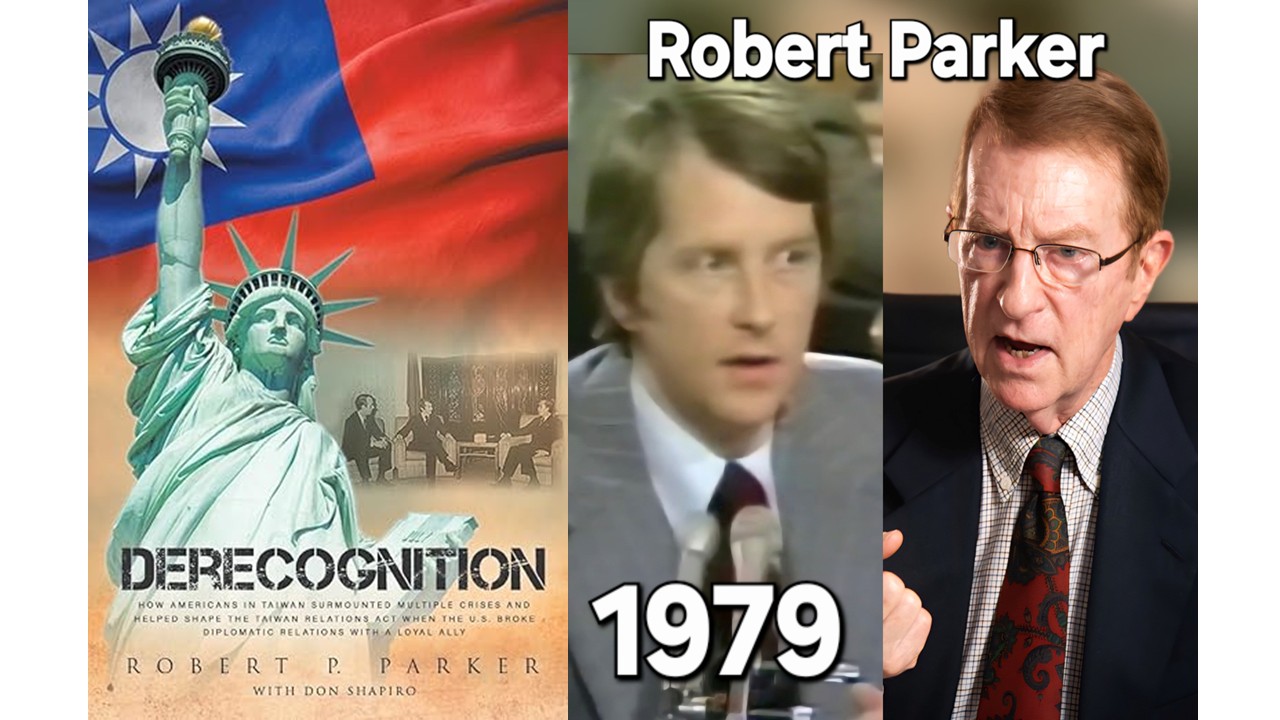
The U.S. Breaks Relations with a Loyal Ally for the First Time in History: Former AmCham Taipei President Robert Parker Tells the Story of “Derecognition” – S5-E30
Everyone knew it was coming, but when U.S. President Carter announced on Dec. 15, 1978 that Washington D.C. was switching diplomatic recognition from Taipei to Beijing in two weeks, both the Taiwanese people and the foreign community (then mostly Americans) were shocked. On that historic day of Jan. 1, 1979, Robert Parker began his term as the President of the American Chamber of Commerce. He soon found himself forced to act as a kind of de facto U.S. ambassador. Part of the bombshell announcement was the deadline for decoupling: everything and everyone officially connected to the United States would vanish by April 1979. For Parker, this resulted in near-surreal experiences that included helping cobble together a civilian radio station in 90 days (ICRT FM100.7), walking a political tightrope to determine the legality of the Taipei American School, and testifying before the U.S. Congress as American officials reacted to Carter’s recognition of the PRC by passing the Taiwan Relat…

2
Feb. 28, 2025
S5-E2 - 228, White Terror, The Formosa Incident, and Nylon Deng: PART ONE
NOTE: This episode is not suitable for young children. In part one, we begin in Saigon in 1963 before returning to Taiwan in the days before the nation became a full democracy. The stories and asides lead to Nylon Deng (Cheng Nan-jung 鄭南榕), a hardcore Taiwanese pro-democracy and pro-independence activist, who was born a few months after the 228 Incident in 1947. In 1989, after a long stand-off with the police, he chose self-immolation over arrest.
![[Special Encore] Jimmy Carter Dies at 100](https://s3.us-west-1.amazonaws.com/redwood-labs/showpage/uploads/images/6842db0a-ef85-45c6-bf7a-cb394e0dac1e.jpg "[Special Encore] Jimmy Carter Dies at 100")
Dec. 30, 2024
[Special Encore] Jimmy Carter Dies at 100
With a new intro and ending, this is a rerelease of one of our more popular episodes: the story of the decision by former U.S. president Jimmy Carter (1924-2024) to follow through with previous administration commitments to recognize the People’s Republic of China. The switch from the ROC to the PRC was a massive change that would slowly lead to the complicated de facto status the Republic of China has today: not technically recognized as a country, not thought to represent “China” anymore, but – at least for a huge number of nations – in reality, now a thriving, democratic, independent island nation known best by the name “Taiwan.”

8
April 25, 2024
S4-E8 - The Formosan Association for Public Affairs (FAPA): talking to a member of a former “terrorist” pro-Taiwan-independence group
Not so long ago, talking about Taiwan independence could earn you a lengthy prison term. That changed in the late 1990s as Taiwan embraced democracy. Taiwan independence advocates in the United States have always enjoyed more freedom of speech, but pro-independence organizations that pulled stunts such as chaining themselves to the doors of the U.N. building or flying pro-Taiwan banners over Little League games did come under official scrutiny. One such group, the Formosan Association for Public Affairs (FAPA), was actually placed on a “terrorist” list. This week, Eryk chats with the President of the Pennsylvania Chapter of FAPA, Liam Keen, a man from the UK who holds ROC citizenship, and lives and works in both the US and Taiwan. Keen argues that actions by FAPA are producing meaningful changes in the recognition of Taiwan as a de facto sovereign state by the United States, noting that until FAPA fought and won, a Taiwan-born could person had to list their place of birth as “China” o…

8
April 18, 2024
S4-E8 - The U.S. Breaks Up With Taipei for Beijing (Dec. 1978)
Former U.S. president Jimmy Carter only served one term, but those four years were rough: oil embargos, inflation, the Iran hostage crisis, and the decision to recognize the People’s Republic of China (PRC). It was an unpopular move, especially in Taiwan. President Carter asked his deputy secretary of state, Warren Christopher, to go to Taipei and deal with the fallout. Christopher received possibly the most hostile “welcome” to Taiwan ever experienced by an American government official.

March 7, 2024
S4 - A Formosa Files INTERVIEW: CNN China Legend Mike Chinoy
In the summer of 1973, a young Mike Chinoy finagled his way onto one of the earliest trips of civilian Americans to “Red China.” He would later become CNN’s China correspondent – moving to the PRC in 1987 – and became famous as he reported live on the infamous events that transpired in and around Tiananmen Square in Beijing on June 4th, 1989. Chinoy is in Taiwan for an extended stay, working on a documentary project. In this week’s interview episode, hear Chinoy tell Formosa Files about his first trip to Taiwan in 1974, his feelings on the CCP crackdown in Hong Kong, and his pride at watching Taiwan blossom into “the freest nation in Asia.”

Jan. 18, 2024
BONUS Episode: Linda Gail Arrigo's Verdict on Shih Ming-teh 施明德
Linda Arrigo has been in Taiwan for many years, working as a human rights activist, as an important member of the early team of fighters who risked life and limb for a democratic Taiwan, and more recently, worked with the Taiwan Green Party on environmental issues such as stopping NPP4. She's also taught in local universities as a professor. Her Ph.D. thesis (1996) was on land ownership inequality in pre-1949 China, a topic she started working on in 1975 during early graduate study -- but had to return to because her questionnaires on girl factory workers in Taiwan (field research 1975, 1977-79) were confiscated during a police raid on her home following the Kaohsiung Incident. She was married to the late Shih Ming-teh from 1978 to 1995. And while, like many, she has a great amount of respect for the former political prisoner-turned statesman, Linda notes that history will unfortunately remember the errors he made in his latter decades that sullied his once-glowing reputation.

9
April 13, 2023
S3-E9 - Nixon and Kissinger Grovel in China, and Taiwan's “China” Days are Numbered
Long hailed as a “historic diplomatic breakthrough,” the reality is that US president Richard Nixon's 1972 trip to China has been rather oversold. Yes, the brief Mao-Nixon meeting did start a thaw in relations, but Nixon may have given more than he got. Here’s a gripping tale of geopolitical strategy, grand ambition, secret trips, betrayal and blunders. As well as covering the famous summit which would give rise to the expression, “like Nixon going to China,” we also touch on Chiang Kai-shek’s own plans for “going to China” via Vietnam and the Soviet Union.

12
May 19, 2022
S2-E12 - "The National Game" -- Taiwan Falls in and out of Love with Baseball
After the Americans introduced baseball to Japan in the late 19th century, Japan took the game John Ross might call "a corruption of cricket" to their new colonial possession, where it became a hit. Surviving -- somewhat surprisingly -- the arrival of the Nationalists in 1949, baseball was officially ignored for the most part, which helped usher in a "Golden Age'' for the game and its rise to the status of "national game." But harnessed for political and material gain, baseball would be tarnished by a series of scandals that left fans unhappy and out of the stands. In the 2020s, however, there are signs of a revival... Could the "Guo Qiu" be making a comeback?

7
April 14, 2022
S2-E7 - Part 2: Dr. Peng Ming-min 彭明敏 (1923-2022) - Escaping Taiwan and a Hero's Return
How do you get a famous, one-armed democracy activist -- who is under house arrest and being watched 24/7 by the authorities -- off of a well-guarded, militarized island? Hint: A team of brave supporters, some forgery, and a whole lot of chutzpah. Hear the conclusion of the tale of the amazing life of the late Dr. Peng Ming-min.

6
April 8, 2022
S2-E6 - Part 1: Dr. Peng Ming-min 彭明敏 (1923-2022) - The Incredible life of a Democracy Fighter
Dr. Peng Ming-min (彭明敏) was a Taiwanese pro-independence/pro-democracy activist who lived an exceptional life - losing an arm in a WWII US air raid, witnessing the atomic bombing of Nagasaki, and being arrested for sedition after returning to Taiwan -- to name just a few of the amazing parts of his life story. In part one of this tale, we delve into his background and take you up to the day of his arrest in Taipei in 1964. ----------- UPDATE: Shortly after recording this episode, it was announced that Dr. Peng had passed away in the early morning hours of April 8th, 2022, at the age of 98. We offer our heartfelt condolences to his family - and may he rest in peace. Whether one agrees with all his political views or not, it's undeniable that Dr. Peng Ming-min was a powerful advocate for and champion of Taiwanese democracy -- the freedoms we enjoy in Taiwan today were fought for by people such as Dr. Peng, for which we are sincerely grateful.

1
March 10, 2022
S2-E1 - The CIA vs. Made in Taiwan Nukes
After the U.S. dropped an atomic bomb on Hiroshima in 1945, nations around the world began thinking about acquiring nuclear weapons of their own. Among them was China, then ruled by supreme leader Chiang Kai-shek. The Nationalists' retreat to Taiwan interrupted those early ambitions, but when the PRC successfully detonated a nuclear device in 1964, CKS stepped up efforts to develop nukes. This secret program continued after the death of Chiang Kai-shek in 1975 and came surprisingly close to success. Taiwan, however, would not end up joining the Atomic Club. Here's the story of how that happened: