
Taiwan During World War II. Episodes
By the late 1930s Taiwan had become one of Japan’s most important colonial possessions. It functioned as both an economic supplier and a strategic military base for Japan’s expansion across East and Southeast Asia. Extensive infrastructure, including ports, railways, and airfields, had already been developed during the colonial period, and these facilities allowed Taiwan to serve as a major logistical hub once the Pacific War began in 1941.
As the war intensified, Taiwan’s economy and society were fully mobilized to support Japan’s military needs. Agricultural production, especially rice and sugar, was directed toward feeding Japanese troops and civilians across the empire. Factories were retooled to produce military supplies and processed goods that could be shipped to battlefronts. Colonial authorities also launched assimilation campaigns encouraging Taiwanese people to adopt Japanese names, speak Japanese, and participate in Shinto rituals. These policies were meant to integrate Taiwan more tightly into the imperial state and cultivate loyalty to the emperor. Some local elites cooperated and benefited from economic modernization, while others maintained a distinct Taiwanese identity beneath official pressure to conform.
Mobilization also meant manpower. Hundreds of thousands of Taiwanese men were recruited as laborers, technicians, and eventually soldiers in the Japanese armed forces. Many served in non combat roles such as construction, transport, and communications, though some later joined combat units as the war situation worsened for Japan. Daily life became increasingly controlled. Rationing, surveillance, and civil defense drills became common. Schools taught imperial ideology, and propaganda stressed unity between Japan and its colonies. Even so, enthusiasm for the war varied widely among the population, reflecting a complex mixture of pragmatism, colonial conditioning, and quiet skepticism.
From 1944 onward, Taiwan’s role shifted from secure rear base to vulnerable frontline target. As American forces advanced across the Pacific, they launched heavy bombing raids on key military and industrial sites on the island. Major targets included the harbor at Kaohsiung, air bases near Tainan and Hsinchu, and transportation networks that supported Japan’s regional war effort. These attacks caused widespread destruction and civilian casualties. Air raid sirens, blackouts, and shelter drills became part of everyday life. Food shortages worsened, and the sense of imperial security that had once surrounded Taiwan steadily eroded under the pressure of Allied air power.
The war ended abruptly in August 1945 with Japan’s surrender following the atomic bombings and the Soviet entry into the conflict. Taiwan was handed over to the Republic of China.
As the war intensified, Taiwan’s economy and society were fully mobilized to support Japan’s military needs. Agricultural production, especially rice and sugar, was directed toward feeding Japanese troops and civilians across the empire. Factories were retooled to produce military supplies and processed goods that could be shipped to battlefronts. Colonial authorities also launched assimilation campaigns encouraging Taiwanese people to adopt Japanese names, speak Japanese, and participate in Shinto rituals. These policies were meant to integrate Taiwan more tightly into the imperial state and cultivate loyalty to the emperor. Some local elites cooperated and benefited from economic modernization, while others maintained a distinct Taiwanese identity beneath official pressure to conform.
Mobilization also meant manpower. Hundreds of thousands of Taiwanese men were recruited as laborers, technicians, and eventually soldiers in the Japanese armed forces. Many served in non combat roles such as construction, transport, and communications, though some later joined combat units as the war situation worsened for Japan. Daily life became increasingly controlled. Rationing, surveillance, and civil defense drills became common. Schools taught imperial ideology, and propaganda stressed unity between Japan and its colonies. Even so, enthusiasm for the war varied widely among the population, reflecting a complex mixture of pragmatism, colonial conditioning, and quiet skepticism.
From 1944 onward, Taiwan’s role shifted from secure rear base to vulnerable frontline target. As American forces advanced across the Pacific, they launched heavy bombing raids on key military and industrial sites on the island. Major targets included the harbor at Kaohsiung, air bases near Tainan and Hsinchu, and transportation networks that supported Japan’s regional war effort. These attacks caused widespread destruction and civilian casualties. Air raid sirens, blackouts, and shelter drills became part of everyday life. Food shortages worsened, and the sense of imperial security that had once surrounded Taiwan steadily eroded under the pressure of Allied air power.
The war ended abruptly in August 1945 with Japan’s surrender following the atomic bombings and the Soviet entry into the conflict. Taiwan was handed over to the Republic of China.
17
July 2, 2026
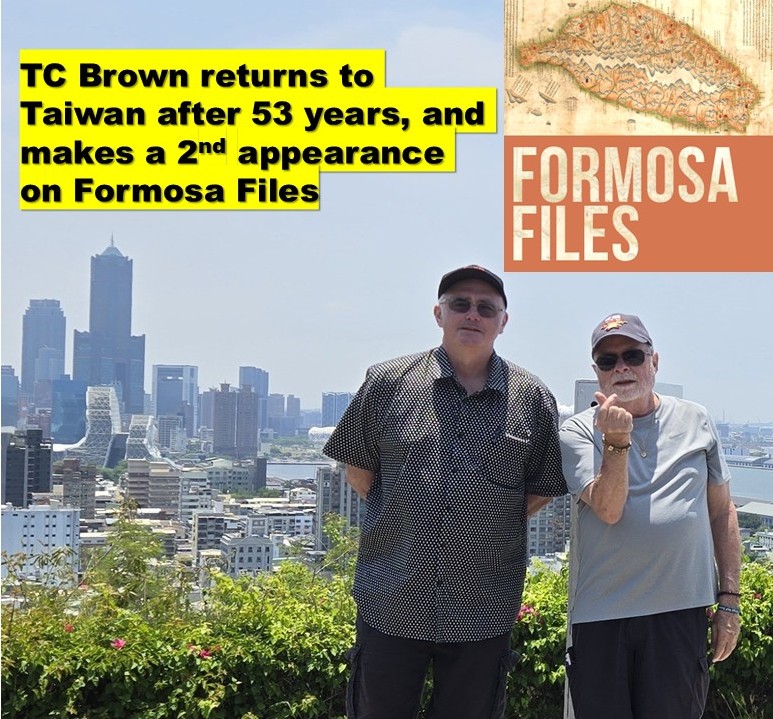
Sky Cop TC Brown Returns – S6-E16
TC Brown returns to Formosa Files – and to Taiwan – after 53 years away. A former U.S. Air Force security policeman stationed at CCK Air Base in Taichung for most of 1968-73, TC reflects on his recent trip back to the island, the Taiwan he remembers from the Vietnam War era, and the Taiwan he found today. John talks with TC about his memoir Made in Taiwan and town patrol in Taichung’s “Dirty Dozen” bar district. We also visit Hualien through Wang Chen-ho’s bawdy novel Rose, Rose, I Love You, one of the few works of fiction to touch on Taiwan’s role in Vietnam War R&R.
14
June 10, 2026
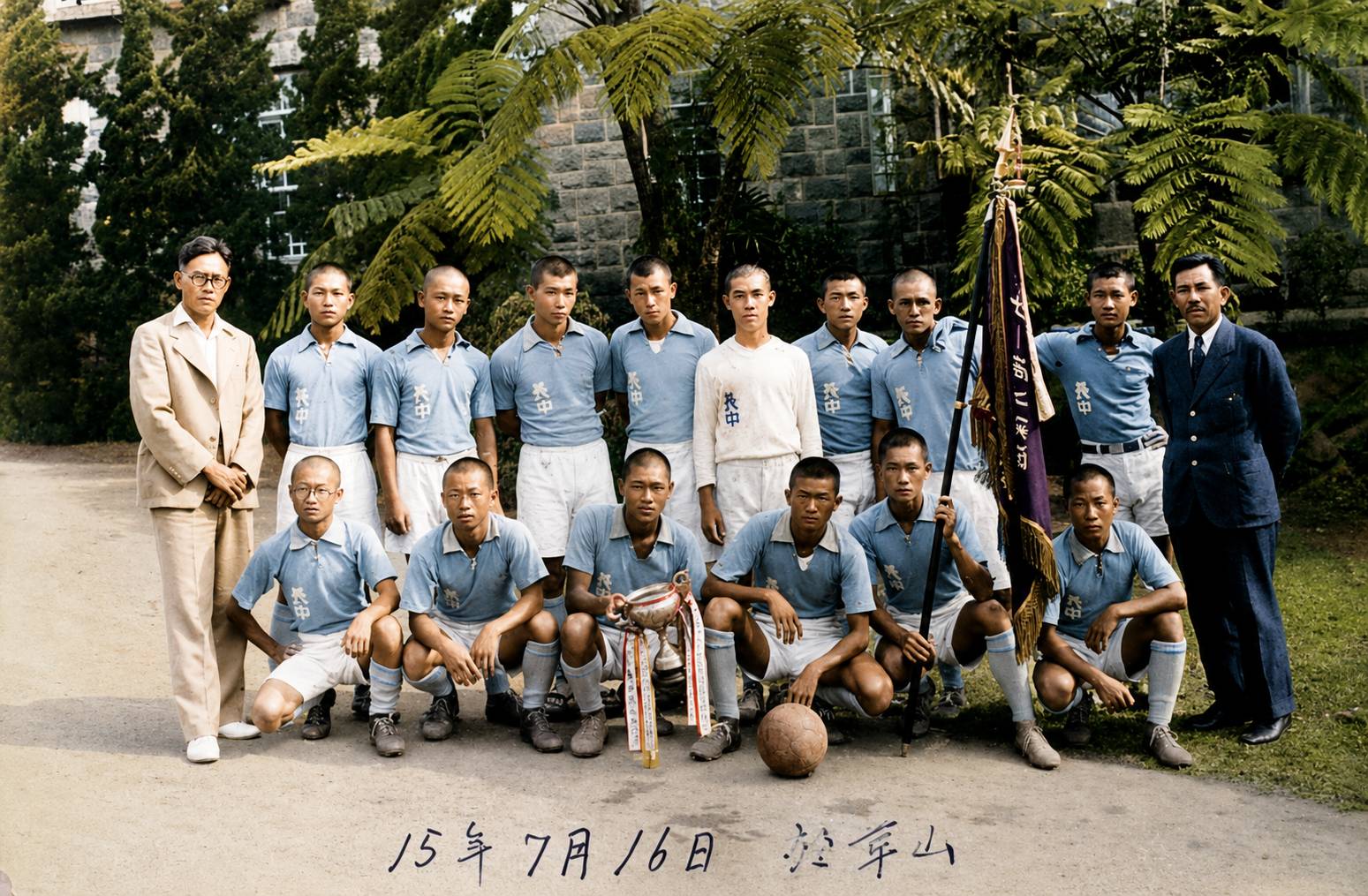
Football in Taiwan: From Missionaries to Mulan – S6-E14
As we head into the 2026 World Cup, we take a look at Taiwan’s surprisingly rich football heritage. Although a minor sport today, there have been periods of intense popularity and success. The soccer story starts more than a century ago with British Presbyterian missionary Edward Band, who introduced the sport to students in Tainan. We follow the growth of football during the Japanese colonial era, the White Terror crackdown, and then the unusual “Hong Kong Legs” era when the ROC national team used “football mercenaries.” The country’s greatest international success, however, came with the Mulan women’s football team.
11
May 20, 2026
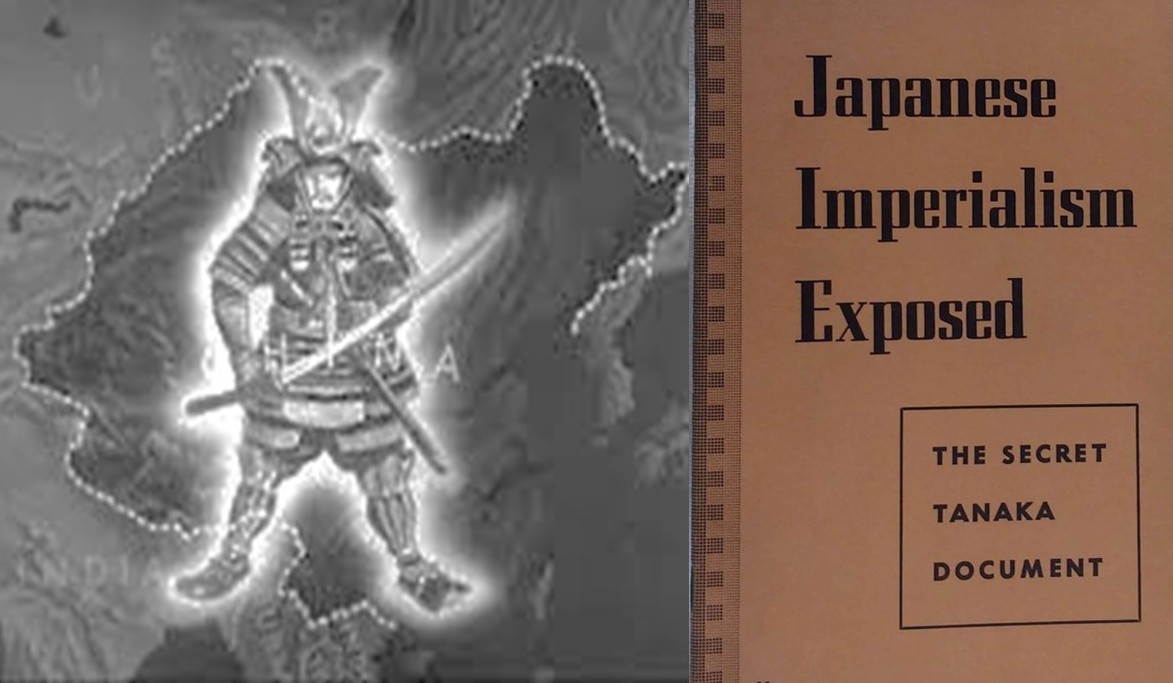
The Tanaka Memorial: A Secret Blueprint for World Conquest – S6-E11
In the 1930s, a mysterious document known as the Tanaka Memorial shocked the world. Supposedly written by Japanese Prime Minister Baron Tanaka, it outlined a strategy for conquering Manchuria, China, Southeast Asia, and even the United States. As real-life events seemed to unfold according to the alleged plan, the document became one of the most influential pieces of anti-Japanese propaganda of the twentieth century. It was quoted by American films, politicians, and many others. In this episode, we tell the story of Taiwanese businessman Tsai Chih-kan (蔡智堪), who later claimed to have personally copied the secret plans from inside the Japanese Imperial Palace. Although most historians today believe the Tanaka Memorial was a forgery, it remains an unsolved mystery. And the story of how it shaped global politics and wartime propaganda is, we think, more fascinating than the contents of the document.
52
Feb. 27, 2026
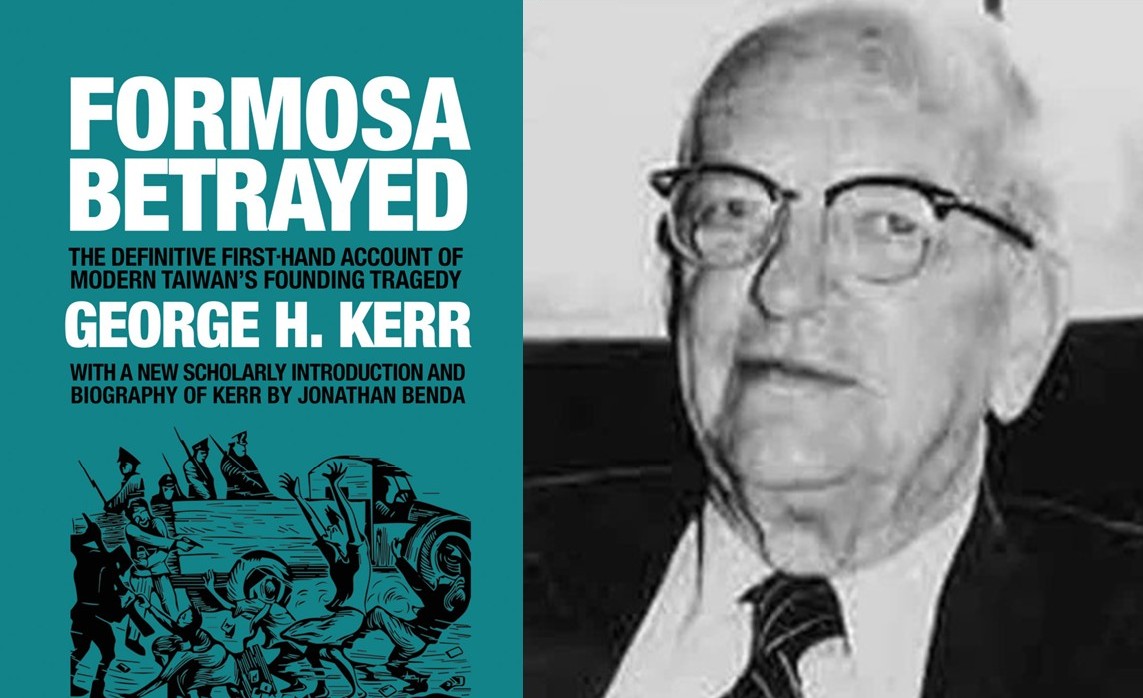
George Kerr and Formosa Betrayed (with Prof. Jonathan Benda) – S5-E52
American George H. Kerr was the most important Western eyewitness and chronicler of the February 28 Incident of 1947, the violent uprising and brutal crackdown that shaped Taiwan’s modern politics and identity. Kerr first lived in Taiwan in the late 1930s, when the island was a colony of Japan. During the war, he worked for the U.S. Navy as a Taiwan expert, and then from 1945 to 1947 served as the U.S. vice consul in Taipei. His account of Chinese Nationalist (KMT) misrule, Formosa Betrayed (1965), is arguably the most influential English-language book ever written about Taiwan. John chats with Kerr scholar Jonathan Benda about the book and the man behind it. Why did it take Kerr so long to publish his account? What does the “betrayed” in the title refer to? How did the book inspire Taiwanese democracy and independence activists? Drawing on new evidence, Benda explains it all and gives us a full picture of this complex man.
39
Dec. 8, 2025
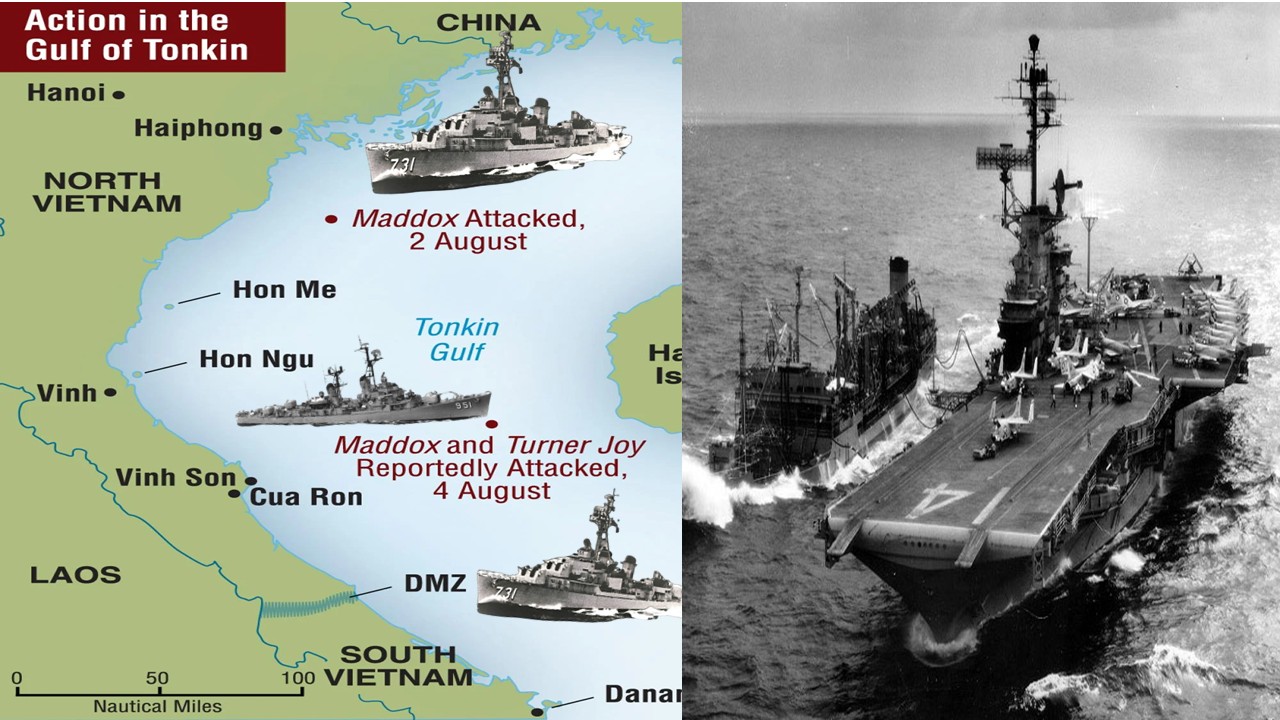
Shulinkou Air Station – Part 3: Taiwan and the Gulf of Tonkin – S5-E39
We end our Shulinkou trilogy by tying together the surprisingly interconnected Taiwan–U.S.–Vietnam story. It’s July 1964, and two U.S. Navy destroyers are in Taiwan preparing for an intelligence-gathering mission off the coast of North Vietnam. Shulinkou Air Station provided intel, specialized equipment, and trained personnel for the USS Maddox and USS Turner Joy – ships about to play starring roles in the controversial incident that helped draw the United States fully into the Vietnam War. Amid this geopolitical drama, we follow the story of a young Navy intelligence specialist, Joe Miller. A forbidden romance costs him his posting at Shulinkou. But his reassignment to the aircraft carrier USS Ticonderoga will give him a front-row seat to the Tonkin crisis, and change the course of his life.
![The San Cha Mountain 三叉山 Incident of 1945 – Taiwan Marks 80 Years Since Double Tragedy [S5 Reedited Encore]](https://s3.us-west-1.amazonaws.com/redwood-labs/showpage/uploads/images/50ecc7e4-b65c-418f-97c1-0c84bc8606aa.jpg "The San Cha Mountain 三叉山 Incident of 1945 – Taiwan Marks 80 Years Since Double Tragedy [S5 Reedited Encore]")
Sept. 17, 2025
The San Cha Mountain 三叉山 Incident of 1945 – Taiwan Marks 80 Years Since Double Tragedy [S5 Reedited Encore]
Imagine you’re an Allied soldier in the Pacific during WWII. You’re captured by the Japanese, survive brutal conditions as a POW, and the dangerous voyage in a “hell ship” to Japan, where you endure more years of captivity. Finally, in August 1945, the war ends. You’re freed, ready to go home. But there will be no happy ending. Some transport planes and ships never make their destination, including a B-24 carrying 20 former POWs, which crashes into a 3,496-meter peak in Taiwan’s southern Central Mountain Range during a typhoon. Compounding the sadness, 26 members of a team made up of Japanese, Taiwanese, and Indigenous people die in a rescue/retrieval attempt. This once little-known story was featured in Season Two of Formosa Files. In 2025, however – the 80th anniversary – many news organizations featured stories marking the event. Taiwan President Lai offered a moving tribute in a Facebook post, which in part read, “Eighty years ago, a group of people, without regard to nation…

June 7, 2025
Mark Kitto: “Last Boat Out of Shanghai” – musings and readings with John Ross on Shanghai-Taipei Connections – BONUS EPISODE
Some have called Taipei a “mini-Shanghai.” If true, the emphasis might need to be on the word “mini.” The population of the greater Shanghai area is nearly 30 million, some six million more than the number of people who live in Taiwan. Yet, there are some interesting similarities – which mostly aren’t accidental. When CKS and the Nationalists took control in 1945, and then made Taipei the "ROC Provisional Capital" on December 7th, 1949, the new rulers began to shape Taipei in an image modeled in many ways after Shanghai. John Ross (world traveler that he is) has never been to this sprawling city, but Mark Kitto (English actor and author, most recently of China Running Dog , lived and worked there for around a decade. Mark and John discuss the Shanghai-Taipei connection via talking about and reading from the book, Last Boat Out of China , a tale of a family fleeing Red China and “temporarily” seeking shelter in Taipei.

27
Oct. 17, 2024
S4-E27 - 1946
Taiwan in 1946. How will post-war Formosa turn out? Will the KMT be successful in managing the local economy? Will there be strife between the new Chinese rulers and – until very recently – Japanized Taiwanese people? Who knows? Well, we do... now. The Formosa Files team is pleased to bring you a rare gem: clips of a radio program by NBC, recorded in late 1946, just a little more than a year after the end of World War II. John and Eryk will play segments of this radio docu-drama and then comment on the facts, add info, explain context, and more. Enjoy this experience, which really feels like a kind of time travel!

14
June 20, 2024
S4-E14 - PACIFIC STORY–Formosa: Prize of the China Sea (NBC Radio, 1944)
It’s January 1944 and the tide of WWII has changed. Though it will be a long hard grind, victory is on the horizon. To “better inform the American public,” about the situation in the Pacific, NBC creates a series of radio documentary dramas in Hollywood, with expert writers and professional voice actors. Enjoy this 80-year-old gem that traces the island’s history from the Dutch to the “Chinese” on Japanese Formosa “yearning to rejoin the fatherland... China!” This old radio drama is a wonderful snapshot in time – 1944 – before the events of the following year (Hitler’s death, two atomic bombs dropped on Japan, the formal end of WWII, and Taiwan’s “return” to the Republic of China) shaped the world we live in today.

39
Jan. 4, 2024
S3-E39 - Taiwan’s Most Famous Red Light District: Taipei’s Combat Zone
“Blatant sex capital of Asia, where vice is legal and the price is right,” was how one book described Taipei in 1969. Listen as Taipei-based journalist David Frazier takes us through the history of Taipei’s first foreign-oriented red light district, an area of girlie bars and nightclubs that was, and still is, known as the “Combat Zone.” Frazier explains how this infamous entertainment zone formed around nearby US military bases, the history of prostitution in modern Taiwan, and how a bar zone became a conduit for Western culture.

33
Nov. 9, 2023
S3-E33 - Tales of Tokyo and Taiwan
This week we're looking at Tokyo, and telling a few tales that connect events in that major world city to people, places, and things in Taiwan. ポッドキャストをお楽しみください!

30
Oct. 6, 2023
S3-E30 - When the Russians Bombed Taipei (and other aviation stories)
Here's something we bet you didn't know: in 1938, Soviet pilots in Soviet planes (disguised to look like ROC Air Force planes) bombed the main airfield in Taihoku (now the Songshan Airport 臺北松山機場 in Taipei City). We've got that story and more as this week John and Eryk get a bit geeky and delve into some of the stories behind the planes we saw during recent visits to the Gangshan Aviation Education Exhibition Hall (航空教育展示館).

28
Sept. 21, 2023
S3-E28 - More Bits and Pieces: Ox Ditches and an Unsinkable Warship
Remember those two Polish cargo ships and one oil tanker from the USSR seized by the ROC Navy in the 1950s? Well, the story has one highly interesting extra element we didn't have time to get to in the last episode. Plus, John wants to write a book about an "ox ditch."

27
Sept. 14, 2023
S3-E27 - When Taiwan (ROC) Blockaded China (PRC)
After retreating to Taiwan, the ROC government-in-exile ordered a naval blockade of China, which lasted officially until 1979. In the early years, it was much more aggressively enforced than one might imagine. There were interceptions and attacks by the ROC Navy, CIA-backed Nationalist forces, and some pirate-like actions by unofficial ROC guerrillas. Even ships from the UK and the US were targeted, and being outside of Taiwanese and Chinese waters was no guarantee of safety. But, with several high-profile cases involving the seizure and confiscation of two Polish ships and a Soviet tanker called the Tuapse, the world grew weary and demanded that Chiang Kai-shek stop the blockade. Meanwhile, the detained crews became political footballs. Sadly, some of those sailors who were on the seized vessels ended up in prisons in both the USSR... and Taiwan. Some were stuck here for over 30 years!

21
Aug. 11, 2023
S3-E21 - Blockading Taiwan
China's People's Liberation Army/Navy has been practicing for a possible blockade of Taiwan with ships, planes, and drones. This week, Formosa Files looks at the history of blockades connected to Taiwan. Plus, hear about the nastiest "ocean blockade" in history -- when the new Qing authorities ordered the evacuation of the Chinese coast for over 20 years!

Aug. 3, 2023
Bonus Episode: 2-28: A Bad Beginning
In this special episode, we hear Eryk reading from chapter five of John’s “Taiwan in 100 Books.” The topic is 2-28, an event named after a date: February 28, 1947. It’s usually referred to as the February 28 incident, but sometimes called the 2-28 Massacre. American vice-consul at the time George Kerr used the term “the March massacres,” which gives a more accurate impression of what happened; the brutal suppression of uprisings and protests throughout the country, which left perhaps 20,000 dead. It was a bad beginning to ROC rule on Formosa, a dark stain that was a taboo topic until the early 1990s. Listen and learn about George Kerr’s “Formosa Betrayed”(1965), probably the most important English-language non-fiction work on Taiwan. We also cover the first English-language White Terror novel, “A Pail of Oysters” (1953), by Vern Sneider, and Allan James Shackleton’s “Formosa Calling” (1998), an account of 2-28 which took four decades to get published.
![[ENCORE] The Empire's Last Solider (29 Years, 3 Months, and 16 Days)](https://s3.us-west-1.amazonaws.com/redwood-labs/showpage/uploads/images/e99a06aa-db6b-4079-bf32-52d547e99504.jpg "[ENCORE] The Empire's Last Solider (29 Years, 3 Months, and 16 Days)")
July 27, 2023
[ENCORE] The Empire's Last Solider (29 Years, 3 Months, and 16 Days)
The last Japanese "holdout" of World War II was an Indigenous Amis Taiwanese named Attun Palalin, but in Japanese Formosa, he was Nakamura Teruo (中村 輝夫). Palalin was one of a group of Indigenous Taiwanese who served in the Japanese military as part of the Takasago Volunteer Unit 高砂義勇隊. The Takasago Unit was built on the idea that Indigenous Taiwanese were best suited for guerilla-style fighting in Southeast Asian jungles as they could live off the land and were accustomed to tropical climates, etc. Several thousand Indigenous men were recruited. Many Formosans served under the flag of the Rising Sun with distinction during the Second World War; no one, however, was apparently more dedicated than "The Empire's Last Solider," Attun Palalin, who kept "fighting" on an island in modern-day Indonesia until 1974! Enjoy your summer, catch up on episodes, and check out this encore episode, first released in October 2021.

June 15, 2023
S3-E14 - The Three “Pearl Harbors” of the Chinese Communist Party - with Ian Easton
Author of The Final Struggle, Ian Easton, sits down for a long chat with Eryk about the Chinese Communist Party (CCP). It's remarkable how close to extinction the CPP came, not once, but thrice. This is a story of spies and counterspies, moles and defectors, violence, treachery and death. Listen to Ian Easton's case on how much we've underestimated the CCP, and how democratic governments, international institutions... and people of all freedom-loving societies, need to "wake up" to the reality of what the CCP is: an authoritarian near-superpower wedded to a fanatic Marxism/Leninism ideology that seeks a new world order, controlled, of course, by a modern emperor in Beijing.
![[Encore] Mao's Taiwanese Spymaster](https://s3.us-west-1.amazonaws.com/redwood-labs/showpage/uploads/images/0c6eada1-a20e-467f-a918-716a24d0318b.jpeg "[Encore] Mao's Taiwanese Spymaster")
June 6, 2023
[Encore] Mao's Taiwanese Spymaster
The Taiwan News recently did a feature on Formosa Files (link below), and in the article, this episode from 2021 is mentioned. We thought we'd re-release it for any new "Formosa Filers" who missed it the first time around. This is a fascinating tale of a Taiwanese man (Japanese Formosan, to be exact), who survived the Long March with Mao Zedong, and was then sent back to Taiwan to build a spy network and prepare for a communist invasion. Many thanks to the Taiwan News for their detailed feature on Formosa Files. https://www.taiwannews.com.tw/en/news/4910533

40
Feb. 2, 2023
S2-E40 - The Two Generalissimos - Francisco Franco and Chiang Kai-shek
Relations between the R.O.C. (Taiwan) and Spain have never been as close as Taiwan's ties to, for example, the United States. But back in the days when Taiwan was ruled as a one-party state, there were more connections than one might think between the R.O.C. and Spain, which was also a one-party state under the rule of a "generalissimo."

30
Oct. 20, 2022
S2-E30 - The Mysterious Death in Taipei of India's Most Controversial Nationalist
Unlike Mahatma Gandhi, fellow Indian pro-independence leader Subhas Chandra Bose advocated taking up arms against the British. WWII presented a golden opportunity for this, and in an "enemy of my enemy" move Bose escaped from arrest in India and headed for Nazi Germany. But despairing of a German invasion of India that would overthrow the British, Bose turned to the Japanese. This controversial Indian revolutionary died in Taipei in 1945, leading to decades of speculation and conspiracy theories. Here's the story of this complex figure and his final fate in what was then still Taihoku, Japanese Formosa.

29
Oct. 13, 2022
S2-E29 - The "Most Powerful Witness" to Modern Taiwan's History: Wu Zhuoliu (吳濁流) - Part One
Sadly, the bloodshed and sorrow that began on February 28, 1947 (228) is the foundational story of post-Japanese Taiwan. Wu Zhuo-liu (吳濁流), an ethnically-Hakka poet, writer, and journalist, was born in 1900 and died in 1976, his life effectively spanning the tumultuous birth of the nation. He experienced and documented colonial rule, WWII, the Japanese departure, and the hopeful first days of a "New China" which turned so quickly to violent tragedy. Wu's writings are today considered some of the most important of the modern era, but he remains mostly unknown to much of the world. Here is the beginning of Wu Zhuo-liu's story.

27
Sept. 22, 2022
S2-E27 - Ghost Planes and the Japanese Fighter Pilot who Became a God
John loves aviation stories and in this episode we've got two: the first raises some serious questions about an oft-told "ghost plane" tale, while the second features a heroic young Japanese Zero fighter pilot who perished in Tainan in the last year of WWII...and then became a deity in that southern Taiwanese city! Photos and additional info at Formosafiles.com

22
Aug. 11, 2022
S2-E22 - USS Tang: The Most Successful US Submarine of WWII
War is not glorious, and shouldn’t be glorified. But war does provide the chance to be brave, and bravery can be glorious. Such was the case of Commander Richard O’Kane and the crew of the USS Tang. In 1944 the American submarine was on its fifth and most dangerous patrol yet, in the vital shipping lane of the Formosa (Taiwan) Strait. After their final torpedo was fired and the men already talking of home, a freak accident would leave the crew fighting for their lives, some on the surface and others trapped underwater. NOTE: This was also the first time in history submariners were able to escape a sub without help from the surface, using a "Momsen lung."