
Modern Democracy Episodes
Trace the evolution of Taiwan's political landscape from authoritarian rule to a vibrant democracy, focusing on key events, figures, and societal movements that shaped its current governance.

19
July 22, 2026
Chen Chu, Part 1: The Prisoner Who Would Lead Kaohsiung – S6-E19
Long before becoming a three-time mayor of Kaohsiung, Chen Chu (陳菊) spent decades in Taiwan’s democracy movement. Born into a farming family in Yilan in 1950, Chen Chu moved to Taipei to attend university, and was soon drawn into the dangerous world of the dangwai opposition struggle against one-party KMT rule. After the Kaohsiung Incident of December 1979, Chen was sentenced to twelve years, and would spend more than six years behind bars – much of that time isolated with fellow prisoner and future vice president Annette Lu. Cover image shows Chen Chu marching in one of the first martial law-era political protests: The Jan. 1979 Ciaotao Incident

17
July 8, 2026
Taiwan’s First Sex Change (1953-1955) – S6-E17 (Not suitable for minors)
NOTE: This is our first episode to be labeled “explicit,” not due to bad language, but because it includes reasonably direct anatomical references. It may be best not to play this aloud when minors are present. We start with the relatively unknown story of Taiwanese boys condemned to become eunuchs in Emperor Qianlong’s imperial palace, their fate sealed simply because they were the young sons of rebels. We then turn to the first gender affirmation surgery (as it might be called today) performed in Taiwan, way back in the early 1950s, with the remarkable case of soldier Hsieh Chien-shun (謝尖順), the so-called "Chinese Christine." In 1953, the discovery of Hsieh's medical condition and the ensuing series of operations became front-page news across Taiwan, with newspapers turning a deeply personal matter into a national spectacle. We explore the ethics of the case. Hsieh was reluctant to transition to female and only agreed after considerable pressure, making it much less of an “aff…

14
June 10, 2026
Football in Taiwan: From Missionaries to Mulan – S6-E14
As we head into the 2026 World Cup, we take a look at Taiwan’s surprisingly rich football heritage. Although a minor sport today, there have been periods of intense popularity and success. The soccer story starts more than a century ago with British Presbyterian missionary Edward Band, who introduced the sport to students in Tainan. We follow the growth of football during the Japanese colonial era, the White Terror crackdown, and then the unusual “Hong Kong Legs” era when the ROC national team used “football mercenaries.” The country’s greatest international success, however, came with the Mulan women’s football team.
8
April 29, 2026
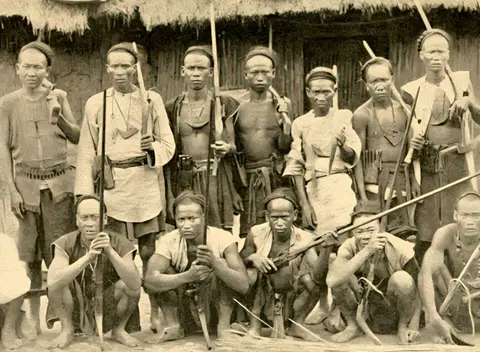
Guns in the Mountains: Taiwan’s Indigenous Firepower – S6-E8
We head into the mountains to tell the story of the deep relationship between Taiwan’s Indigenous communities and firearms. The warriors’ incredible skill and ingenuity with guns enabled them to hold off Qing dynasty forces, Western punitive expeditions, and even the modern Japanese army well into the 20th century. Far from the familiar image of bows and arrows versus modern rifles, Taiwan’s Indigenous peoples were quick to adopt and adapt firearms. Early on these firearms were simple matchlock muskets – slow to load but still deadly in skilled hands – but in the late 1880s, the Indigenous groups acquired modern rifles. Sometimes they had firepower equal to, or better than, their opponents. Through the centuries, guns became essential tools for hunting and warfare. They also became items of status and cultural importance. Guns were gifted in marriage, buried with the dead, and woven into customs of justice and belief. For this episode, we drew on the excellent dissertation by…
3
March 26, 2026
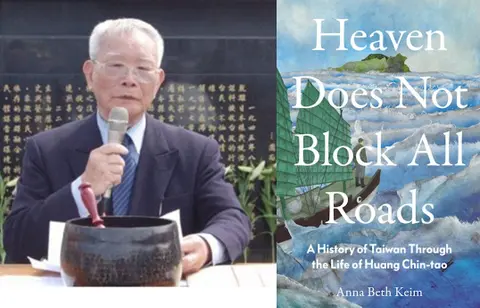
The Extraordinary Life of Huang Chin-tao (Part 2) – S6-E3
Huang Chin-tao (黃金島) was never a household name, but his life story is the story of modern Taiwan. In this concluding episode, we follow Huang from the 2.28 uprising in 1947 as he joins a resistance group led by a rare combination: a Taiwanese woman communist guerrilla commander, Xie Xuehong, whom we've dubbed Agent "Red Snow." After fighting bravely but losing the Battle of Wuniulan Bridge in Nantou, Huang becomes a fugitive and then spends more than two decades in Taiwan’s prisons. There is, however, finally some happiness: a few years after being released, he found love and became a political activist in what would become Taiwan's first real opposition party. For this tale of resistance, survival, and a regular man’s refusal to be broken by history, we drew on Anna Beth Keim’s excellent biography "Heaven Does Not Block All Roads."
2
March 18, 2026
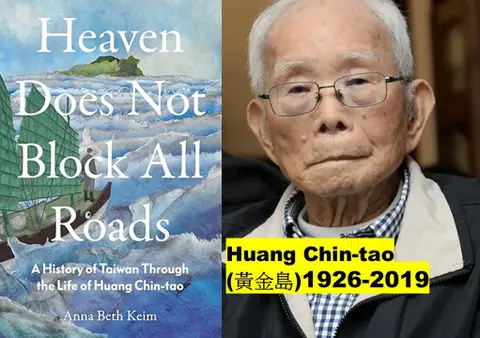
Huang Chin-tao: a History of Taiwan Through One Man’s Life (Part 1) – S6-E2
This is part one of the extraordinary life story of Huang Chin-tao (黃金島 Huáng Jīndǎo). In fact, he seemed to live not one life but many; he was a Japanese naval recruit, a combat soldier, a survivor of typhoons and pirates, an armed rebel during the 2-28 Incident of 1947, a man on the run, a prisoner, and a politician. His lifetime, 1926 to 2019, also gives us the background story of Taiwan’s turbulent 20th century. Although the turns and twists of history were often brutal for Huang, he was unbreakable, a man who refused to let fate decide his path. In the words of the title of Anna Beth Keim’s excellent biography: Heaven Does Not Block All Roads.
45
Jan. 21, 2026
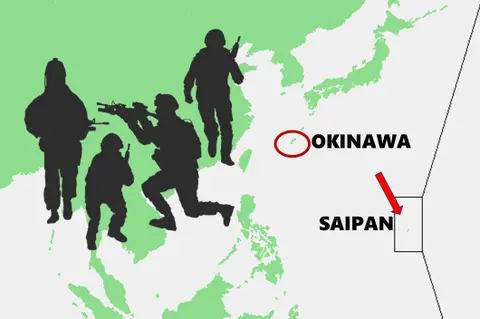
The CIA Plan to Remove CKS (Part 2): S5-E45
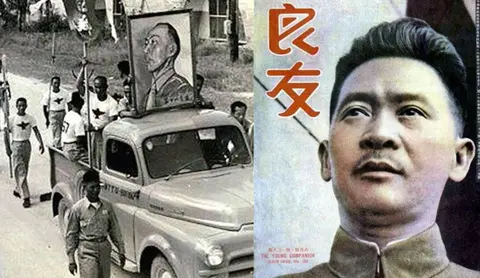
The Cold War is heating up as the CIA continues to build a “Third Force” – a democratic alternative to both Mao’s Communists and Chiang Kai-shek’s Nationalists. A secret army is being trained on the islands of Okinawa and Saipan. But when these Chinese special forces are dropped inside the PRC to gather information and organize anti-communist guerrillas, there is a grim reckoning. Most perished. Built on a house of cards of faulty intelligence, this ambitious covert project would quickly and quietly collapse. It is, however, a riveting story and one with valuable, evergreen lessons. Please take a second and rate or review, it really helps.
44
Jan. 14, 2026
The CIA Plan to Remove President Chiang Kai-shek (Part 1): S5-E44
Standard histories tell us that after fleeing to Taiwan, Chiang Kai-shek became America’s staunch Cold War ally – an immovable figure with an iron grip on Fortress Formosa. But behind the scenes, parts of the U.S. government were quietly exploring ways to push him aside. Today we uncover a little-known CIA effort to build a “Third Force” – a democratic alternative to both Mao’s Communists and Chiang’s Nationalists. From whispered WWII assassination plots to secret Cold War schemes involving breakaway Chinese generals and hidden training camps, it’s such a riveting story that we’ll need two episodes to tell it properly. Please rate or review on Apple or Spotify, it helps others find the program.
35
Nov. 5, 2025
Altars and Outlaws: Ben Sando on Taiwan’s Underworld – Gangs, Temples, and Political Influence – S5-E35
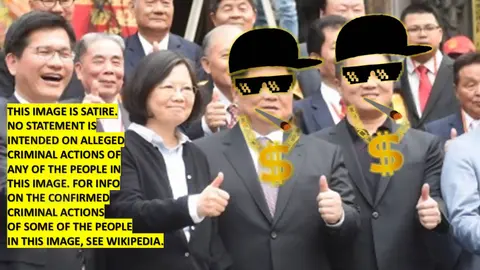
We’ll let Benjamin Sando, research fellow at the Global Taiwan Institute, and our guest for this week’s episode, describe the topic: “From the early days of Han Taiwanese society, through the period of Kuomintang (KMT, 國民黨) martial law and on to the era of democratization, the influence of Taiwan’s gangs has evolved. The activity of some gangs (but not all) has spread beyond extracting profit from local territory – through extortion, prostitution, and gambling – to international transactions involving drugs, arms, and human trafficking. This has sown connections between certain Taiwanese gangs and foreign actors, such as Chinese triads and government officials engaging in united front work for the People’s Republic of China (PRC). As elections become more competitive in Taiwan, gangs have leveraged their control of prominent Taiwanese temples to influence politicians seeking support from religious communities. Such deep-rooted connections between gangs and local communities obstruc…
32
Oct. 15, 2025
From Ashes to Innovation: Japan, Taiwan, and the Spirit of the Osaka Expo of 1970 – S5-E32
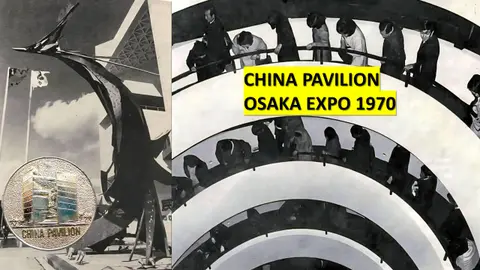
In 1968, just 23 years after the end of WWII, Japan became the world’s second-largest economy (and would remain so until 2011, when it was overtaken by China). In 1970, Japan highlighted its rise from the ashes by holding the Osaka Expo, a showcase of technology, culture, and confidence — from a monorail to moving walkways to videophones. It was the first World’s Fair held in Japan, and also in Asia. For the Republic of China (Taiwan), however, it would turn out to be something of a swan song on the international stage; in 1971, Taiwan lost its seat at the United Nations, and in the following years numerous countries switched diplomatic recognition to the PRC. But join Formosa Files as we visit Osaka in those happy days of 1970, when the future looked bright; astronauts had just landed on the Moon, Japan’s miracle was in full swing, and the world gathered to imagine tomorrow. Take a tour around the ROC’s futuristic pavilion, designed by I.M. Pei, which was a break from the classic Chi…
28
Sept. 10, 2025
Made in Taiwan: A Naïve American’s Chaotic Journey to Manhood in an Exotic Culture During Radical Times – Formosa Files chats with Vietnam vet and author TC Brown – S5-E28
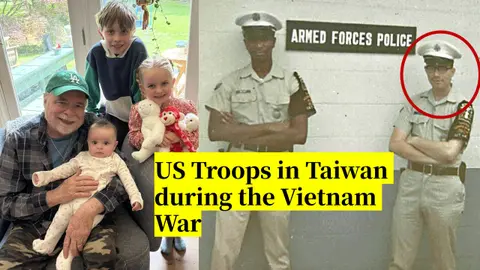
Bargirls, bar fights, beer, and bong hits – yes, those topics are covered, but this interview features much more than salacious tales. TC Brown, who first came here at the age of 18, served in the U.S. Air Force as a police officer – or “Sky Cop” – at the famous CCK Air Base in Taichung during the Vietnam War era. Brown’s recent book, Made in Taiwan, is a wonderfully honest memoir; an important first-hand account of his five-year deployment and a glimpse into a radically different Taiwan, and he’s a great storyteller… as you will hear. Please rate or review the program! It helps people find the show.
27
Sept. 4, 2025
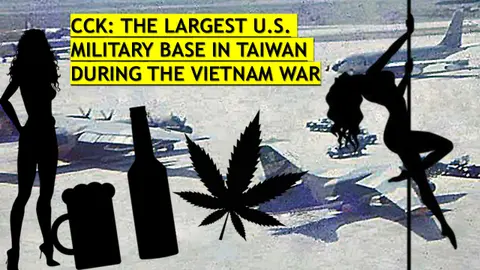
CCK: The Largest U.S. Military Base in Taiwan During the Vietnam War – S5-E27
With sprawling 1,750-acre grounds and a record-setting 12,000-foot runway, CCK stood as America’s most significant Taiwan base during the Vietnam War. At times hosting as many as 8,000 U.S. troops, CCK was a vital airpower logistics hub. From its prime spot near Taichung, CCK orchestrated major Southeast Asian airlift missions, including iconic long-range C‑130 flights. In this week’s episode, we focus on two “inside story” books, the best of which is Made in Taiwan: A Naïve American’s Chaotic Journey to Manhood in an Exotic Culture During Radical Times – by TC Brown, a former U.S. Air Force police officer. Brown’s book is full of stories about the gritty realities connected to Taiwan’s forgotten Vietnam War-era American stronghold: from falling in love with bargirls to racial tensions and marijuana smuggling. And, we’re happy to say the author will be chatting with us next week. Follow, review, comment, share... it makes a difference! Thanks.
25
Aug. 21, 2025
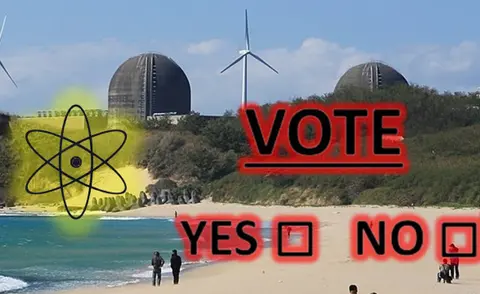
Nuclear Power in Taiwan: The Story Behind Saturday’s Radioactive Referendum – S5-E25
From Chiang Kai-shek’s nuclear ambitions to the fallout from Chernobyl and Fukushima, Taiwan’s nuclear story has always been controversial. The ROC once came within months of being nuclear-bomb ready, but today, fission is gone from even civilian atomic power generation. This Saturday, Aug. 23, 2025, voters face a radioactive referendum. The core question? Whether to restart the recently decommissioned Ma’anshan Nuclear Power Plant 馬鞍山核能發電廠 in Kenting, Pingtung County. After years of splitting atoms over this hot topic, a critical mass is forming in a debate that may reveal just how divided the island remains on atomic energy. Join us as we explore the chain-reaction politics of Taiwan’s nuclear dilemma and the referendum which may trigger a U-turn on uranium. Please follow us on social media, and leave a review or comment. Thanks, it really helps.
23
Aug. 7, 2025
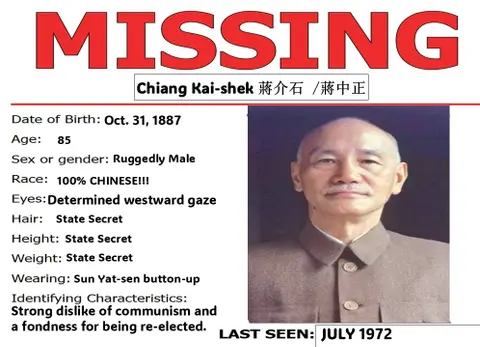
Chiang Kai-shek’s Secret Coma, and the Cigar-Smoking, Cross-Dressing, Confucian Descendant Ms. Kung — S5-E23
In the summer of 1972, Chiang Kai-shek vanished. He missed Double Ten parades. However, Madame Chiang (Soong Mei-ling), and the step-son she loathed (future president Chiang Ching-kuo) carried on as if all was well. There were no press leaks as the president of the Republic of China lay in a coma for six months. In this episode of Formosa Files, we uncover the cover-up, and tell you about an odd dinner where medical staff waited to pounce and revive the aging dictator. Plus, we meet Jeanette Kung: a cigar-smoking, men’s clothing enthusiast who might today be a gay icon of some kind, except for the fact that she possessed an…um…“challenging personality.” SUPPORT the show by rating, commenting, liking, subscribing, and following on social media.
15
May 28, 2025
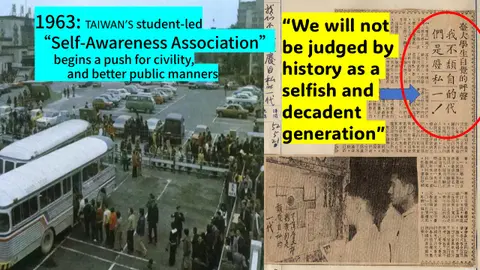
Bad Manners & Book Crimes: How an American Op-Ed Sparked Taiwan’s Self-Awareness Movement – S5-E15
In 1963, a 32-year-old American grad student in Taipei wrote a newspaper editorial complaining that Taiwanese people were great at treating friends kindly, but kind of awful in public. Within days, he had unintentionally launched a nationwide student movement for civility, morality, and self-awareness. But this student-led push for better manners would also lead to arrests, prison time, and even psychiatric detention. In this episode, we tell the strange true story of the “Self-Awareness Movement,” how it exploded from one opinion piece, and explain how it contributed (or didn’t) to Taiwan’s public behavior transformation. Listen as we go from the sharp-elbowed chaos at bank counters and bus stops of the 1960s to today’s orderly lines and the quiet pride of the MRT.
13
May 15, 2025
S5-E13 - 1962: Taiwan’s Bloody Year You’ve Never Heard Of
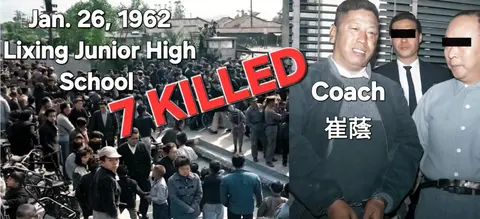
This week, Formosa Files digs into two wild and almost totally forgotten killings from Taiwan’s Cold War years. First up: a soldier named Li Wei, a former POW, sets his army barracks on fire in the middle of the night and opens fire on his fellow soldiers. The whole thing gets swept under the rug. No local news coverage. It’s been basically erased from memory. Then there’s Taiwan’s deadliest school shooting: the Lixing High School Massacre. A fired sports coach shows up at school with a pistol and a grudge. He kills the principal, teachers, and even goes after the principal’s family. This one made the headlines at the time, but somehow, almost nobody talks about it today. Both happened in 1962, when Taiwan was still under martial law and the government kept a very tight lid on the media. With help from researcher and Formosa Files Chinese version co-host Eric Hsu, we dug through old court records and tracked down as much truth as we could find.
9
April 17, 2025
S5-E9 – Magistrate Mass Murder and Gangsters in Government
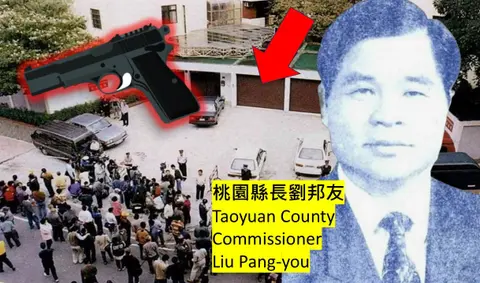
After the “execution-style” murder of Taoyuan Magistrate Liu Pang-yu and half a dozen others at Liu’s official residence in November 1996 by assassins deemed connected to the underworld, Taiwan’s authorities began getting serious about trying to rid its ranks of those with ties to organized crime – but it’s no easy task. A report from that same year found that at least a third of elected officials were part of a system termed “Black Gold,” or put simply: gangsters in government.
5
March 12, 2025
S5-E5 - South Africa and Taiwan (And the Sad Story of SAA Flight 295)
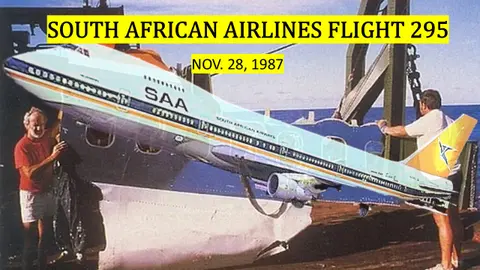
November 28, 1987: South African Airways Flight 295 departs from Taipei bound for Johannesburg. Somewhere near Mauritius, a mysterious fire breaks out. The crew fights hard to extinguish it, but sadly, the plane and all 159 people on board are doomed to a watery grave in the Indian Ocean. The crash of SAA Flight 295 raises questions: What was in the cargo hold? Did the fire have anything to do with banned items or weapons? Plus, we'll tell you why the ROC (Taiwan) and white-ruled South Africa were once very good friends – to the point that Taiwanese were deemed “honorary whites.”
March 12, 2025
FORMOSA FILES IN CHINESE! CH48-臺灣獨立的精神導師—彭明敏(part 2)
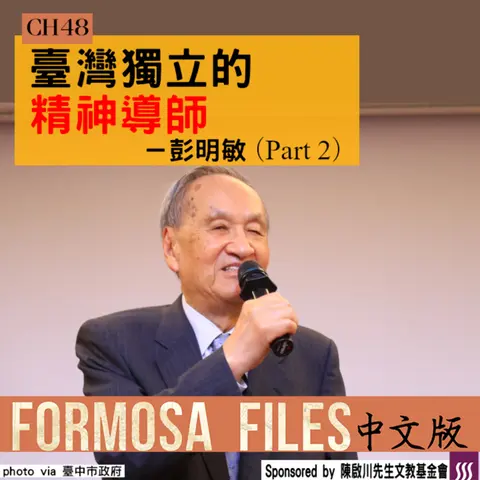
臺灣在追尋民主自由獨立的道路上,彭明敏教授是無法忽略的一位重量級人物。在日本留學時經歷了戰爭、原子彈,回到臺灣後又遇上二二八事件。而1964年的《台灣自救運動宣言》,讓他不得不在傳教士友人的協助下逃離臺灣,顛沛流離三十年,最終由於與李登輝的因緣而回到臺灣。這集的 Formosa Files 中文版,就讓兩位主持人來一起聊聊這位經歷離奇波折的臺灣民主前輩。
3
March 2, 2025
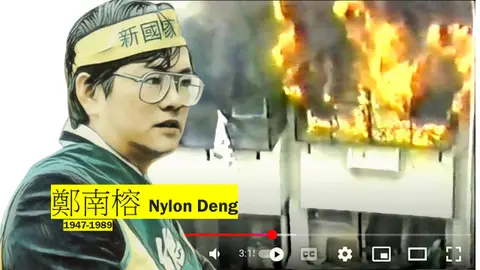
S5-E3 - 228, White Terror, the Formosa Incident, and Nylon Deng: PART TWO
NOTE: This episode is not suitable for young children. The story of Nylon Deng is too often painted in terms of good/bad, black/white…but almost nothing is ever so binary. January 1989: Deng is summoned to answer charges of sedition/treason for publishing an idea for a constitution for the “Republic of Taiwan.” He vows not to be taken alive. However, unlike almost every article about him, Formosa Files isn’t going to stick to the script of “the police tried to break in and he self-immolated.” Instead, we try to offer some new perspectives on his fiery end. Was Deng a “martyr”? Were he and his followers’ actions actually non-violent? Taiwanese independence and democracy activist Nylon Deng (Cheng Nan-jung 鄭南榕) will forever have a place in the pantheon of Taiwanese democracy heroes. But heroes – of course – are human.
2
Feb. 28, 2025
S5-E2 - 228, White Terror, The Formosa Incident, and Nylon Deng: PART ONE
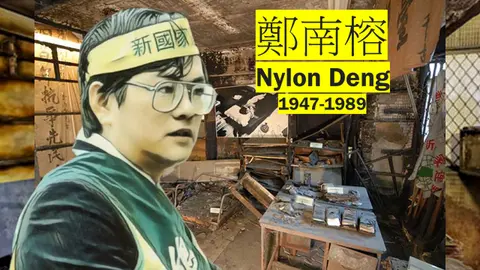
NOTE: This episode is not suitable for young children. In part one, we begin in Saigon in 1963 before returning to Taiwan in the days before the nation became a full democracy. The stories and asides lead to Nylon Deng (Cheng Nan-jung 鄭南榕), a hardcore Taiwanese pro-democracy and pro-independence activist, who was born a few months after the 228 Incident in 1947. In 1989, after a long stand-off with the police, he chose self-immolation over arrest.
1
Feb. 20, 2025
S5-E1 – Taiwan’s Shrinking Population
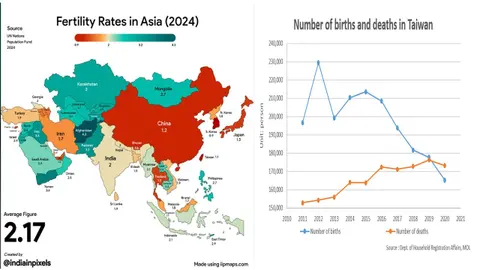
Did you know that former Taiwan president Tsai Ing-wen 蔡英文 is the youngest of eleven siblings? Her personal story is a dramatic example of how quickly we’ve fallen from high fertility in the 1950s, when the rate was over six children per woman, to the current birthrate of about one. That’s half of what’s needed to maintain a population. Eryk and John discuss Taiwan’s dramatic demographic changes and explore possible solutions. This is an important subject, an existential threat for Taiwan, which is why we chose it to kick off Season Five of Formosa Files.
Feb. 19, 2025
FORMOSA FILES IN CHINESE! CH45-陽明山上的車禍疑雲—讓蔣介石折壽20年的事故
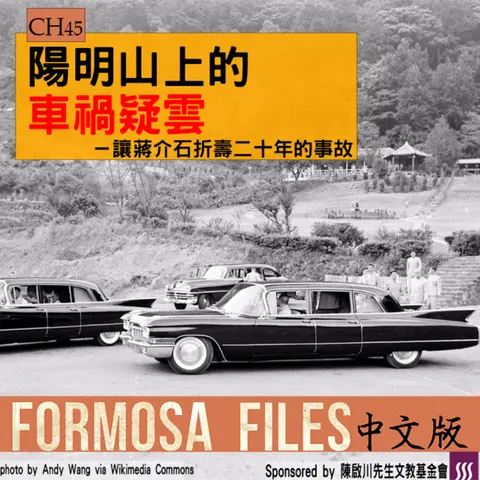
上陽明山的仰德大道,由於彎道視線不良,過去時常發生重大車禍。但絕大多數的人也許不知道,蔣介石自己也曾經在陽明山發生過非常嚴重的車禍,嚴重損害了他的健康,甚至讓他自認因此「折壽二十年」。到底是怎麼一回事呢?這集的 Formosa Files 中文版,就讓兩位主持人來一起聊聊這場一度被懷疑是意圖暗殺國家元首的(不)單純車禍。 主持人簡介: Eryk Michael Smith-ICRT南臺灣特派員,長期從事記者採編工作、聲音編輯,也會客串DJ。現居高雄,在臺灣已經居住了接近30年,認為臺灣是自己的家。 Eric Hsu(徐葆權)-彰化北斗人,從大學南漂高雄以來,人生的大部分時間都在高雄渡過。關心臺灣文史與地方文化發展,尤其是自己的兩個家鄉:北斗與高雄。
39
Jan. 16, 2025
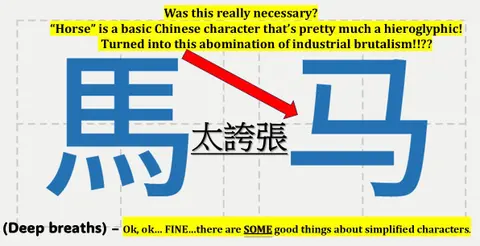
S4-E39 - Traditional VS. Simplified Chinese Characters – 繁體字或簡體字?
As you likely know, Chinese writing comes in two main forms: traditional (fántǐzì) and simplified (jiǎntǐzì). Taiwan uses traditional characters and China uses simplified characters. Taiwan is a peace-loving democracy and China is an authoritarian state; ergo – traditional characters are better! But no, logic doesn’t care about politics and as John and Eryk debate this sometimes-controversial topic, you may come to agree with us that there are pluses and minuses for both systems. Eryk likes writing his wife’s surname as 刘, not 劉… but John has a point about beauty – did they really need to do this 东 to “east”? Was the original, 東, really oh, sooo hard? Enjoy a friendly argument or two, and learn a bit of the history of characters and the people who simplified them. PS: if you want to know more about Hanyu Pinyin, listen to our Bookish Asia podcast episode where John chats with an author of a book on Zhou Youguang (周有光).