Taiwan’s Forgotten Horse History: Cowboys, Cavalry, and the Racing Craze – S6-E1

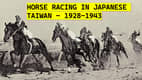
Horses have never played a big role in Taiwan’s history – or have they? Eryk and John start Season Six of Formosa Files and celebrate the Year of the Fire Horse by uncovering a series of surprising equine stories. We have prehistoric horses, Dutch cavalry, and Indigenous riders hunting wild cattle in the 1700s. And this will be a revelation to most; horse racing was hugely popular across the island during the later years of the Japanese colonial period. In the 1930s, tens of thousands flocked to the tracks, fortunes were wagered, and the Japanese colonial government even linked betting to imperial patriotism.


Cover image from recent TAIWAN IN TIME column by Han Cheung - a must-read for history/horse lovers.
There were several sources of inspiration and information for our horse episode.
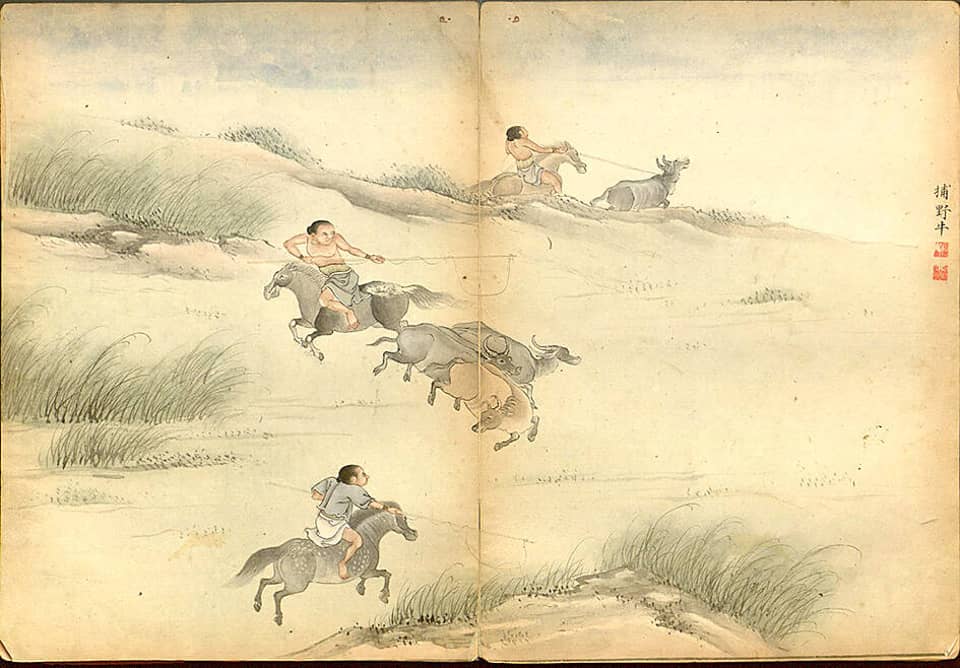
In February, John had a chat with Lee Moore about his book China’s Backstory, and Lee mentioned Indigenous cowboys during the Qing era, as recorded by Qing official Huang Shu-ching (黃叔敬) in 1722. Then last weekend, Han Cheung had an excellent “Taiwan in Time” piece in the Taipei Times: “A land that produced no horses.” That article led us to a wonderful 2019 master’s thesis on “Horse Racing in the Taipei Area during the Japanese Colonial Period” by Wada Naomi, a student at National Taiwan Normal University.
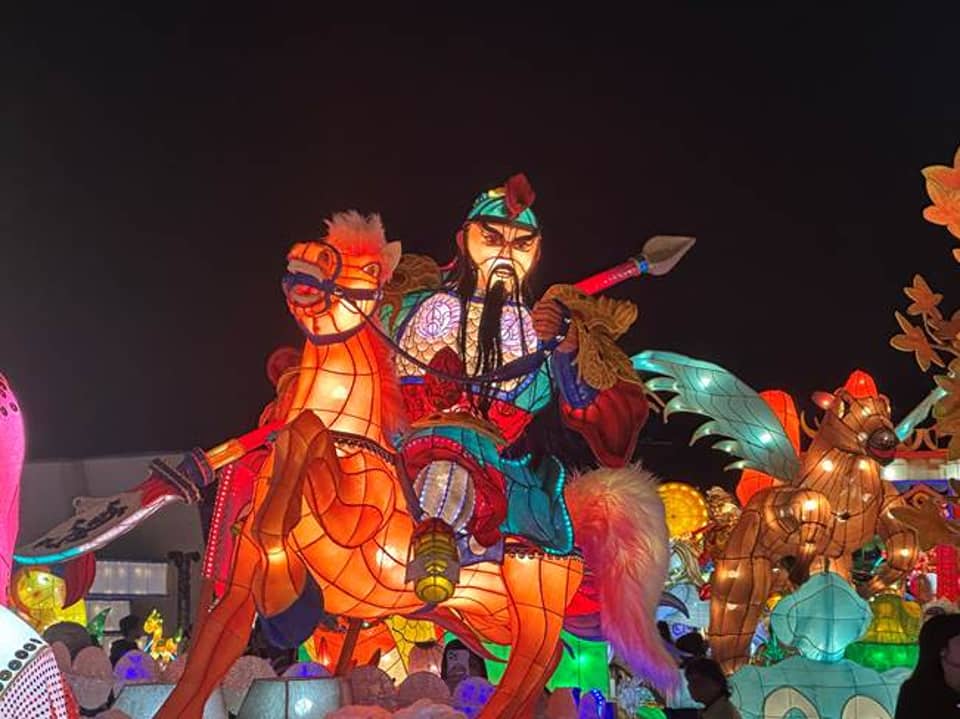
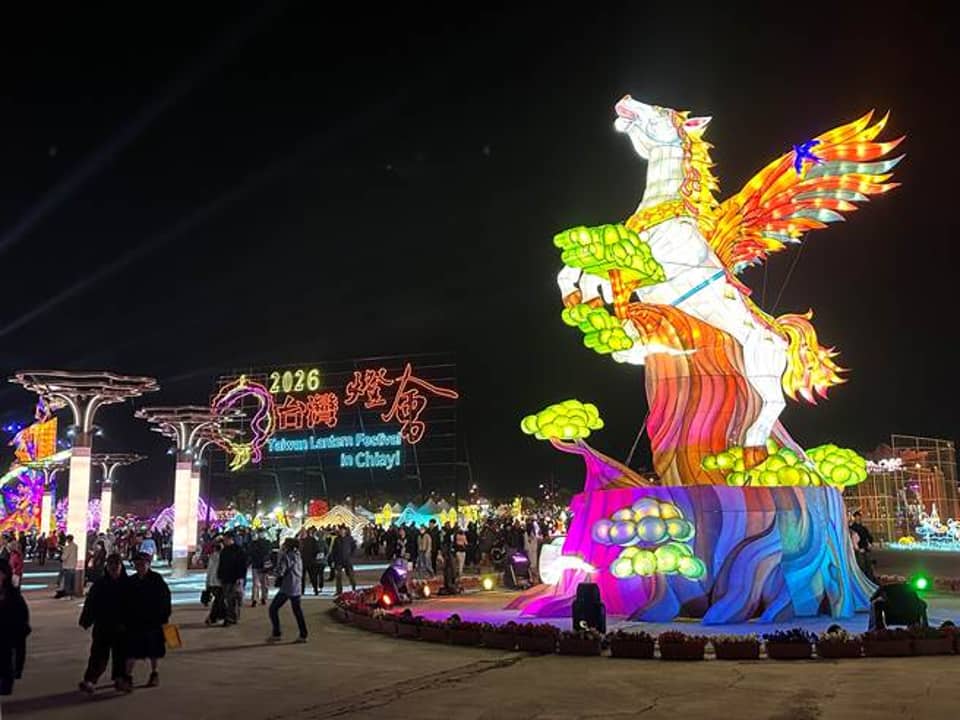
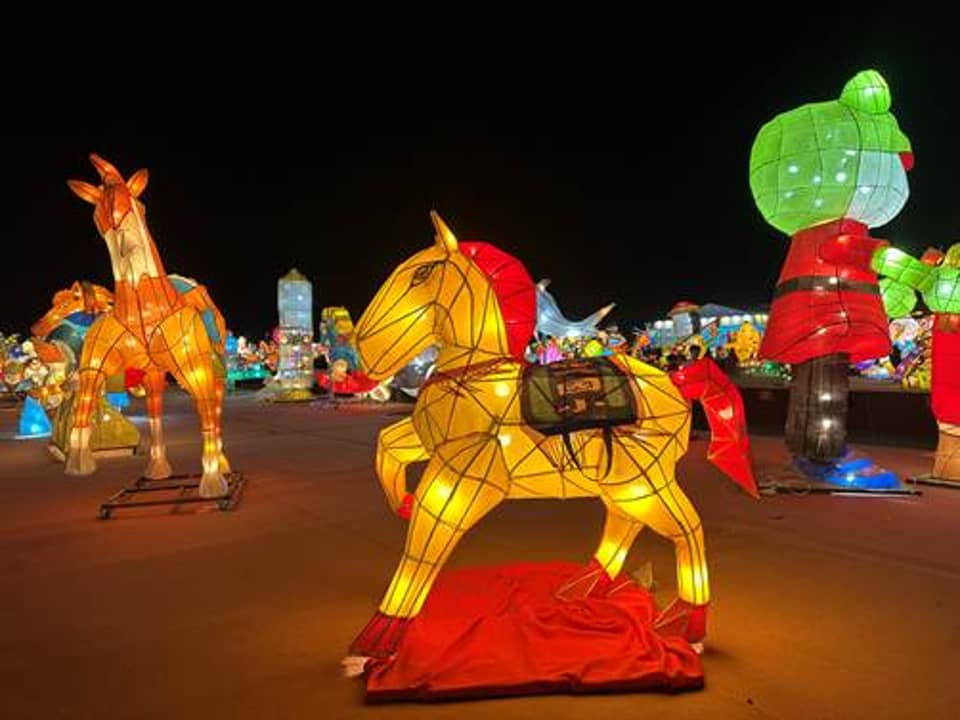
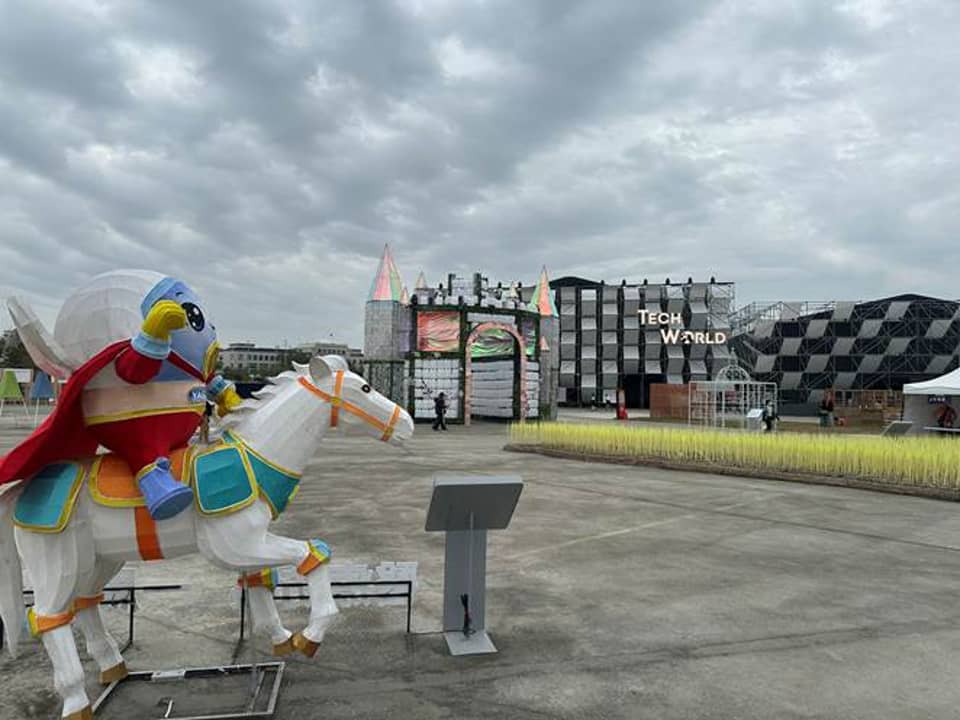
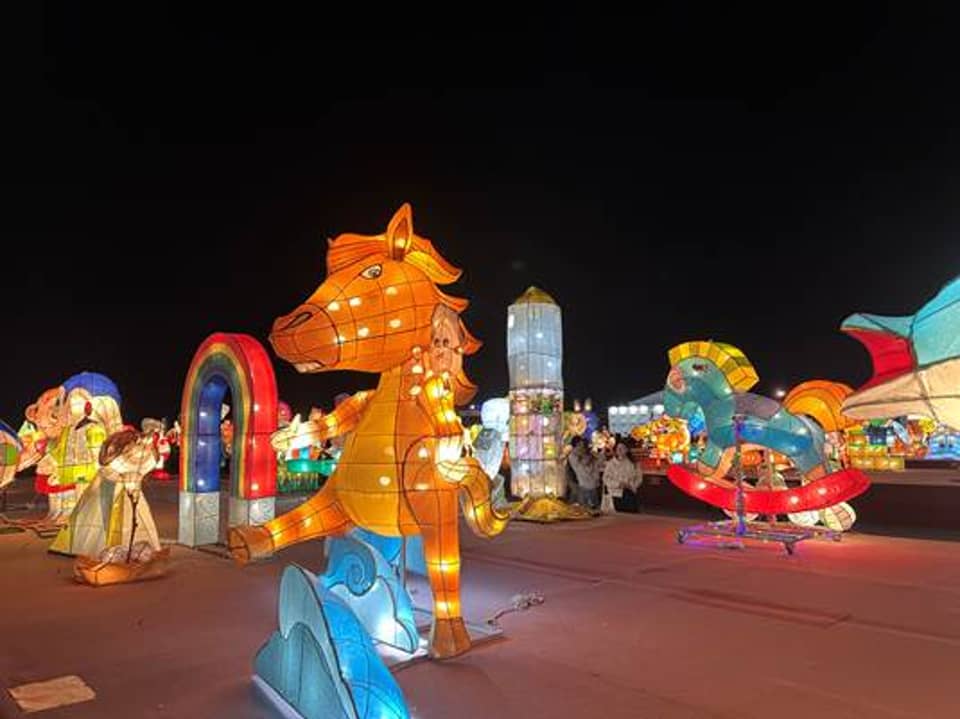
And finally there was inspiration in the form of herds of horse-themed lanterns down the road from John’s place in Chiayi County, where the annual Taiwan Lantern Festival is currently being held this year.
A 1747 painting of plains Indigenous Taiwanese chasing water buffalo on horseback. Photo courtesy of US Library of Congress.
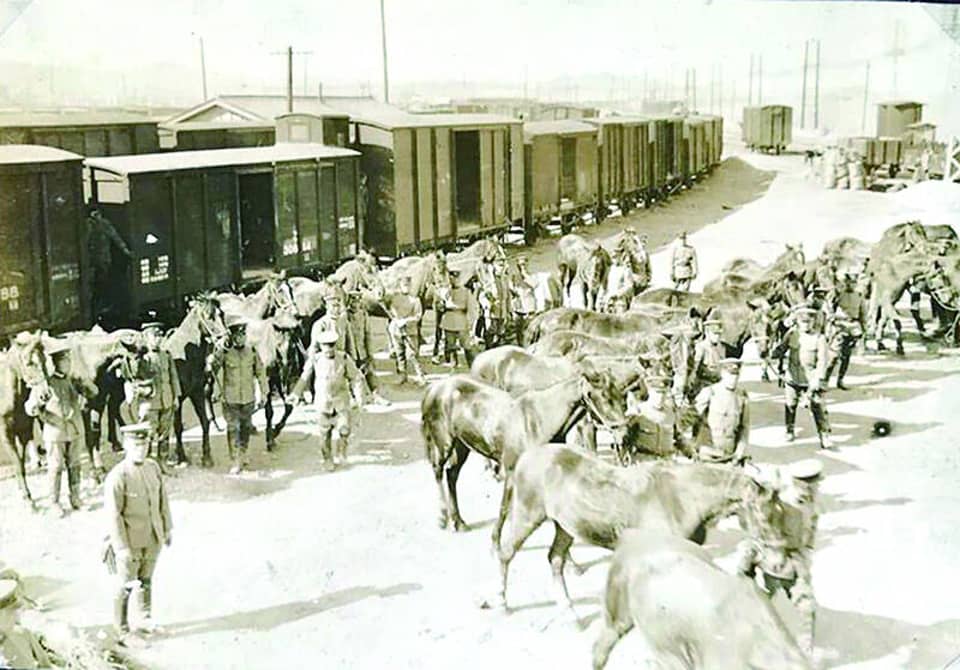
Below: Also via Taipei Times' TAIWAN IN TIME - War horses brought by the Japanese military to Taiwan in 1895. Photo courtesy of Kuo Shuang-fu
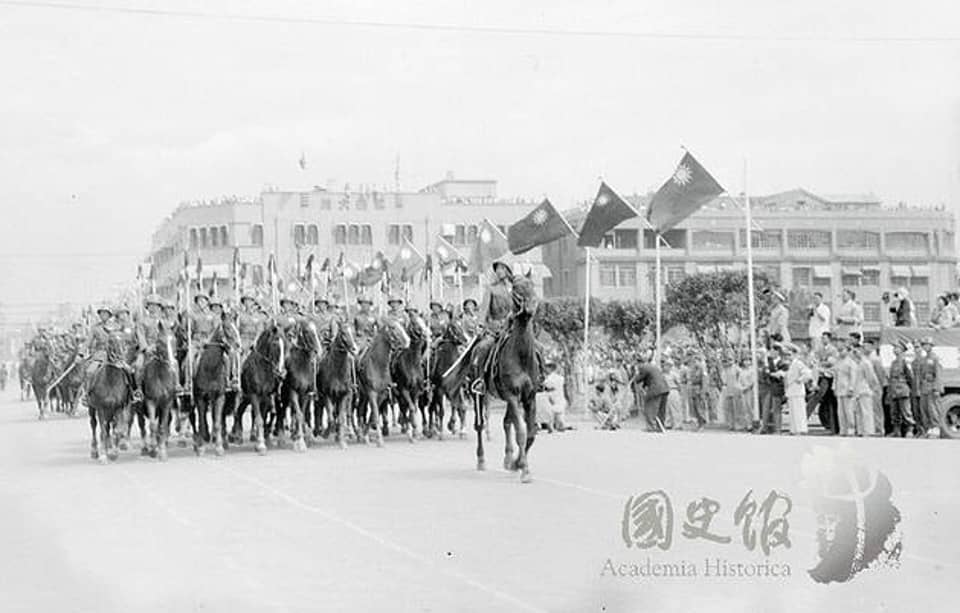
A cavalry in formation during a parade in 1953. Photo courtesy of Taiwan Historica
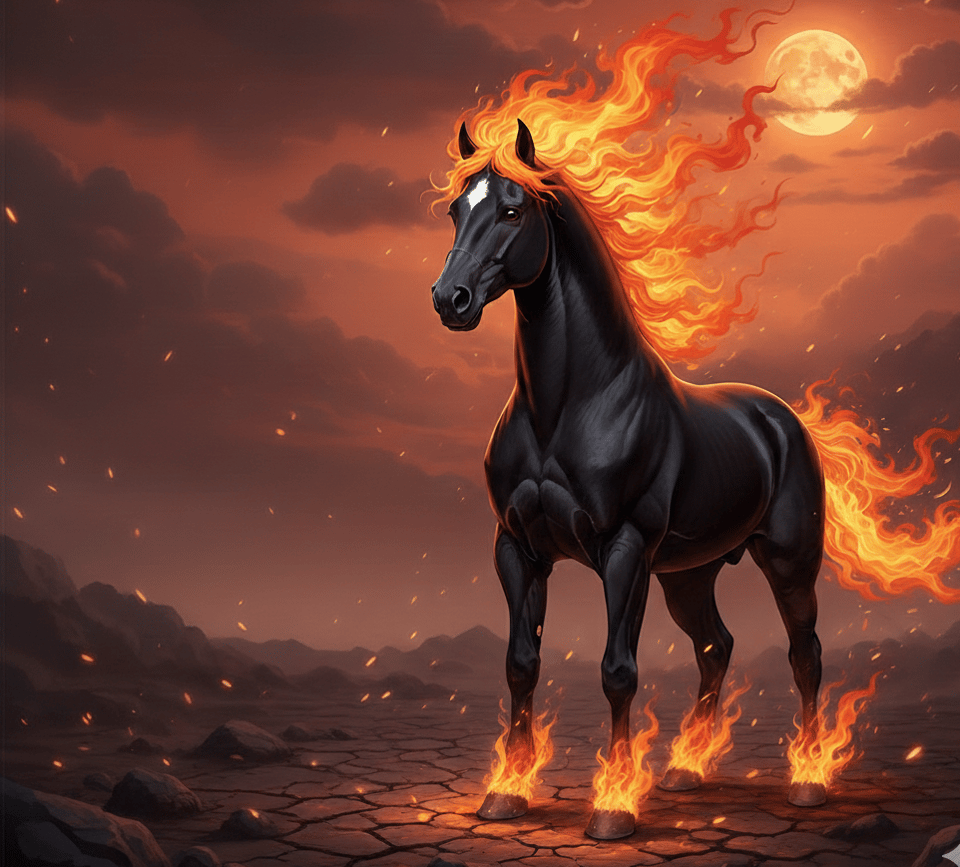
About the FIRE HORSE YEAR - Via Kaohsiung Times
By Eryk Michael Smith
KAOHSIUNG — Taiwan is about to gallop into the Year of the Horse. But not just any horse. This one comes with flames attached.
In the Chinese zodiac, every animal is paired with one of the Five Elements, producing a 60-year cycle. The combination for 2026 is the Fire Horse, last seen in 1966 and before that in 1906. The official window runs from Feb. 17, 2026, to Feb. 5, 2027.
The Horse traditionally symbolizes movement, ambition, and a refusal to sit still. Add the Fire element — associated with speed, passion, and volatility — and astrologers, fortune-tellers, and feng shui consultants arrive at a tidy conclusion: expect momentum, and transformation. Or simplified: “things may happen,” not exactly a shockingly specific prediction.
CommonWealth Magazine notes that Fire Horse years are culturally framed as rewarding decisive action while punishing impulsiveness. The horse motif emphasizes expansion — travel, career shifts, new ventures — while the fire element injects courage but also instability.
Why the Fire Horse has a reputation for chaos
Symbolically, this pairing is a high-energy double act. Horse equals movement and unpredictability; Fire equals heat and transformation. Together, they allegedly amplify courage and initiative, along with impatience and social friction. Fire Horse years are therefore periods of rapid change, disruption, and restless public mood swings — which, conveniently, also describes most news cycles in the 21st century.
History, superstition, and selective memory
If believers want evidence, they can point to 1966, the last Fire Horse year. That year saw the start of China’s Cultural Revolution, a major escalation of the Vietnam War, breakthroughs in lunar exploration with Luna 9 and Surveyor 1, and the founding of the Black Panther Party alongside the signing of the U.S. Freedom of Information Act.
Skeptics, however, could counter with 1968, an “Earth Monkey” year supposedly linked to stability and clever adaptability. Instead, 1968 delivered global protests, political assassinations, and widespread upheaval. Animal + element + year enthusiasts will quickly explain this by saying that “monkey” traits also include rebellion, calculated chaos, and rapid adaptation — proving that arguing over unprovables is as useful as (wait for it) beating a dead horse.
The Fire Horse and Japan’s demographic panic
Where superstition becomes measurable is in Japan. There, girls born in Fire Horse years are traditionally believed to have strong, rebellious personalities that bring misfortune to husbands. The result is a well-documented plunge in births in 1966 as couples quietly delayed having children.
This differs from the Chinese folklore about Tiger-year women — often described as assertive or difficult — which is a recurring stereotype rather than one tied to a single rare cycle. China never experienced the same dramatic birth-rate dip associated with Tiger years as Japan did with the Fire Horse in 1966.
So what should 2026 supposedly bring?
Traditional predictions say the Fire Horse year favors entrepreneurship, bold political shifts, and technological leaps, while warning against impulsive decisions, burnout, and unnecessary conflict. Economically, the talk is about acceleration and competition; personally, decisive action tempered with restraint is advised. In other words, move forward bravely, but maybe not recklessly — advice that works whether you think crystals have healing energy or not.
Do us a favor and rate/review the show! It really helps. Do it on Apple Podcasts or here on our website.
Write us with questions or ideas at formosafiles@gmail.com
AND THE BIGGEST REQUEST: tell others about this free, not-for-profit resource about Taiwan.