
The Armed Forces Of The Republic Of China (ROC-Taiwan) Episodes
27
Sept. 17, 2026
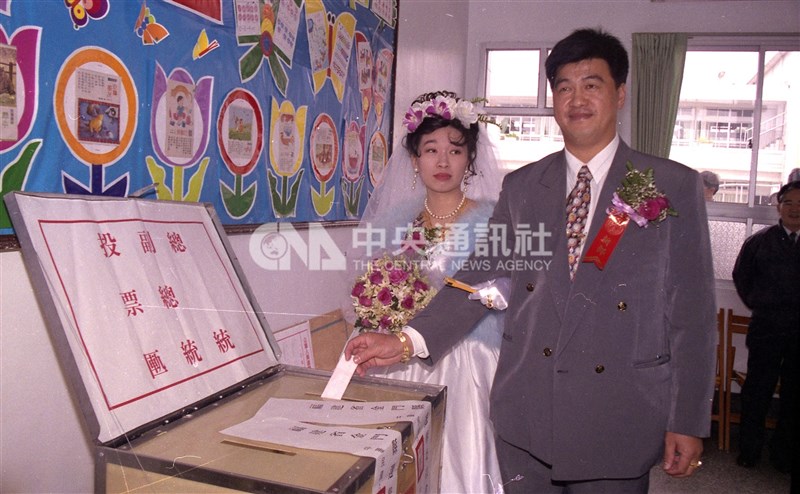
VIDEO - Ballots and Missiles: Taiwan’s First Presidential Election (1996) – S6-E27
Eryk and John look back at Taiwan’s first direct presidential election: the protests and constitutional reforms that made it possible, Lee Teng-hui’s controversial visit to Cornell University, and the Chinese missile tests that turned an election campaign into the Third Taiwan Strait Crisis. On March 23, 1996, with two US carrier groups sent to the region and ROC soldiers on alert, more than ten million Taiwanese went to the polls. The leading candidates were incumbent KMT president Lee Teng-hui and the DPP’s Peng Ming-min, a veteran democracy activist and former political exile. Held in the shadow of PLA missiles, the election was a landmark in Taiwan’s democratization.
27
Sept. 17, 2026
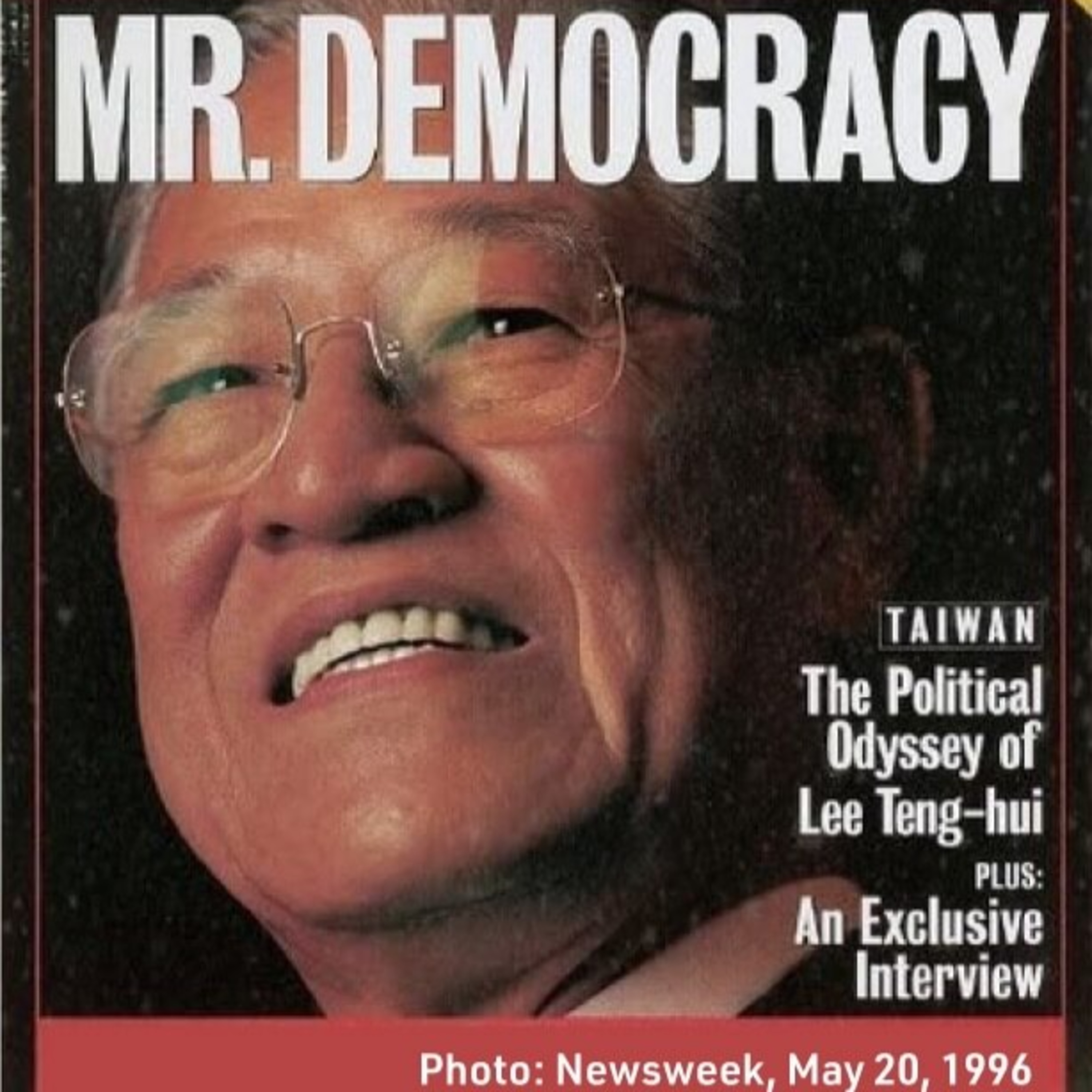
Ballots and Missiles: Taiwan’s First Presidential Election (1996) – S6-E27
Eryk and John look back at Taiwan’s first direct presidential election: the protests and constitutional reforms that made it possible, Lee Teng-hui’s controversial visit to Cornell University, and the Chinese missile tests that turned an election campaign into the Third Taiwan Strait Crisis. On March 23, 1996, with two US carrier groups sent to the region and ROC soldiers on alert, more than ten million Taiwanese went to the polls. The leading candidates were incumbent KMT president Lee Te...
38
Dec. 3, 2025
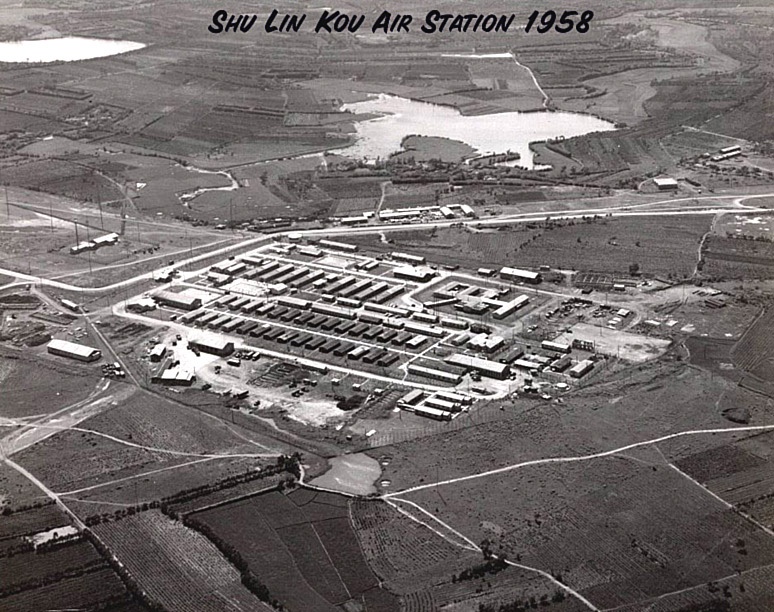
Shulinkou Air Station – Part 2 – S5-E38
We continue the story of the Shulinkou Air Station and the American military in the early 1960s. We tackle Taiwan’s infamous gravel-truck killers (urban legend or fact?), get slapped by Typhoon Gloria, and have our duck-hunting excursion interrupted by the Generalissimo’s latest China invasion plans. And we follow the trail of controversial crimes and court verdicts which led to the ROC and U.S. finally signing a Status of Forces Agreement. On a lighter note, we also take time out for some catered Mongolian barbecue.
37
Nov. 26, 2025
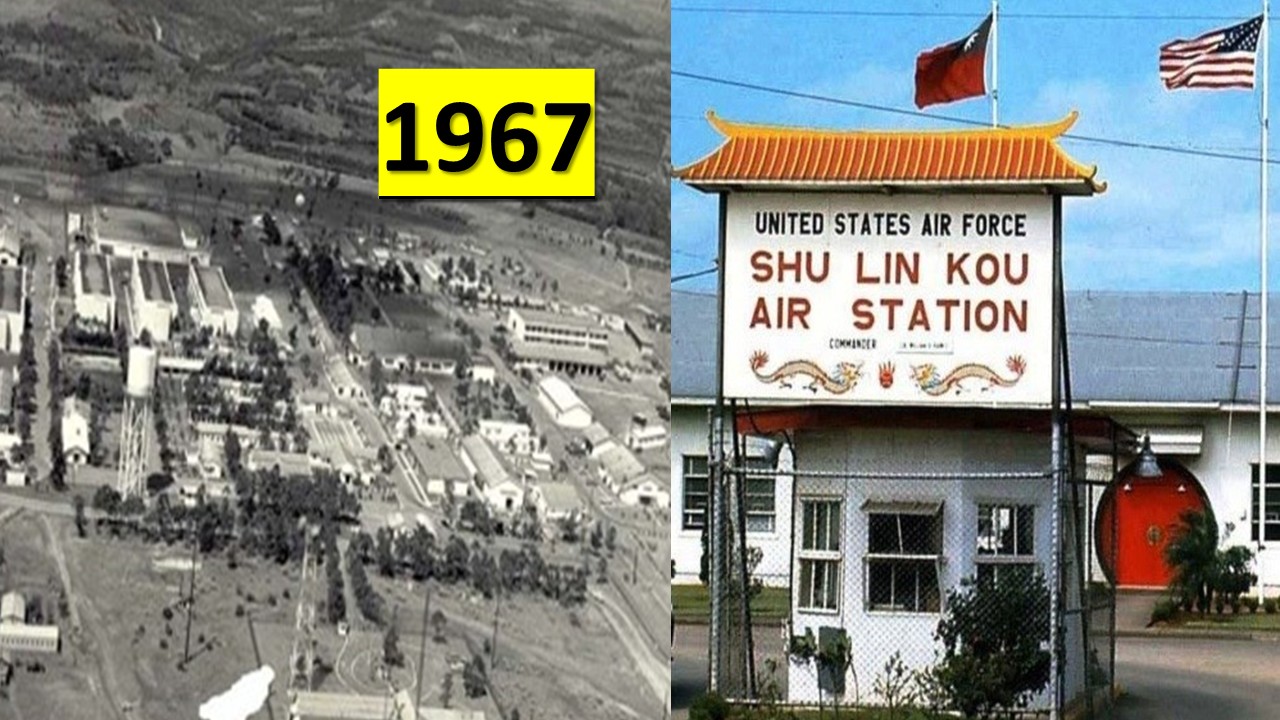
Shulinkou Air Station – Part 1 of 3 (early 1960s) – S5-E37
It was one of Taiwan’s most secretive Cold War outposts: Shulinkou Air Station (樹林口空軍情報站), a joint-service U.S. intelligence base perched on a misty plateau west of Taipei. Built in 1955, it was a hub for the interception, decryption, and analysis of enemy radio and electronic communications. In Part 1 of this three-part series, we focus on the early 1960s and the everyday world of the young servicemen and officers stationed there. Join them as they resist the character-destroying temptations of Taipei’s back alleys, face vengeful thieves, ride the rails in a stolen locomotive (probably a tall tale but you be the judge), and encounter ghostly road vehicles. This is Part 1. Parts 2 and 3 will take us deeper -- into the looming Vietnam War. For this episode, we relied heavily on the excellent Shulinkou Air Station Taiwan website, which is run by men who served there between 1955 and 1977.
34
Oct. 29, 2025
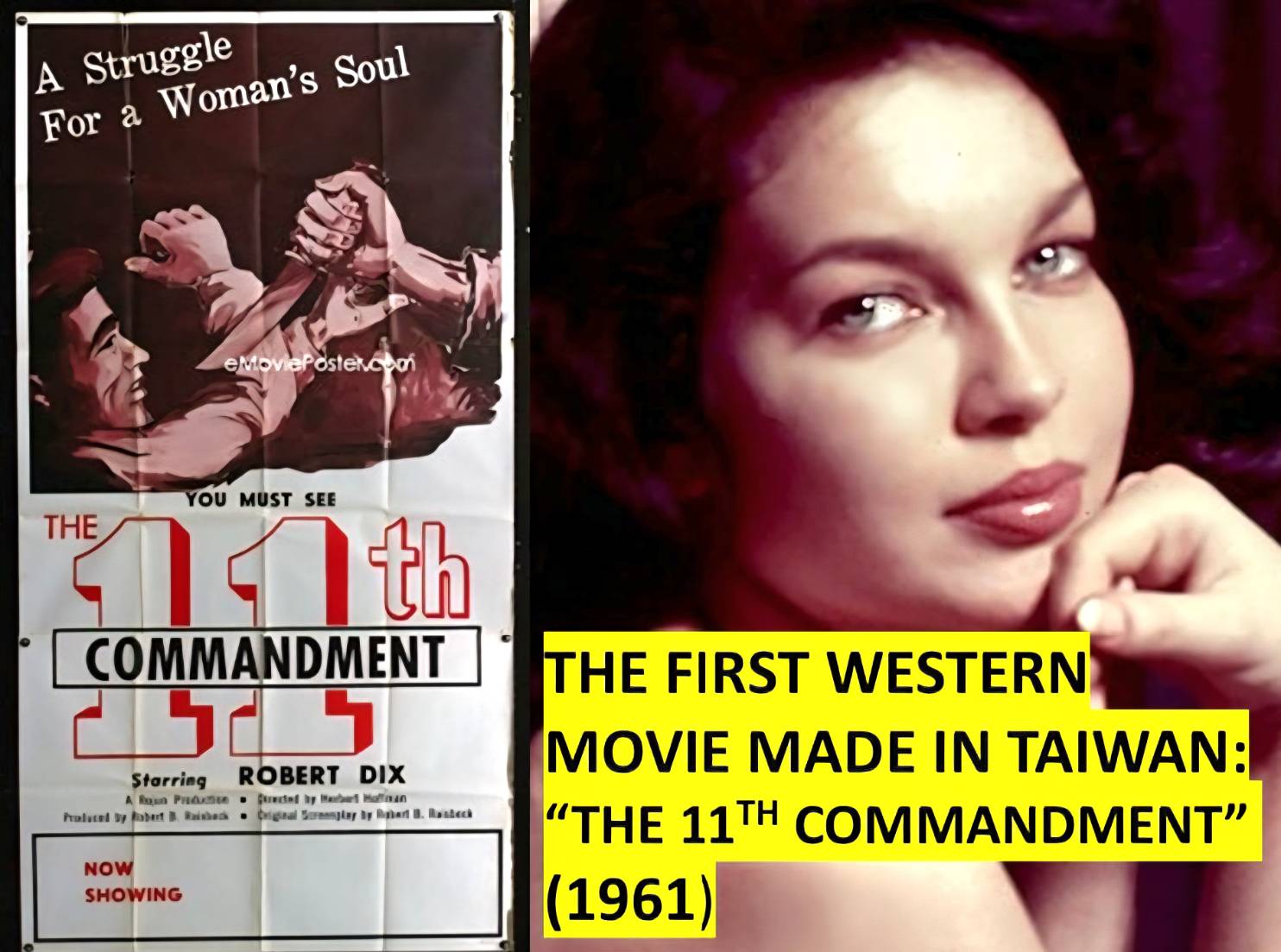
“The Eleventh Commandment” – the First Western Movie Shot in Taiwan – S5-E34
This wonderfully weird story is part of our “almost-no-one’s-ever-hear-of-Taiwan-trivia” collection, and man… it’s wild. Plot synopsis: A Cold War warrior movie director makes the first Western film in Taiwan in the winter of 1959/1960. In the film, the characters come to Taiwan from Iowa to learn about the evils of communism(?). Next week, we’ll get back to some “real” history, but today, enjoy 30 minutes of almost pure insanity from Formosa Files.
28
Sept. 10, 2025
Made in Taiwan: A Naïve American’s Chaotic Journey to Manhood in an Exotic Culture During Radical Times – Formosa Files chats with Vietnam vet and author TC Brown – S5-E28
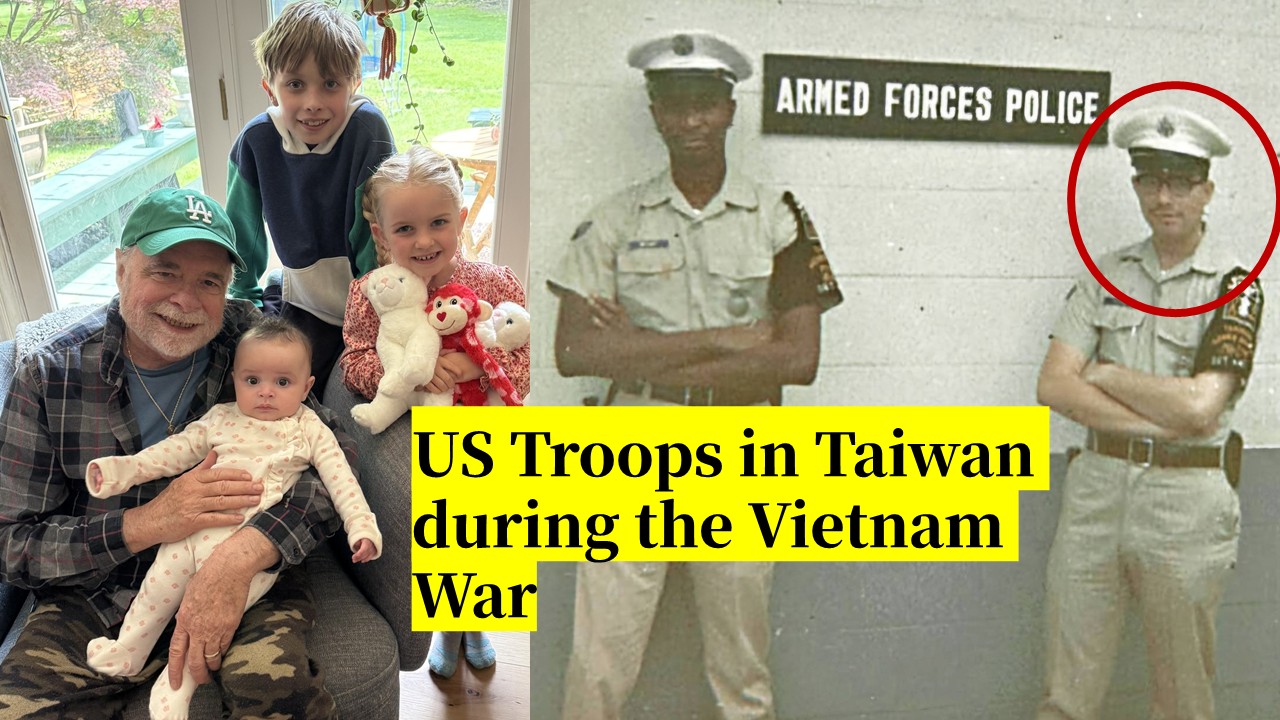
Bargirls, bar fights, beer, and bong hits – yes, those topics are covered, but this interview features much more than salacious tales. TC Brown, who first came here at the age of 18, served in the U.S. Air Force as a police officer – or “Sky Cop” – at the famous CCK Air Base in Taichung during the Vietnam War era. Brown’s recent book, Made in Taiwan, is a wonderfully honest memoir; an important first-hand account of his five-year deployment and a glimpse into a radically different Taiwan, and he’s a great storyteller… as you will hear. Please rate or review the program! It helps people find the show.

10
May 9, 2024
S4-E10 - Radio Wars
John recently visited the National Radio Museum in Minxiong Township, Chiayi County. This led to some research on the use of radio for propaganda. Whether harnessed by the imperial Japanese military or the CIA, “Free China” or the People’s Republic of China, radio waves were important weapons in a cross-strait battle to tell their version of the truth. Enjoy some classic Chinese communist radio broadcast gems that assure all compatriots that the brilliant sun of Mao Zedong will soon illuminate every part of Taiwan. (Happily, not.)

39
Jan. 4, 2024
S3-E39 - Taiwan’s Most Famous Red Light District: Taipei’s Combat Zone
“Blatant sex capital of Asia, where vice is legal and the price is right,” was how one book described Taipei in 1969. Listen as Taipei-based journalist David Frazier takes us through the history of Taipei’s first foreign-oriented red light district, an area of girlie bars and nightclubs that was, and still is, known as the “Combat Zone.” Frazier explains how this infamous entertainment zone formed around nearby US military bases, the history of prostitution in modern Taiwan, and how a bar zone became a conduit for Western culture.

33
Nov. 9, 2023
S3-E33 - Tales of Tokyo and Taiwan
This week we're looking at Tokyo, and telling a few tales that connect events in that major world city to people, places, and things in Taiwan. ポッドキャストをお楽しみください!

32
Nov. 2, 2023
S3-E32 - Hakka Author Wu Zhuoliu (吳濁流), Part 2 - Japan’s Surrender and 2/28
Writer Wu Zhuoliu 吳濁流 (1900-1976), sadly, never saw Taiwan blossom into a democracy. But he left us with some of the most important works ever written about 20th-century Taiwan. Among these is the autobiography “The Fig Tree”, whose early chapters mirror the events in his acclaimed novel “Orphan of Asia.” In S2-E29, we covered Wu’s younger years as in Japanese colonial Taiwan, his grandfather’s tales of a cultured, ancient China and the influence these ideas had on Wu. We told the story of Wu’s time in “the Motherland,” where he discovered that the China of his imagination was simply that – imaginary. Today, we pick up his story as WW2 comes to an end and the Chinese Nationalists arrive. Wu describes how Taiwanese jubilation soon turned to despair, and how this exploded into riots and killings known collectively as the 2/28 Incident. Please rate us on Apple Podcasts or any other platform -It really helps!

27
Sept. 14, 2023
S3-E27 - When Taiwan (ROC) Blockaded China (PRC)
After retreating to Taiwan, the ROC government-in-exile ordered a naval blockade of China, which lasted officially until 1979. In the early years, it was much more aggressively enforced than one might imagine. There were interceptions and attacks by the ROC Navy, CIA-backed Nationalist forces, and some pirate-like actions by unofficial ROC guerrillas. Even ships from the UK and the US were targeted, and being outside of Taiwanese and Chinese waters was no guarantee of safety. But, with several high-profile cases involving the seizure and confiscation of two Polish ships and a Soviet tanker called the Tuapse, the world grew weary and demanded that Chiang Kai-shek stop the blockade. Meanwhile, the detained crews became political footballs. Sadly, some of those sailors who were on the seized vessels ended up in prisons in both the USSR... and Taiwan. Some were stuck here for over 30 years!

Aug. 3, 2023
Bonus Episode: 2-28: A Bad Beginning
In this special episode, we hear Eryk reading from chapter five of John’s “Taiwan in 100 Books.” The topic is 2-28, an event named after a date: February 28, 1947. It’s usually referred to as the February 28 incident, but sometimes called the 2-28 Massacre. American vice-consul at the time George Kerr used the term “the March massacres,” which gives a more accurate impression of what happened; the brutal suppression of uprisings and protests throughout the country, which left perhaps 20,000 dead. It was a bad beginning to ROC rule on Formosa, a dark stain that was a taboo topic until the early 1990s. Listen and learn about George Kerr’s “Formosa Betrayed”(1965), probably the most important English-language non-fiction work on Taiwan. We also cover the first English-language White Terror novel, “A Pail of Oysters” (1953), by Vern Sneider, and Allan James Shackleton’s “Formosa Calling” (1998), an account of 2-28 which took four decades to get published.
![[ENCORE] The Empire's Last Solider (29 Years, 3 Months, and 16 Days)](https://s3.us-west-1.amazonaws.com/redwood-labs/showpage/uploads/images/e99a06aa-db6b-4079-bf32-52d547e99504.jpg "[ENCORE] The Empire's Last Solider (29 Years, 3 Months, and 16 Days)")
July 27, 2023
[ENCORE] The Empire's Last Solider (29 Years, 3 Months, and 16 Days)
The last Japanese "holdout" of World War II was an Indigenous Amis Taiwanese named Attun Palalin, but in Japanese Formosa, he was Nakamura Teruo (中村 輝夫). Palalin was one of a group of Indigenous Taiwanese who served in the Japanese military as part of the Takasago Volunteer Unit 高砂義勇隊. The Takasago Unit was built on the idea that Indigenous Taiwanese were best suited for guerilla-style fighting in Southeast Asian jungles as they could live off the land and were accustomed to tropical climates, etc. Several thousand Indigenous men were recruited. Many Formosans served under the flag of the Rising Sun with distinction during the Second World War; no one, however, was apparently more dedicated than "The Empire's Last Solider," Attun Palalin, who kept "fighting" on an island in modern-day Indonesia until 1974! Enjoy your summer, catch up on episodes, and check out this encore episode, first released in October 2021.

17
July 6, 2023
S3-E17 – The Wrongful Execution of Chiang Kuo-ching (江國慶) and the Death Penalty in Taiwan
Among the too many killings committed in the lawless year of 1997 was the execution of 21-year-old Chiang Kuo-ching (江國慶), a soldier convicted of a horrific crime after a forced confession. Chiang went to his death maintaining his innocence, and 14 years later in 2011, he was posthumously cleared of all wrongdoing. John and Eryk tell this harrowing story, disagree on capital punishment, and discuss the death penalty in Taiwan. They end with a case John brings up of a serial killer from the 1970s-80s who certainly "deserved" his fate.
![[Encore] Mao's Taiwanese Spymaster](https://s3.us-west-1.amazonaws.com/redwood-labs/showpage/uploads/images/0c6eada1-a20e-467f-a918-716a24d0318b.jpeg "[Encore] Mao's Taiwanese Spymaster")
June 6, 2023
[Encore] Mao's Taiwanese Spymaster
The Taiwan News recently did a feature on Formosa Files (link below), and in the article, this episode from 2021 is mentioned. We thought we'd re-release it for any new "Formosa Filers" who missed it the first time around. This is a fascinating tale of a Taiwanese man (Japanese Formosan, to be exact), who survived the Long March with Mao Zedong, and was then sent back to Taiwan to build a spy network and prepare for a communist invasion. Many thanks to the Taiwan News for their detailed feature on Formosa Files. https://www.taiwannews.com.tw/en/news/4910533

32
Nov. 3, 2022
S2-E32 - “Defectors from the PRC to Taiwan, 1960-1989: The Anti-Communist Righteous Warriors” - Part Two
Picking up on last week's conversation between the University of Southern California East Asian Studies Center's Li-ping Chen and author Andrew D. Morris -- a very special collaborative double episode with Formosa Files -- we learn more about how North/South Korean Cold War tensions affected air force defections from the PRC. As flying from northern China to Taiwan was almost impossible, most defectors taking off from the north headed to South Korea. The pair also give us more details on the rewards these "righteous warriors" received after arrival in Taiwan. This interview originally appeared on the New Books Network podcast. Visit them at www.newbooksnetwork.com

Oct. 27, 2022
S2-E31 - “Defectors from the PRC to Taiwan, 1960-1989: The Anti-Communist Righteous Warriors” - Part One
Formosa Files is delighted to announce a very special episode in collaboration with the University of Southern California’s East Asian Studies Center and the New Books Network! The USC’s Li-ping Chen recently interviewed Andrew D. Morris, the author of a 2022 book (of the same name as this episode’s title) on the defector pilots who risked it all to fly their planes (mostly military jets, but one famous case was a commercial airliner) to Taiwan from China. Each case is fascinating; some are even shocking. Many thanks to Li-ping Chen and Andrew D. Morris. Links to Morris' book and more info on the New Books Network can be found at www.formosafiles.com. Check out https://newbooksnetwork.com/defectors-from-the-prc-to-taiwan-1960-1989 for the unedited interview.

30
Oct. 20, 2022
S2-E30 - The Mysterious Death in Taipei of India's Most Controversial Nationalist
Unlike Mahatma Gandhi, fellow Indian pro-independence leader Subhas Chandra Bose advocated taking up arms against the British. WWII presented a golden opportunity for this, and in an "enemy of my enemy" move Bose escaped from arrest in India and headed for Nazi Germany. But despairing of a German invasion of India that would overthrow the British, Bose turned to the Japanese. This controversial Indian revolutionary died in Taipei in 1945, leading to decades of speculation and conspiracy theories. Here's the story of this complex figure and his final fate in what was then still Taihoku, Japanese Formosa.

29
Oct. 13, 2022
S2-E29 - The "Most Powerful Witness" to Modern Taiwan's History: Wu Zhuoliu (吳濁流) - Part One
Sadly, the bloodshed and sorrow that began on February 28, 1947 (228) is the foundational story of post-Japanese Taiwan. Wu Zhuo-liu (吳濁流), an ethnically-Hakka poet, writer, and journalist, was born in 1900 and died in 1976, his life effectively spanning the tumultuous birth of the nation. He experienced and documented colonial rule, WWII, the Japanese departure, and the hopeful first days of a "New China" which turned so quickly to violent tragedy. Wu's writings are today considered some of the most important of the modern era, but he remains mostly unknown to much of the world. Here is the beginning of Wu Zhuo-liu's story.

15
June 9, 2022
S2-E15 - "123 Freedom Day" Taiwan's Shadowy Involvement in the Korean War - Part Two
The Korean War would almost certainly have ended much earlier but for the tricky question of what to do with Chinese POWs. The 21,000 Red Chinese soldiers captured were finally given a choice: go home to China...or go to "Free China" on Taiwan, the ROC. The choices made by these captives were not, however, free from influence. Every side in the conflict had an angle that would benefit themselves, and each tried to steer the POWs to making the "right choice." Some of this "steering" involved drastic measures such as forcibly tattooing political slogans -- or, worse, cutting such tattoos off. Here's the somewhat forgotten tale of why Taiwan once annually celebrated "123 Freedom Day."

14
June 2, 2022
S2-E14 - Taiwan's Shadowy Involvement in the Korean War - Part One
It's 1950 and a war-weary world is at it again. Communist China pours fuel on the conflict in Korea by sending in a quarter of a million soldiers. ROC President Chiang Kai-shek has, from the start, offered to send his Nationalist troops. MacArthur is now, more than ever, determined to use them. But American president Truman continues to say "No!" and he fires MacArthur over the general's resistance to Washington's policy of containing the war. Taiwan, however, would end up playing a central role in the war. Here's just one example: The UN/US forces can't understand Chinese radio intercepts or interrogate Chinese prisoners. Is there somewhere with Mandarin speakers who have translation and interrogation experience? Yep. Taiwan. Listen to part one of this episode now... and make sure to come back for part two, to hear the tale of how Taiwan indirectly helped the Korean War drag on for close to two extra years.

21
Dec. 23, 2021
S1-E21 - The "Best" Hijacking in History?
The word "stalemate" defined relations between Taiwan and China in the 1970s and early 1980s. Neither side wanted to legitimize the other with "official" talks so ideas such as postal and travel links, as well as the most important - family reunions - went nowhere. But everything would change in 1986 when 王錫爵, a former ROC Airforce U2 spy plane pilot did the unthinkable - hijacking his China Airlines cargo plane and flying it to Guangzhou.

9
Oct. 14, 2021
S1-E9 - The Empire's Last Soldier 李光輝
He was the last Pacific WWII holdout and a native Taiwanese from the Amis tribe... here's the remarkable story of a Japanese colonial soldier who didn't get home until the mid-1970s!

8
Oct. 8, 2021
S1-E8 - POWs, Bombing Raids, and Kamikazes
Initially relatively spared, as WWII in the Pacific reaches a climax, Taiwan is hit hard by advancing Allied forces. POWs in camps across the island await liberation and in modern-day Tainan, a Japanese commander assembles the first kamikaze unit on Formosa.