
Taiwan As A Japanese Colony Episodes
Via Wikipedia:
The island of Taiwan, together with the Penghu Islands, became a dependency of Japan in 1895, when the Qing dynasty ceded Fujian-Taiwan Province in the Treaty of Shimonoseki after the Japanese victory in the First Sino-Japanese War. The consequent Republic of Formosa resistance movement on Taiwan was defeated by Japan with the capitulation of Tainan. Japan ruled Taiwan for 50 years. Its capital was located in Taihoku (Taipei) led by the Governor-General of Taiwan.
Taiwan was Japan's first colony and can be viewed as the first step in implementing their "Southern Expansion Doctrine" of the late 19th century. Japanese intentions were to turn Taiwan into a showpiece "model colony" with much effort made to improve the island's economy, public works, industry, cultural Japanization, and support the necessities of Japanese military aggression in the Asia-Pacific. Japan established monopolies and by 1945, had taken over all the sales of opium, salt, camphor, tobacco, alcohol, matches, weights and measures, and petroleum in the island.
Japanese administrative rule of Taiwan ended following the surrender of Japan in September 1945 during the World War II period, and the territory was placed under the control of the Republic of China (ROC) with the issuing of General Order No. 1 by US General Douglas MacArthur. Japan formally renounced its sovereignty over Taiwan in the Treaty of San Francisco effective April 28, 1952. The experience of Japanese rule continues to cause divergent views among several issues in Post-WWII Taiwan, such as the February 28 massacre of 1947, Taiwan Retrocession Day, Taiwanese comfort women, national identity, ethnic identity, and the formal Taiwan independence movement.
The island of Taiwan, together with the Penghu Islands, became a dependency of Japan in 1895, when the Qing dynasty ceded Fujian-Taiwan Province in the Treaty of Shimonoseki after the Japanese victory in the First Sino-Japanese War. The consequent Republic of Formosa resistance movement on Taiwan was defeated by Japan with the capitulation of Tainan. Japan ruled Taiwan for 50 years. Its capital was located in Taihoku (Taipei) led by the Governor-General of Taiwan.
Taiwan was Japan's first colony and can be viewed as the first step in implementing their "Southern Expansion Doctrine" of the late 19th century. Japanese intentions were to turn Taiwan into a showpiece "model colony" with much effort made to improve the island's economy, public works, industry, cultural Japanization, and support the necessities of Japanese military aggression in the Asia-Pacific. Japan established monopolies and by 1945, had taken over all the sales of opium, salt, camphor, tobacco, alcohol, matches, weights and measures, and petroleum in the island.
Japanese administrative rule of Taiwan ended following the surrender of Japan in September 1945 during the World War II period, and the territory was placed under the control of the Republic of China (ROC) with the issuing of General Order No. 1 by US General Douglas MacArthur. Japan formally renounced its sovereignty over Taiwan in the Treaty of San Francisco effective April 28, 1952. The experience of Japanese rule continues to cause divergent views among several issues in Post-WWII Taiwan, such as the February 28 massacre of 1947, Taiwan Retrocession Day, Taiwanese comfort women, national identity, ethnic identity, and the formal Taiwan independence movement.

7
March 27, 2025
S5-E7- First “Bits and Pieces” Episode of Season 5
If we left in all the material we discover when researching topics, our episodes would be many hours long, so we try to force ourselves not to go down too many rabbit holes. But it’s a problem: we find so many “goodies” that are too good not to share! Our solution: a “Bits and Pieces” episode every now and then. In this first one for Season Five, we’ll look again at Taiwan’s falling population, female dentists, the old custom of throwing teeth on a roof (or burying them), the surprising number of Taiwan-Russia connections, and more.

1
Feb. 20, 2025
S5-E1 – Taiwan’s Shrinking Population
Did you know that former Taiwan president Tsai Ing-wen 蔡英文 is the youngest of eleven siblings? Her personal story is a dramatic example of how quickly we’ve fallen from high fertility in the 1950s, when the rate was over six children per woman, to the current birthrate of about one. That’s half of what’s needed to maintain a population. Eryk and John discuss Taiwan’s dramatic demographic changes and explore possible solutions. This is an important subject, an existential threat for Taiwan, which is why we chose it to kick off Season Five of Formosa Files.

36
Dec. 25, 2024
S4-E36 - Merry Christmas 2024, and a big thank you to all our People of Quality
This was a breakout year for Formosa Files, for which we thank our highly intelligent, "people of quality" listeners and supporters. John and Eryk wrap up the year with a "bits & pieces/Xmas hotpot" episode that includes everything from a non-canonical version of the goddess Mazu's birth to the fact that early Tintin comics move into the public domain on 1 January 2025. Oh, and we've decided on a divine mission: a search for the "Holy Bamboo" of Pingtung (or any bamboo in Pingtung Eryk can pass off as being connected to the grove that bloomed in joy when then-Crown Prince Hirohito visited in 1923.) This year also featured the launch of Plum Rain Press and the release of Dr. Chen Yao-Chang's major historical fiction epic, "A Tale of Three Tribes in Dutch Formosa." MERRY CHRISTMAS (or seasonal greeting of your choice) and HAPPY NEW YEAR! See you in 2025!
35
Dec. 19, 2024
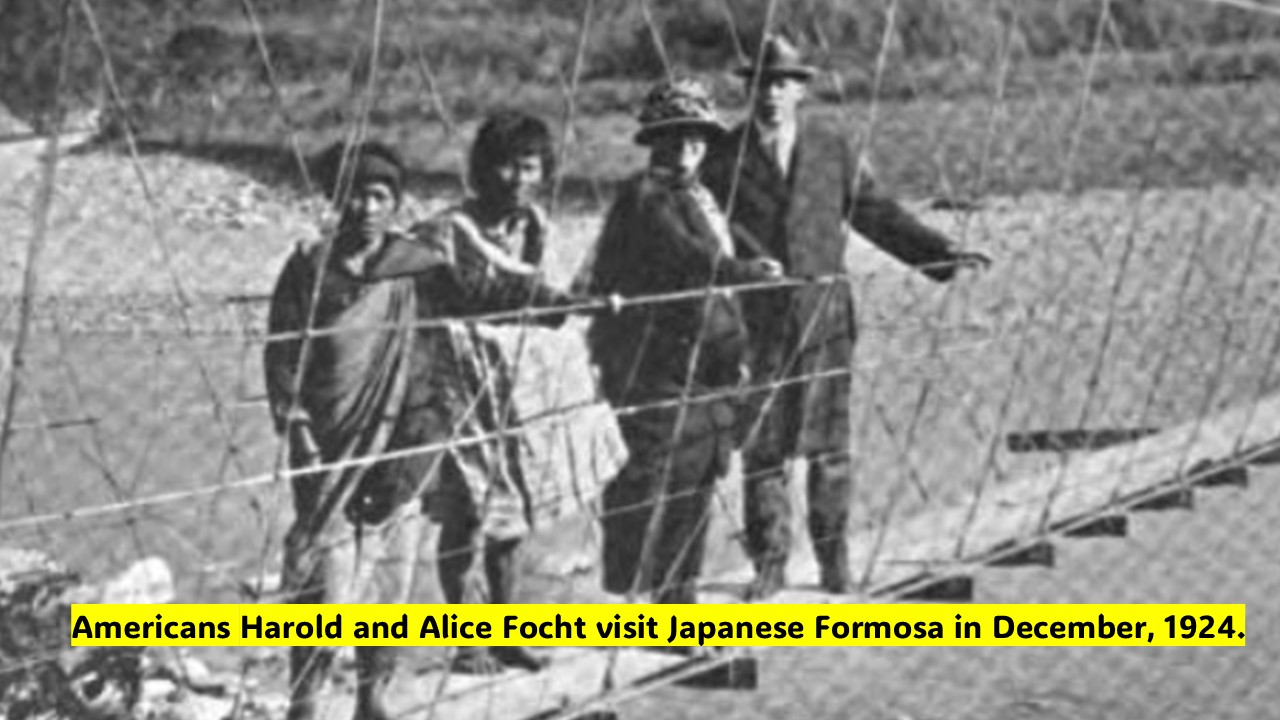
S4-35 - FORMOSA 100 YEARS AGO: AMERICAN VISITORS IN JAPAN’S MODEL COLONY - DEC., 1924
Harold and Alice Focht. He was an educator, she came along to keep him away from the geishas (well, some said). Hear how two middle-aged Americans saw Taiwan at, arguably, the peak of the Japanese colonial era. Lots of civilizing was on display – Asia’s longest bridge and the aboriginal show village of Kappanzan (beautiful modern-day Jiaobanshan). But happily, some local charms were also seen, including the unhealthy but persistent habit of chewing betel nuts, some minor disregarding of cleanliness, and local throngs gawking at big-footed Americans. As a bonus, Eryk and John give away two brilliant ideas for modern-day tourism related to rail pushcarts.

23
Sept. 12, 2024
S4-E23 - Taiwan’s President in Exile – Thomas Liao.
This forgotten father of Taiwan democracy sacrificed his comfortable life (he came from a rich family and had a PhD from the US in Chemical Engineering) to fight for Taiwanese independence in the post-WW2 decades. In 1956 he was elected president of the Japan-based Republic of Taiwan Provisional Government. In some ways, he also sacrificed his Chinese-American wife and children. So, when his American granddaughter Kim Liao was growing up, Thomas Liao was almost never mentioned. In this episode, John talks to Kim about uncovering her mysterious family history, the subject of her recent outstanding book: Where Every Ghost Has a Name: A Memoir of Taiwanese Independence. (Note: John also recorded another episode with Kim focusing on her book – see Episode 6 of Bookish Asia with Plum Rain Press)

16
July 18, 2024
S4-E16 - Political Assassination Attempts, 1928-1970
Japanese princes, Taiwanese activists, a Korean martyr, American generals and presidents, Chiang Kai-shek and his son Chiang Ching-kuo. It’s an action-packed episode with an amazing cast of characters. These little-known Taiwan-related assassination attempts and plots will surprise you. And, we hope, also please you that they failed. As Eryk passionately points put at the end of the episode, assassination, even of a "bad guy" target, can lead to a worse replacement and the unleashing of chaos. PLEASE "LIKE" or "SUBSCRIBE" or give us 5-Stars... it really makes a difference! Thanks!

14
June 20, 2024
S4-E14 - PACIFIC STORY–Formosa: Prize of the China Sea (NBC Radio, 1944)
It’s January 1944 and the tide of WWII has changed. Though it will be a long hard grind, victory is on the horizon. To “better inform the American public,” about the situation in the Pacific, NBC creates a series of radio documentary dramas in Hollywood, with expert writers and professional voice actors. Enjoy this 80-year-old gem that traces the island’s history from the Dutch to the “Chinese” on Japanese Formosa “yearning to rejoin the fatherland... China!” This old radio drama is a wonderful snapshot in time – 1944 – before the events of the following year (Hitler’s death, two atomic bombs dropped on Japan, the formal end of WWII, and Taiwan’s “return” to the Republic of China) shaped the world we live in today.

7
April 11, 2024
S4-E7 - Travel and Tremors – the 1906 Meishan Earthquake 梅山地震
Drawing on an account never before told in English, we visit Taiwan in the company of French war correspondent Reginald Kann. Upon his arrival in Taihoku (Taipei), he hurries down to the city of Chiayi to investigate the aftermath of the massive 7.1 magnitude Meishan Earthquake of March 17, 1906. Kann reports on the damage and the relief efforts being carried out by Taiwan's relatively new Japanese masters. He gives us a fascinating look at the disaster (which took 1,258 lives) and also Japanese colonial rule as it was moving from military subjugation to development. The Frenchman’s “Report on Formosa” was published in French and Dutch. Now, thanks to AI and the talents of a Formosa Files fan, we can bring you the tale in English.

33
Nov. 9, 2023
S3-E33 - Tales of Tokyo and Taiwan
This week we're looking at Tokyo, and telling a few tales that connect events in that major world city to people, places, and things in Taiwan. ポッドキャストをお楽しみください!

32
Nov. 2, 2023
S3-E32 - Hakka Author Wu Zhuoliu (吳濁流), Part 2 - Japan’s Surrender and 2/28
Writer Wu Zhuoliu 吳濁流 (1900-1976), sadly, never saw Taiwan blossom into a democracy. But he left us with some of the most important works ever written about 20th-century Taiwan. Among these is the autobiography “The Fig Tree”, whose early chapters mirror the events in his acclaimed novel “Orphan of Asia.” In S2-E29, we covered Wu’s younger years as in Japanese colonial Taiwan, his grandfather’s tales of a cultured, ancient China and the influence these ideas had on Wu. We told the story of Wu’s time in “the Motherland,” where he discovered that the China of his imagination was simply that – imaginary. Today, we pick up his story as WW2 comes to an end and the Chinese Nationalists arrive. Wu describes how Taiwanese jubilation soon turned to despair, and how this exploded into riots and killings known collectively as the 2/28 Incident. Please rate us on Apple Podcasts or any other platform -It really helps!
![[ENCORE] Golf in Taiwan: A Surprisingly Long History](https://s3.us-west-1.amazonaws.com/redwood-labs/showpage/uploads/images/10f26860-f33d-4204-8188-4b6b1863af8a.jpg "[ENCORE] Golf in Taiwan: A Surprisingly Long History")
Oct. 23, 2023
[ENCORE] Golf in Taiwan: A Surprisingly Long History
Hear the tale of Japanese colonial officials discovering golf as the "new cool thing for elites" -- and ordering a course built in just a few hours. Plus, the story of Lu Liang-huan (呂良煥), a man from a poor family who worked his way up from being a caddy to an impressive 2nd place win at the 1971 British Open. NOTE: We are re-releasing this episode in celebration of the 62nd anniversary of the Kaohsiung Golf and Country Club 高雄高爾夫俱樂部, a public course and oasis of nature, trees, and birds in the middle of the city (and, of course, an international-standard golf course). This episode first came out in July 2022. The Kaohsiung Golf and Country Club is managed by the sponsors of the Formosa Files podcast, the Frank C. Chen Foundation.

30
Oct. 6, 2023
S3-E30 - When the Russians Bombed Taipei (and other aviation stories)
Here's something we bet you didn't know: in 1938, Soviet pilots in Soviet planes (disguised to look like ROC Air Force planes) bombed the main airfield in Taihoku (now the Songshan Airport 臺北松山機場 in Taipei City). We've got that story and more as this week John and Eryk get a bit geeky and delve into some of the stories behind the planes we saw during recent visits to the Gangshan Aviation Education Exhibition Hall (航空教育展示館).

28
Sept. 21, 2023
S3-E28 - More Bits and Pieces: Ox Ditches and an Unsinkable Warship
Remember those two Polish cargo ships and one oil tanker from the USSR seized by the ROC Navy in the 1950s? Well, the story has one highly interesting extra element we didn't have time to get to in the last episode. Plus, John wants to write a book about an "ox ditch."

Aug. 3, 2023
Bonus Episode: 2-28: A Bad Beginning
In this special episode, we hear Eryk reading from chapter five of John’s “Taiwan in 100 Books.” The topic is 2-28, an event named after a date: February 28, 1947. It’s usually referred to as the February 28 incident, but sometimes called the 2-28 Massacre. American vice-consul at the time George Kerr used the term “the March massacres,” which gives a more accurate impression of what happened; the brutal suppression of uprisings and protests throughout the country, which left perhaps 20,000 dead. It was a bad beginning to ROC rule on Formosa, a dark stain that was a taboo topic until the early 1990s. Listen and learn about George Kerr’s “Formosa Betrayed”(1965), probably the most important English-language non-fiction work on Taiwan. We also cover the first English-language White Terror novel, “A Pail of Oysters” (1953), by Vern Sneider, and Allan James Shackleton’s “Formosa Calling” (1998), an account of 2-28 which took four decades to get published.
![[ENCORE] The Empire's Last Solider (29 Years, 3 Months, and 16 Days)](https://s3.us-west-1.amazonaws.com/redwood-labs/showpage/uploads/images/e99a06aa-db6b-4079-bf32-52d547e99504.jpg "[ENCORE] The Empire's Last Solider (29 Years, 3 Months, and 16 Days)")
July 27, 2023
[ENCORE] The Empire's Last Solider (29 Years, 3 Months, and 16 Days)
The last Japanese "holdout" of World War II was an Indigenous Amis Taiwanese named Attun Palalin, but in Japanese Formosa, he was Nakamura Teruo (中村 輝夫). Palalin was one of a group of Indigenous Taiwanese who served in the Japanese military as part of the Takasago Volunteer Unit 高砂義勇隊. The Takasago Unit was built on the idea that Indigenous Taiwanese were best suited for guerilla-style fighting in Southeast Asian jungles as they could live off the land and were accustomed to tropical climates, etc. Several thousand Indigenous men were recruited. Many Formosans served under the flag of the Rising Sun with distinction during the Second World War; no one, however, was apparently more dedicated than "The Empire's Last Solider," Attun Palalin, who kept "fighting" on an island in modern-day Indonesia until 1974! Enjoy your summer, catch up on episodes, and check out this encore episode, first released in October 2021.

June 22, 2023
Bonus Episode: Eryk Calls John for a Meanderingly Interesting Chat
Now that we're well into Formosa Files season three, your co-hosts add some background to stories we've told, try to clear up misconceptions about the ROC’s exit from the United Nations, make some “controversial” comments on Dr. Sun Yat-sen, and finally, we agree that Mongolia is an independent country, which the Republic of China (Taiwan) also agreed is a fact, in 2002.

12
May 18, 2023
S3-E12 - American Luxury Cruise Ship Runs into Green Island 綠島 (1937)
The SS President Hoover was a ship ahead of its time, with innovative engine designs, air conditioning in all cabins, and space for almost a thousand passengers. But just seven years after being commissioned, the ship ran aground just off Green Island, which in 1937 was a part of the Japanese Empire. Listen to this week's story for a riveting adventure involving a possibly intentional bombing, a journey along the unfamiliar East Coast of Formosa in the dark, a shipwreck, drunken sailors, and some heartwarming pre-WWII kindness between Japan and America
![[Encore] Japan Puts Paiwan Indigenous Taiwanese on Display at London Expo (1910)](https://s3.us-west-1.amazonaws.com/redwood-labs/showpage/uploads/images/906601c1-483b-470d-9e73-f345cd16d853.jpg "[Encore] Japan Puts Paiwan Indigenous Taiwanese on Display at London Expo (1910)")
Jan. 26, 2023
[Encore] Japan Puts Paiwan Indigenous Taiwanese on Display at London Expo (1910)
At the turn of the 20th century, Japan was on a roll. After taking Formosa and Penghu from Qing China in 1895, Japan beat mighty Russia in 1905. Eager to show the world its newfound economic strength – and to highlight the successful development of its new colony – the Japanese parliament voted vast sums of money to sponsor the Japan-British Exhibition. It was held in London from May to October 1910. Among the most “wild” displays the Japanese brought to London was a recreated Paiwan village, with live Indigenous Paiwan Formosans! NOTE: This episode was first released in September 2021.

Jan. 5, 2023
Bonus Episode: Among the Headhunters of Formosa - From Taiwan in 100 Books, by John Ross
This week we have another snippet from the audiobook of John's 2020 book, Taiwan in 100 Books. This extract tells the tale of Janet Montgomery McGovern, a feisty anthropologist who managed to cut through the red tape and official disapproval from Japanese colonial authorities in Formosa during her residence from 1916 to 1918, and headed up into the hills to learn about Taiwan's Indigenous Peoples -- most of whom had already given up headhunting by then. We'll also hear a "rose-colored glasses" 1921 travel account of a very brief visit to Taiwan by Englishman Owen Rutter. Enjoy!

Dec. 22, 2022
Bonus Episode: The Forgotten President 嚴家淦
Eryk calls John for a chat about Yen Chia-kan (嚴家淦, Yan Jiagan) the president of the Republic of China (Taiwan) for three years following the death of Chiang Kai-shek in 1975. Who was C.K. Yen, and why isn’t he better known? Here’s the story.

35
Dec. 1, 2022
S2-E35 - Colonial Tourism: Japanese Visit their Model Colony, While Tokyo Brings Indigenous Taiwanese to “The Motherland” to Show Off “Civilization”
We travel back to 1920s Taiwan, first in the company of Terry’s Guide to the Japanese Empire and then follow a Tokyo travel bureau itinerary for Japanese tourists to the island. Ride the rails with us as we visit Shinto shrines, sugar factories, former “savages,” and scenic spots (not just any scenic spots but the official “Eight Views of Taiwan”). And we look at perhaps the most interesting aspect of colonial sightseeing: free guided trips to Japan for Indigenous Taiwanese leaders. These propaganda trips were meant to demonstrate why resistance to the Empire was futile, but they were not always home runs.

30
Oct. 20, 2022
S2-E30 - The Mysterious Death in Taipei of India's Most Controversial Nationalist
Unlike Mahatma Gandhi, fellow Indian pro-independence leader Subhas Chandra Bose advocated taking up arms against the British. WWII presented a golden opportunity for this, and in an "enemy of my enemy" move Bose escaped from arrest in India and headed for Nazi Germany. But despairing of a German invasion of India that would overthrow the British, Bose turned to the Japanese. This controversial Indian revolutionary died in Taipei in 1945, leading to decades of speculation and conspiracy theories. Here's the story of this complex figure and his final fate in what was then still Taihoku, Japanese Formosa.

29
Oct. 13, 2022
S2-E29 - The "Most Powerful Witness" to Modern Taiwan's History: Wu Zhuoliu (吳濁流) - Part One
Sadly, the bloodshed and sorrow that began on February 28, 1947 (228) is the foundational story of post-Japanese Taiwan. Wu Zhuo-liu (吳濁流), an ethnically-Hakka poet, writer, and journalist, was born in 1900 and died in 1976, his life effectively spanning the tumultuous birth of the nation. He experienced and documented colonial rule, WWII, the Japanese departure, and the hopeful first days of a "New China" which turned so quickly to violent tragedy. Wu's writings are today considered some of the most important of the modern era, but he remains mostly unknown to much of the world. Here is the beginning of Wu Zhuo-liu's story.

27
Sept. 22, 2022
S2-E27 - Ghost Planes and the Japanese Fighter Pilot who Became a God
John loves aviation stories and in this episode we've got two: the first raises some serious questions about an oft-told "ghost plane" tale, while the second features a heroic young Japanese Zero fighter pilot who perished in Tainan in the last year of WWII...and then became a deity in that southern Taiwanese city! Photos and additional info at Formosafiles.com